
Florida’s subtropical beauty comes with a persistent biological shadow: mold. In a state where relative humidity levels frequently soar above 70%, the question isn’t usually if you will encounter mold, but rather how you will manage it.
For Florida residents, mold is a relentless competitor that thrives in the moisture-rich air of the Everglades and the salt-spray of the Atlantic. Finding the most effective Way To Clean Mold In Humid Climate Florida is essential for protecting your property’s structural integrity and your family’s respiratory health.
In 2026, we have moved beyond simply “bleaching” the problem; we now utilize advanced pH-balancing techniques and moisture-control technology to eradicate spores at their source.
I’ve worked with many homeowners who were frustrated because they scrubbed their bathroom tiles, only to see the black spots return within a week. This “yo-yo” effect happens because surface cleaning doesn’t address the microscopic roots (hyphae) embedded in porous materials.
In the Florida heat, mold can double its colony size in as little as 24 to 48 hours. This guide will detail the exact professional-grade protocol for mold remediation tailored specifically for the humid South Florida climate.
If you are starting with a home that has been closed up for a while, it might be wise to check the house cleaning cost in Florida to establish a professional baseline before beginning your maintenance routine.
The Florida Mold Crisis: Why Standard Cleaning Fails
The biggest mistake people make in Florida is using bleach on porous surfaces like drywall or wood. Bleach is 90% water. While the chlorine kills the surface color, the water soaks into the material, effectively “watering” the mold roots. In our humid climate, this actually accelerates regrowth.
The superior Way To Clean Mold In Humid Climate Florida involves using “surfactants” and “antifungals” that penetrate the surface without adding excessive moisture.
By shifting your strategy from “whitening” to “disinfecting,” you break the cycle of regrowth. To prevent the lingering scents associated with these outbreaks, refer to our specialized guide on how to remove mildew smells.
The 2026 Protocol: Step-by-Step Mold Eradication
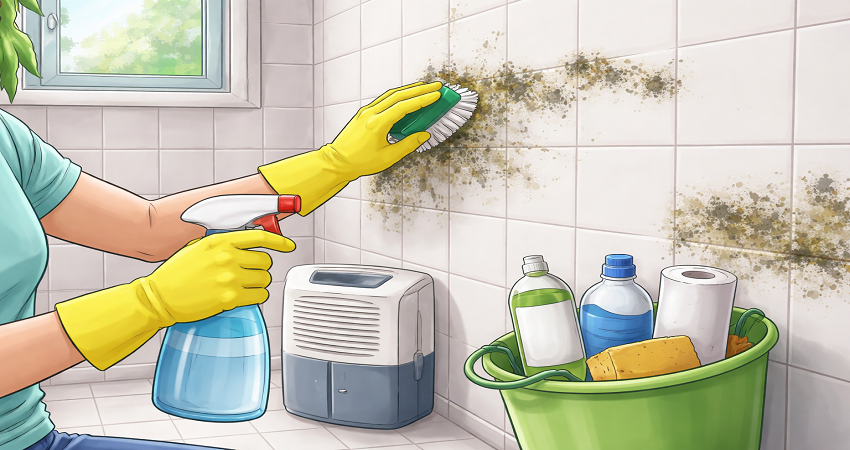
Before you begin, you must treat mold with the respect a biological hazard deserves. Always wear an N95 mask, gloves, and eye protection. Florida mold spores are highly buoyant in our heavy, humid air.
1. Isolation and Moisture Detection
First, identify the source of the moisture. Is it a leaky pipe, a window seal failed by a hurricane, or simply high indoor humidity? Use a moisture meter to check the walls. If the moisture level is above 15% inside the material, cleaning the surface won’t help until the leak is fixed.
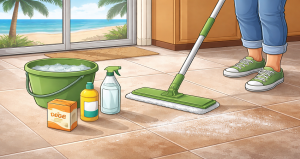
For those living in coastal areas, salt-air can also compromise seals; see our beach house cleaning tips for more on salt-mitigation.
2. The “Vinegar-Borax” Punch
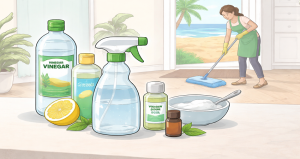
In Florida, we recommend a two-stage chemical approach. Vinegar (acetic acid) kills about 82% of mold species, including the roots. Borax acts as a natural inhibitor that prevents new spores from landing and growing.
- Stage A: Spray undiluted white vinegar on the area and let it dwell for 60 minutes.
- Stage B: Scrub with a paste of Borax and water to lift the physical structure of the mold.
- Stage C: Wipe clean with a microfiber cloth and dry immediately using a high-velocity fan.
Comparing Florida Mold Cleaning Agents
Not all cleaners are created equal for the subtropics. Use this table to choose the right weapon for your specific surface.
| Agent | Best For | Florida Performance |
|---|---|---|
| Distilled White Vinegar | Drywall and Wood | Excellent (Kills roots) |
| Hydrogen Peroxide (3%) | Kitchen Surfaces | Good (Effervescent action) |
| Tea Tree Oil Solution | Bathroom Tiles | Elite (Natural fungicide) |
| Chlorine Bleach | Non-porous Glass/Plastic | Poor (Encourages regrowth on wood) |
Targeting the “Hot Zones”: AC Vents and Bathrooms
In Florida, the HVAC system is the primary distributor of mold spores. If you see black dust on your ceiling vents, the mold is likely inside your ducts.
- AC Vent Care: Use a specialized antifungal foam to clean the registers. If the problem persists, it is vital to clean your air vents in Florida humidity professionally. This prevents the “re-seeding” of mold every time the fan kicks on. For bathrooms, focus on the grout. Hard water in Miami and Orlando creates porous mineral deposits where mold hides; check our hard water cleaning guide for more details.
The “Dry” Strategy: Prevention is 90% of the Cure
The ultimate Way To Clean Mold In Humid Climate Florida is to never let it grow in the first place. You must maintain an indoor environment that is hostile to fungal life.
- The 50% Rule: Keep your indoor relative humidity between 45% and 55%. Buy a $10 hygrometer to monitor this.
- Airflow: Never push furniture directly against an exterior wall in Florida. Leave a 2-inch “breathing gap” to prevent condensation from forming behind couches or beds.
- Kitchen Management: Cooking creates massive amounts of steam. Always use your exhaust fan and consider our greasy kitchen maintenance tips to keep surfaces smooth and mold-resistant.
When Mold Becomes a Structural Threat
If mold has penetrated the paper backing of your drywall or the underside of your subflooring, cleaning is no longer an option—removal is necessary.
In Florida, “Black Mold” (Stachybotrys) can be particularly toxic. If the area of growth is larger than 10 square feet (roughly the size of a standard doorway), the EPA recommends hiring a professional.
You can gauge the market for these services by looking at deep cleaning house costs in Tampa or Miami to ensure you are getting a fair quote for remediation.
- Pro Tip: If you are traveling for a week or more, never turn your AC off. Set it to “Cool” at 78°F. Many Florida mold outbreaks happen while homeowners are on vacation and the stagnant, humid air allows spores to take over the entire house.
Step-by-Step: The Tea Tree Oil “Shield”
For areas prone to recurring mold (like window sills), use this natural Florida shield:
- Mix 2 teaspoons of 100% pure Tea Tree Oil with 2 cups of water in a spray bottle.
- After cleaning the mold using the vinegar method, spray this solution lightly over the area.
- Do not rinse. The oil will create a microscopic antifungal barrier that prevents new spores from germinating in the humidity.
For more recipes like this, visit our natural cleaning tips for Florida humidity.
Frequently Asked Questions (FAQ)
1. Is “Mildew” the same as “Mold” in Florida?
Essentially, yes. Mildew is simply the early, “powdery” stage of mold growth. Both require the same moisture-control and cleaning protocols to eradicate.
2. Does sunlight kill Florida mold?
UV rays can kill mold, but Florida humidity often counteracts this. While “sunning” your rugs can help, it’s not a substitute for proper chemical treatment.
3. Can I use a dehumidifier instead of the AC?
A dehumidifier is a great supplement, but it generates heat. In Florida, the AC is your primary dehumidifier; the portable unit should only be used in specific “problem rooms.”
4. Why does mold keep growing on my window tracks?
This is due to “thermal bridging.” The cold glass meets the warm, humid air, creating condensation. Clean tracks weekly as part of your weekly Florida checklist.
5. What is the “smell” of mold?
It is often described as “earthy” or “musty.” It’s actually the microbial volatile organic compounds (mVOCs) released as the mold digests your home’s materials.
Conclusion
Mastering the Way To Clean Mold In Humid Climate Florida is a rite of passage for every resident. By moving away from the “bleach and scrub” mentality and adopting a “balance and block” strategy, you can maintain a home that is fresh, dry, and healthy despite the tropical elements outside. Your home is a sealed system—keep it ventilated, keep it dry, and address spots the moment they appear.
Consistency is your best weapon. By integrating these tips into your routine and understanding the unique chemistry of our state, you can enjoy all the sunshine without the stress of mold.
For more professional assistance, check out our guide on Maid Service costs to help you maintain a mold-free baseline. Stay dry and stay healthy!
Your Next Action: Check the seal on your refrigerator and your front door today. Any gap where humid air enters is a VIP entrance for mold!