Dishwasher Cleaner Products: 7 Smart Tips for a Fresh, Clean Machine
Dishwasher cleaner products can help remove grease, mineral deposits, and unpleasant odors that build up inside your appliance over time. Even when your dishes look clean, the dishwasher itself may need occasional maintenance to keep its interior fresh and free from residue.
Choosing the right cleaner depends on the problem you want to solve. Some products target grease and everyday buildup, while others are designed to help remove hard-water deposits or reduce odors. Using the correct product—and following its instructions—can make dishwasher maintenance easier.
In this guide, you will learn how to compare dishwasher cleaner products, understand the differences between tablets and liquid cleaners, choose a suitable option for your home, and maintain your dishwasher without unnecessary chemicals or expense.
Why Use Dishwasher Cleaner Products?
Dishwashers handle food residue, grease, detergent, and hot water during regular use. Over time, some of these materials can accumulate on accessible surfaces and inside parts of the appliance.
A dedicated dishwasher cleaner is formulated to address certain types of buildup inside the machine rather than simply wash the dishes.
Depending on the product, it may help:
- Loosen grease and detergent residue.
- Reduce odors caused by accumulated residue.
- Address certain mineral deposits from hard water.
- Clean areas that are difficult to reach during routine wiping.
- Support a regular appliance-maintenance routine.
A machine cleaner is not a substitute for cleaning a removable filter, clearing accessible food debris, or investigating mechanical problems. If your dishwasher continues to smell, drain poorly, or leave food on dishes, check the underlying cause before repeatedly using cleaning products.
7 Smart Tips for Choosing Dishwasher Cleaner Products
1. Identify the Problem Before Buying a Cleaner
Start by identifying what is happening inside your dishwasher. Different problems may require different solutions.
Grease and residue: If the interior feels greasy or has visible detergent buildup, consider a dishwasher machine cleaner whose label specifically mentions grease removal.
Unpleasant odors: Food particles trapped in a filter or around the door seal may contribute to smells. Clean accessible areas first, then consider a product designed to address dishwasher odors if needed.
White film or mineral deposits: Hard water can leave mineral residue on dishwasher surfaces and glassware. Look for a compatible product specifically intended to address limescale or mineral buildup.
Food particles on dishes: Inspect the filter, spray arms, loading arrangement, and detergent use. A machine cleaner alone may not solve the problem.
For more guidance, read our existing guide on dishwasher cleaning agents.
2. Compare Different Types of Dishwasher Cleaners
Dishwasher cleaner products are available in several formats. The most suitable choice depends on the product instructions, your appliance, and the type of buildup you want to address.
| Cleaner type | Potential advantage | What to check |
|---|---|---|
| Liquid dishwasher cleaner | Convenient for products designed to release cleaner during a cycle | Bottle placement, cap instructions, and required cycle |
| Cleaning tablets | Premeasured and convenient to store | Whether the tablet is intended for machine cleaning |
| Cleaning pacs | Convenient single-use format | Correct placement and whether the appliance should be empty |
| Powder or descaling cleaner | Some formulations target particular mineral deposits | Correct dosage and material compatibility |
These formats are not interchangeable. For example, a liquid bottle designed to sit upside down in the lower rack must be used according to its own instructions. A tablet designed for the detergent dispenser may require a different procedure.
Do not assume that all dishwasher cleaning products work with the same cycle or placement method.
3. Compare Products by Their Intended Purpose
When shopping for dishwasher cleaner products, compare the stated purpose, directions, ingredients, and compatibility rather than relying on packaging claims alone.
Here are four examples of established products to investigate.
Finish Dishwasher Cleaner
Finish offers a liquid dishwasher cleaner designed to address grease and limescale buildup. Its US product instructions specify placing the bottle upside down in the bottom rack, leaving the cap on, exposing the wax plug as directed, and running the empty dishwasher on the specified hot cycle. The manufacturer says not to add ordinary dishwasher detergent during this cleaning cycle.
Official product information: https://www.finishdishwashing.com/products/dishwasher-cleaners/dishwasher-cleaner-liquid/
Affresh Dishwasher Cleaner
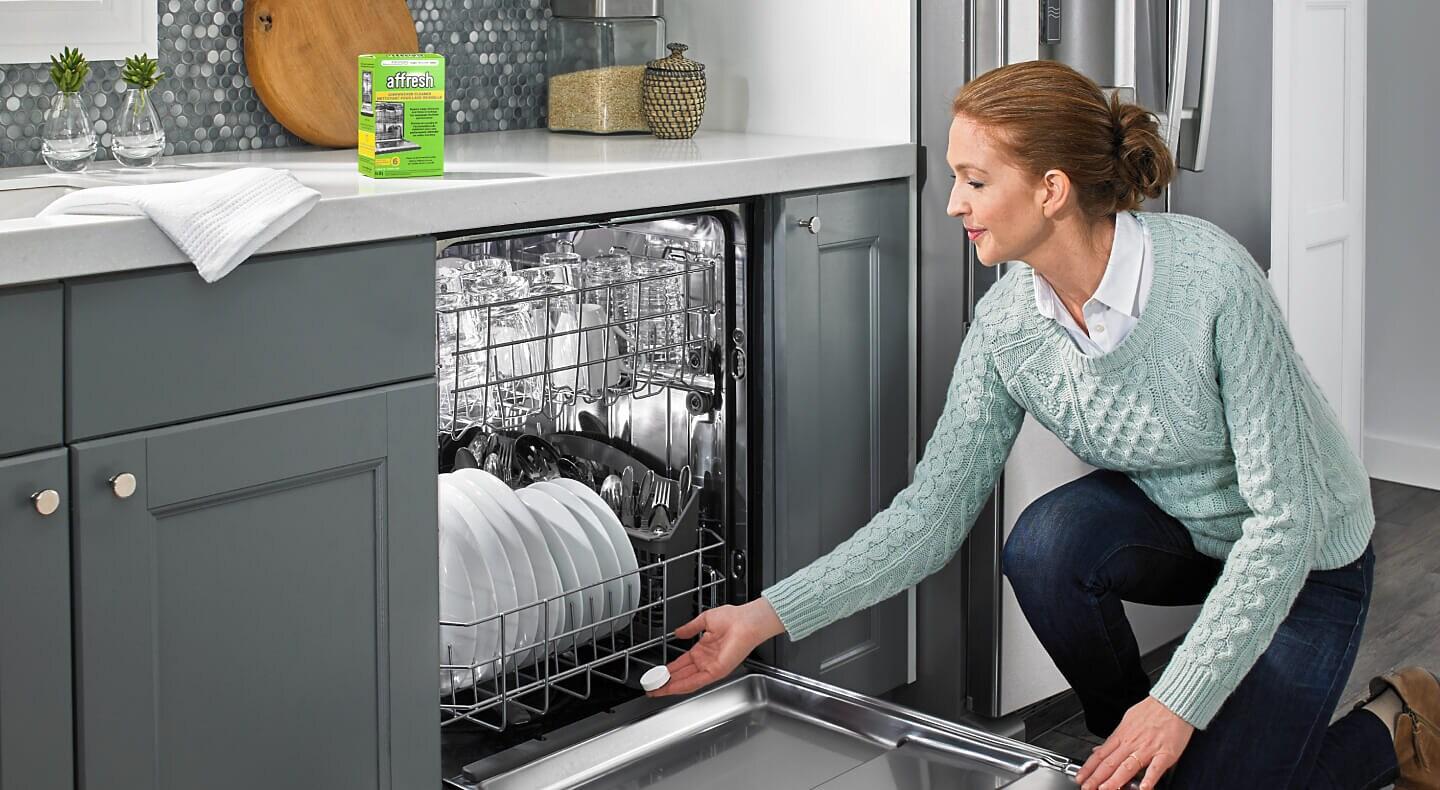
Affresh offers dishwasher-cleaning tablets. Its manufacturer explains that the product is designed to clean areas of the appliance and recommends regular maintenance according to the product directions.
Read the label for the correct placement and cycle. Do not substitute an Affresh washing-machine cleaner for a dishwasher-specific product.
Official product information: https://www.affresh.com/product_categories/dishwasher-cleaner/
Cascade Dishwasher Cleaner
Cascade sells single-dose dishwasher cleaner pacs intended to address buildup and odors. Its manufacturer recommends monthly use, subject to the product directions.
Official product information: https://cascadeclean.com/en-us/products/dishwasher-cleaner/
Lemi Shine Dishwasher Cleaner
Lemi Shine is another brand to consider when comparing products intended to address mineral deposits and dishwasher buildup. Check the specific product label, ingredients, compatibility, and instructions before purchasing, as products within a brand can have different purposes.
Official website: https://lemishine.com/
These are examples for comparison, not a laboratory-tested ranking. Formulas, package sizes, availability, and instructions can change, so verify the current label before using any product.
4. Consider Hard-Water Deposits
Hard water contains dissolved minerals that can leave deposits on surfaces over time. If your dishwasher develops a white film, spots, or scale, a product designed for mineral buildup may be more appropriate than a general-purpose cleaner.
Before buying a descaler:
- Check whether the product specifically addresses limescale or mineral deposits.
- Read your dishwasher manual for restrictions on acidic cleaners.
- Follow the required dosage and cycle.
- Avoid combining cleaners or adding unapproved chemicals.
- Investigate other possible causes of cloudy glassware, including detergent choice and rinse-aid settings.
Not every white mark is caused by hard water, and a dishwasher cleaner will not necessarily correct every spotting problem.
5. Read the Label and Check Appliance Compatibility
A product may be intended for an empty cleaning cycle, while another may require a particular dispenser or rack placement. Incorrect use can leave residue or prevent the product from working as intended.
Before using a cleaner, confirm:
- Whether the dishwasher should be empty.
- Where the product must be placed.
- Which wash cycle and temperature are recommended.
- Whether additional detergent should be omitted.
- Any warnings about materials or appliance types.
- Storage and handling precautions.
Use only products intended for automatic dishwashers or explicitly approved by your appliance manufacturer.
Never use ordinary hand dishwashing liquid as a substitute for automatic dishwasher detergent. Hand dish soap can produce excessive suds in an automatic machine.
6. Consider Ingredients and Environmental Preferences
If ingredient information or environmental impact matters to your household, review the product label and manufacturer’s ingredient disclosures.
The US Environmental Protection Agency’s Safer Choice program identifies eligible products that meet its criteria for ingredient safety and other requirements. You can search its current product listings to check whether a particular product qualifies.
Official resource: https://www.epa.gov/saferchoice/products
A product should not be assumed to carry the Safer Choice label simply because its packaging uses words such as “green,” “natural,” or “eco-friendly.” Verify the specific product in the official database.
Also consider fragrance preferences, packaging, instructions, and the amount of product needed per cleaning cycle.
7. Follow a Simple Dishwasher Maintenance Routine
Using a cleaner periodically is only one part of appliance care. A simple maintenance routine can help you identify buildup before it becomes a recurring problem.
A practical routine includes:
- Inspect the interior for visible food debris.
- Check and clean the filter according to the appliance manual.
- Wipe accessible door seals and edges with an appropriate cloth.
- Check the spray arms for visible obstructions.
- Use a dedicated dishwasher cleaner when recommended and needed.
- Follow the product’s specified cycle and dosage.
- Investigate persistent odors, leaks, or drainage problems instead of repeatedly applying cleaner.
For detailed instructions, see our guide on how to clean a dishwasher filter.
The right maintenance schedule depends on the dishwasher, usage, water conditions, and product instructions. There is no universal requirement to use a chemical cleaner after every load.
How to Use Dishwasher Cleaner Products Correctly
Always follow the instructions supplied with the particular product. The following is a general preparation checklist, not a substitute for the product label.
Step 1: Empty the Dishwasher if Required
Many dedicated machine cleaners are designed for an empty dishwasher. Remove dishes and utensils when the instructions require it.
Step 2: Inspect the Filter
Check whether your model has a user-removable filter. If it does, clean it according to the owner’s manual when necessary.
Step 3: Remove Accessible Debris
Wipe away loose food residue from accessible interior surfaces. Do not dismantle internal components or reach blindly into the drain or pump area.
Step 4: Add the Cleaner as Directed
Use the specified amount and placement. Do not improvise by pouring a concentrated product into an unapproved area.
Step 5: Run the Recommended Cycle
Choose the cycle specified by the cleaner’s manufacturer. Some products require a hot cycle, while others may have different directions.
Do not add ordinary detergent unless the cleaner’s instructions explicitly allow it.
Step 6: Inspect the Dishwasher
After the cycle, check the interior for remaining residue or unusual odors. If the problem persists, investigate other possible causes.
Never mix dishwasher cleaners with bleach, ammonia, vinegar, or other cleaning chemicals. Chemical combinations can produce hazardous reactions.
Common Dishwasher Cleaner Mistakes to Avoid
Buying a cleaner without identifying the problem: A product intended for grease may not be the right choice for significant mineral deposits or a blocked drain.
Using too much product: More cleaner does not automatically mean better results. Follow the label’s dosage instructions.
Ignoring the filter: Food debris in a filter can continue to cause odors even after a machine-cleaning cycle.
Using an unapproved homemade solution: Vinegar and other household substances are not suitable for every appliance. Consult your dishwasher manual before using them.
Expecting a cleaner to repair a mechanical fault: A chemical cleaner cannot reliably repair a damaged pump, blocked hose, leak, or failed component.
Ignoring persistent symptoms: If the dishwasher continues to smell, drain poorly, or leave dishes dirty, follow the manufacturer’s troubleshooting guidance or seek qualified service.
Frequently Asked Questions
What are the best dishwasher cleaner products?
The appropriate product depends on your cleaning needs, appliance compatibility, and budget. Compare dedicated cleaners from brands such as Finish, Affresh, Cascade, and Lemi Shine, then verify each product’s current instructions and intended use. The examples in this guide have not been ranked through independent performance testing.
How often should I use a dishwasher cleaner?
Follow the product label and your dishwasher manual. Some manufacturers recommend monthly cleaning, but the correct frequency varies by product, appliance, usage, and water conditions.
Are dishwasher cleaner tablets better than liquid cleaners?
Neither format is automatically better for every dishwasher. Tablets are often premeasured, while some liquid cleaners use a specific bottle-placement method. Choose a compatible product and follow its instructions.
Can dishwasher cleaner products remove hard-water stains?
Some products are formulated to address limescale or mineral deposits. Check the label to confirm that purpose. Persistent white film may have other causes, so a dedicated descaler is not guaranteed to solve every spotting problem.
Can I use dishwasher cleaner with regular detergent?
Many machine cleaners are designed for a separate cleaning cycle without ordinary dishwasher detergent. Other products may have different instructions. Follow the exact label and never assume that combining products will improve results.
Are dishwasher cleaners safe for every dishwasher?
No product should be assumed compatible with every appliance. Check both the cleaner’s instructions and your dishwasher’s owner manual, particularly if your machine has special materials or maintenance requirements.
Why does my dishwasher still smell after using a cleaner?
Food residue in the filter, door seals, or drainage system may be responsible. A blocked hose or another mechanical issue can also cause recurring odors. Inspect accessible areas and consult the manufacturer’s troubleshooting guidance if the smell persists.
Can I use vinegar instead of a dishwasher cleaner?
Only if your dishwasher manufacturer permits the method. Vinegar is acidic and may not be appropriate for every appliance or component. Never mix it with bleach or other cleaning chemicals.
Final Thoughts
Dishwasher cleaner products can make routine appliance maintenance easier when you choose a formula that matches the problem. Compare the product’s intended purpose, instructions, ingredients, and compatibility instead of relying solely on brand claims.
For the best maintenance approach, combine appropriate machine cleaning with regular filter checks and careful use of automatic dishwasher detergent. If odors, poor cleaning, or drainage problems continue, investigate the cause rather than repeatedly using chemical cleaners.
A consistent, manufacturer-approved cleaning routine can help keep your dishwasher fresh and ready for everyday use.