
Living in the Sunshine State offers a lifestyle that many envy, from the pristine Gulf beaches to the lush tropical greenery of Central Florida. However, as any local resident will tell you, paradise comes with a persistent companion: humidity. In Florida, the air isn’t just warm; it is heavy with moisture.
This environmental factor is the primary reason why maintaining a home here requires a specialized approach. When high humidity levels go unmanaged, your living space can quickly become a haven for mold, mildew, and that unmistakable “musty” Florida scent.
This is where natural cleaning tips for Florida humidity become more than just a trend—they are a survival strategy for your home.
I remember talking to a homeowner in Sarasota who was frustrated by the white “fuzz” appearing on her leather shoes in the back of her closet. It wasn’t because her house was dirty; it was because the stagnant, humid air had created a micro-climate perfect for spores.
Many people reach for bleach or heavy industrial chemicals to fight this, but in a state where we spend 90% of our time indoors with the AC recirculating air, those fumes can be detrimental to your health.
The good news is that Mother Nature provides us with everything we need to keep our homes dry, fresh, and sanitized. In this guide, we will explore the science of humidity and provide you with a natural arsenal to keep your home in top shape.
The Impact of Florida Humidity on Your Home Environment
Florida’s average humidity levels often soar above 70%, creating a “tropical greenhouse” effect inside your walls. This moisture doesn’t just make you feel sticky; it actively interacts with your home’s surfaces.
Dust in Florida isn’t like dust in Arizona; it is “damp dust,” which acts like a glue, binding allergens to your baseboards, air vents, and furniture. If left untreated, this mixture provides the organic material mold needs to thrive.
Furthermore, humidity affects the structural integrity of your belongings. High moisture can cause wooden floors to buckle, acoustic guitars to warp, and electronic components to corrode over time.
By implementing natural cleaning habits daily, you aren’t just cleaning—you are performing preventative maintenance on your most valuable investment.
If you are a renter, managing this is equally important for your health; check our apartment cleaning cost guide to see how professional services handle these issues.
Why Go Natural in the Sunshine State?
Choosing natural cleaning solutions is particularly beneficial in the Florida climate for several reasons:
- Air Quality: Since Florida homes are often sealed tight to keep the AC in, chemical fumes from cleaners like ammonia or bleach can linger longer than in drier climates.
- Cost-Effectiveness: Most of the ingredients needed—vinegar, baking soda, and lemons—are significantly cheaper than specialized commercial mold cleaners.
- Safety: Natural solutions are safer for pets and children who are often barefoot on floors where chemical residues might settle.
- Ecosystem Protection: Florida’s unique water table and proximity to the ocean mean that whatever we wash down our drains eventually impacts our beautiful springs and reefs.
The “Big Three” of Natural Florida Cleaning
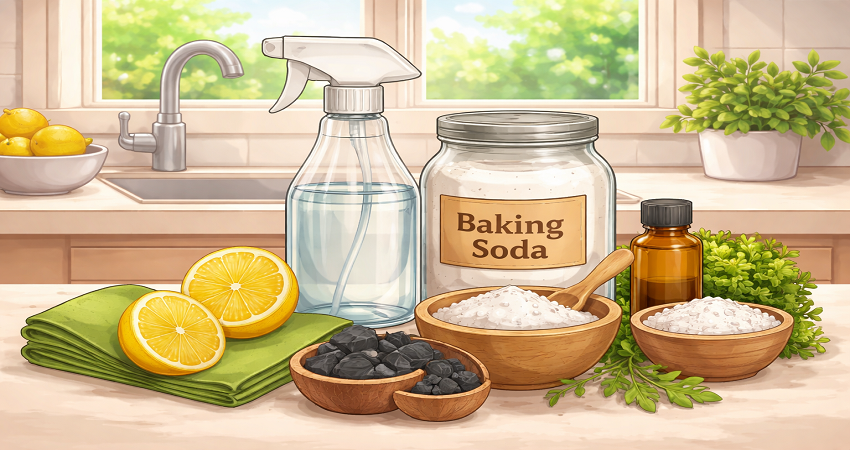
To master the natural cleaning tips for Florida humidity, you only need three core ingredients that are likely already in your pantry. These are the workhorses of any humid-weather cleaning kit.
1. White Vinegar: The Antifungal Powerhouse
White vinegar is arguably the most important tool in your kit. Its acetic acid content is a natural disinfectant that kills roughly 82% of mold species. In Florida, vinegar is your best friend for wiping down window sills, bathroom tiles, and even the exterior of AC vents.
I recommend a 50/50 mix of water and vinegar in a spray bottle. It cuts through the sticky film caused by humidity and leaves surfaces sanitized without a chemical residue.
2. Baking Soda: The Moisture & Odor Absorber
Baking soda (sodium bicarbonate) is chemically alkaline, making it perfect for neutralizing the acidic odors produced by mildew. More importantly, it is a desiccant, meaning it naturally draws moisture out of the air.
Keeping a small open box or bowl of baking soda in your Florida closets can prevent that “old basement” smell from taking over your clothes. For a deeper clean, see our daily cleaning routine for tips on using baking soda on carpets.
3. Lemon Juice: The Natural Degreaser
Citric acid is a powerful cleaning agent. In humid environments, grease and dust combine to form a stubborn grime on kitchen surfaces. Lemon juice breaks this bond effortlessly while providing a fresh, uplifting scent that masks the “mustiness” of high-humidity days. It’s also excellent for polishing chrome fixtures that may be prone to salt-air pitting if you live near the coast.
Specialized Strategies for Common Florida Problems
Beyond the basics, certain areas of a Florida home require a more targeted natural approach. Here is how to handle the most common humidity-related issues:
Combatting Closet “White Mold”
Closets are the most common sites for mold growth because they often lack air vents. To protect your leather goods and fabrics, use Cedarwood. Not only does cedar smell wonderful, but it is naturally resistant to moisture and pests.
You can also hang small sachets filled with dried lavender and rice. The rice acts as a natural dehumidifier, while the lavender provides antimicrobial benefits. Replace these every 30 days during the summer months.
Sanitizing Air Vents Naturally
Your air vents are the lungs of your Florida home. If they are dusty and damp, they will circulate spores 24/7. Use a microfiber cloth dampened with vinegar and a drop of Tea Tree Oil (a potent natural fungicide) to wipe the grates.
This creates a temporary barrier that mold spores find difficult to grow on. For a more intensive look at this process, refer to our guide on how to clean air vents in Florida humidity.
Floor Care in High-Grit Environments
Florida sand is abrasive. When mixed with humidity, it creates a “grind” that ruins floor finishes. For tile floors, common in Florida for their cooling properties, avoid waxy cleaners which trap moisture. Instead, use a gallon of warm water with a half-cup of vinegar.
It dries quickly, preventing the “slippery damp” feeling common after mopping in humid weather. You can find more detail in our tile floor cleaning guide.
Natural Ingredients Vs. Florida Humidity Factors
| Natural Ingredient | Primary Function | Best Use Case in Florida |
|---|---|---|
| White Vinegar | Antifungal & Disinfectant | Bathroom tiles, window sills, and kitchen counters. |
| Baking Soda | Moisture Absorber & Deodorizer | Closets, refrigerators, and carpet refreshing. |
| Tea Tree Oil | Potent Fungicide | Adding to vinegar spray for persistent mold spots. |
| Activated Charcoal | Odor & Moisture Filtration | Laundry rooms and mudrooms with high dampness. |
| Hydrogen Peroxide | Oxygen-based Bleach Alternative | Removing mold stains from white grout lines. |
Proactive Airflow: The Best “Natural” Cleaner
One of the best natural tips for Florida humidity isn’t a liquid at all—it’s airflow. Mold hates moving air. During the peak of summer, ensure your ceiling fans are rotating counter-clockwise to push cool air down. Keep interior doors open to allow the AC to circulate air evenly through the house.
If you have a room that feels particularly damp, consider a small “air mover” or a natural rock salt lamp. While the dehumidifying effects of salt lamps are modest, they do help reduce ambient moisture in very small, localized spaces like a desk area.
Handling Laundry in the Tropics
We’ve all experienced it: you leave a load of laundry in the washer for three hours, and it already smells like a swamp. In Florida, you must dry clothes immediately. If they do catch that musty scent, don’t use harsh chemicals. Add half a cup of baking soda to the wash cycle. It neutralizes the odor at the molecular level.
For stubborn “sour” smells in towels, a vinegar rinse cycle followed by drying in the bright Florida sun (a natural UV disinfectant) works wonders. For more information on how odors affect home value, see our mildew smell removal guide.
- Pro Tip: Create a “Florida Fresh” spray by mixing 1 cup of water, 1 tablespoon of vodka (which acts as a natural emulsifier), and 10 drops of Lemon Essential Oil. Mist your curtains and upholstery daily. The alcohol evaporates quickly, taking odors with it, while the lemon leaves a clean, crisp scent.
Frequently Asked Questions (FAQ)
1. Can vinegar damage my Florida home’s surfaces?
While vinegar is a great natural cleaner, its acidity can dull natural stone like marble or granite countertops common in many Florida luxury apartments. For stone, use a mix of Castile soap and water instead.
2. How often should I use these natural tips?
In the high-humidity months (May through October), a weekly wipe-down of high-moisture areas with vinegar is recommended. Moisture-absorbing bowls of baking soda or charcoal should be refreshed every 30 days.
3. Is lemon juice safe for all furniture?
Lemon juice can have a mild bleaching effect if left in direct sunlight. If you are cleaning a wooden table near a bright window, ensure you wipe the lemon juice off thoroughly with a damp cloth.
4. Do essential oils really kill mold?
Tea tree, clove, and cinnamon oils have been scientifically shown to have antifungal properties. While they won’t replace professional remediation for a major leak, they are excellent for daily maintenance and preventing new spores from taking hold.
5. What is the cheapest natural dehumidifier?
Rock salt or activated charcoal. You can buy these in bulk at most hardware stores in Florida. Place them in a mesh bag in your dampest rooms for a low-cost, eco-friendly way to pull moisture from the air.
Conclusion and Next Steps
Maintaining a fresh home in the heart of Florida doesn’t require a cabinet full of toxic chemicals. By understanding the relationship between moisture and your home’s surfaces, you can use natural cleaning tips for Florida humidity to create a healthy, vibrant sanctuary.
Start small: replace your standard bathroom cleaner with a vinegar-based spray this week and notice how much longer the surfaces stay “grit-free.”
Florida living is about enjoying the outdoors, and that starts with a home that breathes well and smells clean. If you find that the humidity has gotten the upper hand and you need a professional “reset,” be sure to check the house cleaning cost in Florida for a service that aligns with your eco-friendly values. Stay cool, stay dry, and enjoy the beauty of our state without the stress of the mess!