
Living in the Sunshine State offers an incredible lifestyle, from the emerald waters of the Gulf to the Atlantic surf. However, Florida’s tropical climate presents a relentless challenge for indoor air management. As a local, you know that the air isn’t just warm—it’s heavy.
This persistent moisture is the primary reason why knowing how to clean air vents in Florida humidity is a vital skill for every homeowner.
Our HVAC systems work harder than almost anywhere else in the country, and when high humidity meets the dust inside your ductwork, it creates a sticky, problematic residue that a simple feather duster cannot handle.
I remember visiting a beautiful home in Naples where the owners couldn’t understand why their brand-new AC was struggling to keep the house cool. Upon inspection, the vent grates were so choked with damp, “caked-on” dust that the airflow was restricted by nearly 40%.
In Florida, dirty vents aren’t just an eyesore; they are a breeding ground for biological growth and a major drain on your wallet.
This guide is designed to provide you with a professional, step-by-step strategy to sanitize your ventilation system, improve your home’s air quality, and keep your cooling costs under control in our unique climate.
The Florida Factor: Why Humidity Changes Everything
In drier states, dust is light and easy to vacuum away. In Florida, humidity levels inside a home can fluctuate, causing microscopic water droplets to bind with household dust, pet dander, and pollen. This creates a “sludge-like” buildup on the interior of your vents.
When the AC kicks on, the cold air hits these damp deposits, often leading to condensation. This cycle of wetting and drying is exactly what mold spores need to colonize your ventilation system.
Furthermore, because we run our air conditioning almost year-round, our vents never get a “break.” This constant circulation means that any contaminants sitting on your vent covers are being blasted into your living room, kitchen, and bedrooms 24/7.
Understanding that Florida dust is “sticky” dust is the first step in choosing the right cleaning agents and methods to keep your home safe.
Health Implications of Neglected Air Vents
Your air vents are the “lungs” of your home. If they are contaminated, every breath your family takes is impacted. In the humid Florida environment, neglected vents often harbor Aspergillus or other common molds that trigger chronic sneezing, itchy eyes, and even more severe respiratory distress. For those with asthma or allergies, the stakes are even higher.
Beyond health, there is the issue of “sick building syndrome.” A musty smell emanating from your vents is often the first sign that moisture has won the battle.
If you are noticing a persistent odor despite cleaning, you may want to check our specialized guide on how to remove mildew smell from Florida houses. Keeping the vents clean is a non-negotiable part of a healthy Florida lifestyle.
Essential Tools for Cleaning Vents in a Humid Climate
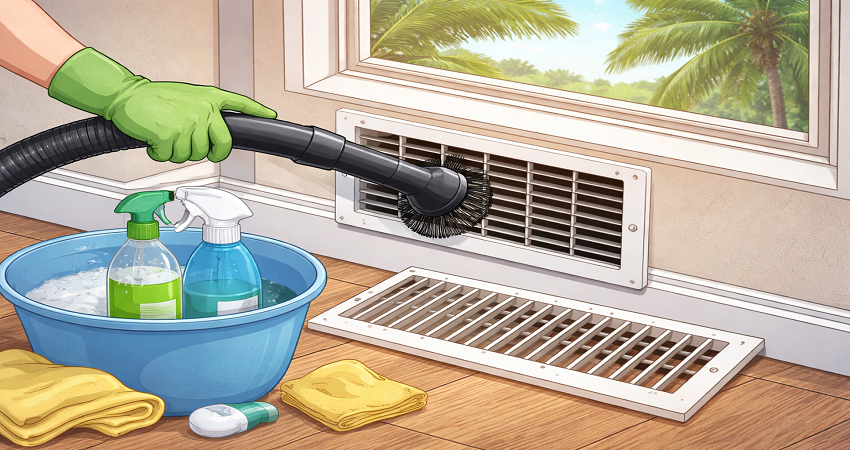
To tackle “sticky” Florida dust, you need more than just a vacuum. I recommend gathering these specific items before you begin:
- Screwdriver: Most Florida vent covers are held by simple Phillips-head screws.
- HEPA-Filter Vacuum: This is critical. A standard vacuum might blow the fine spores back into the air.
- Soft Nylon Brush: Excellent for agitation without scratching the vent finish.
- Degreasing Soap or Vinegar: To break down the sticky humidity-bond.
- Microfiber Cloths: These trap particles instead of spreading them.
- Anti-Microbial Spray: A must-have for Florida to prevent future spores from taking root.
Step-by-Step Guide: How to Clean Air Vents Like a Pro
Follow this exact sequence to ensure you are not just moving dust around, but actually sanitizing the system:
1. System Shutdown
Always turn off your HVAC system at the thermostat before starting. You don’t want the fan to kick on while the cover is off, potentially sucking loose cleaning materials into the return duct or blowing dust into your face.
2. Removing and Soaking the Grates
Unscrew the vent covers. In Florida bathrooms and kitchens, these are often coated in a film of grease and moisture. Don’t just wipe them. Take them to a sink or tub and soak them in warm, soapy water with a splash of white vinegar. This ensures that every slat is cleaned of the sticky residue that attracts mold.
3. The Deep Vacuum Reach
While the covers are soaking, use your vacuum’s hose attachment to reach as far into the duct as possible. Focus on the corners where the “pockets” of humidity allow dust to settle. In Florida, you might see “sweat” marks inside the duct; wipe these dry with a microfiber cloth immediately.
4. Sanitizing the Interior
Dampen a cloth with a 50/50 water and vinegar solution. Reach inside the opening and wipe down the accessible metal or plastic surfaces. This neutralizes odors and kills lingering spores. For more tips on using natural solutions in our climate, see our article on natural cleaning for Florida humidity.
5. Reinstallation and Filter Check
Once the vent covers are 100% dry (never install them damp!), screw them back into place. This is also the perfect time to check your AC filter. In Florida, a filter should be changed every 30-45 days due to the high workload of our systems.
Common Mistakes to Avoid
The most common mistake Florida homeowners make is using too much water. If you leave the inside of your ducts damp after cleaning, the high humidity in the air will prevent it from drying, creating the very mold problem you were trying to prevent. Always use a “damp-wipe” technique followed by a “dry-buff.”
Another error is ignoring the “Return” vents. While we focus on the vents that blow cold air, the return vents (the larger ones) are the ones that pull in the dust.
These actually require more frequent cleaning than the supply vents. If your return vents are high up on the wall, ensure you use a sturdy ladder and never pull on the grates, as the drywall in humid Florida can become brittle.
Comparison: DIY Vs. Professional Duct Cleaning
While cleaning the vent covers and the first few feet of ducting is a great DIY task, sometimes the Florida humidity has caused a deeper issue. Here is how to decide:
| Feature | DIY Vent Cleaning | Professional Duct Cleaning |
|---|---|---|
| Reach | First 2-3 feet of ducting. | Entire system to the air handler. |
| Mold Removal | Surface cleaning only. | Full remediation and sealing. |
| Cost | Under $20 in supplies. | See Florida cleaning costs for estimates. |
Proactive Prevention: Keep Vents Cleaner for Longer
You can significantly reduce the frequency of deep cleaning by managing your indoor environment. Use a dehumidifier to keep your home’s humidity below 50%. This prevents the dust from becoming “sticky.”
Additionally, ensure that your dryer vent is venting properly to the outside; a clogged dryer vent can dump gallons of moisture back into your Florida home every week, which eventually settles in your AC vents.
Consider upgrading to a high-efficiency pleated filter (MERV 8-11). These are designed to catch the fine Florida sand and pollen before it ever reaches your vents.
If you have pets, daily floor maintenance is your friend—less hair on the floor means less hair in the vents. Check our daily cleaning routine for more time-saving tips.
- Expert Advice: If you see black “spider-web” patterns on the ceiling around your vents, this is called “ghosting.” It’s a sign of poor filtration and high humidity. Clean the vent and replace your filter immediately!
Frequently Asked Questions (FAQ)
1. Does the humidity really make vents get dirty faster in Florida?
Yes. In drier climates, dust stays airborne and gets caught in the filter. In Florida, the humidity makes dust heavy and sticky, causing it to “glue” itself to the vent slats and the interior of the ductwork.
2. Can I use bleach to clean the mold off my vents?
I don’t recommend it. Bleach can be corrosive to metal vents and its fumes are harsh in an enclosed space. Vinegar is a safer, natural antifungal that is highly effective for routine Florida maintenance.
3. How often should I check my vents for dust?
In Florida, a monthly visual check is wise. If you see a visible “fuzz” on the slats, it’s time for a cleaning. Usually, a deep clean of the covers every 3 to 4 months is sufficient for most homes.
4. Will cleaning my vents lower my electric bill?
Absolutely. When air flows freely, your AC system reaches the target temperature faster and runs shorter cycles. This reduces wear and tear and saves on monthly utility costs.
5. What if the dust is inside the ceiling where I can’t reach?
If you see significant buildup beyond the first few feet, it’s time to call a professional. In Florida, deep duct cleaning is recommended every 3 to 5 years to maintain a healthy environment.
Conclusion and Final Thoughts
Maintaining a clean ventilation system is one of the most effective ways to thrive in the Florida climate. When you know how to clean air vents in Florida humidity, you aren’t just cleaning your house—you are protecting your family’s health and ensuring your HVAC system lives a long, efficient life. It only takes an hour or two every few months to keep the air in your home as fresh as a coastal breeze.
Don’t let the humidity win. Start with one room today, perhaps the one where you spend the most time, and see the difference a clean vent makes.
For more information on maintaining your Florida home, explore the average cleaning costs or our other localized guides. Stay cool, stay dry, and breathe easy!