Owning a slice of paradise along the Florida coastline is a dream for many. Whether it’s the sugar-white sands of the Panhandle or the vibrant Atlantic shores of Miami, a beach house offers an unparalleled lifestyle. However, as any seasoned coastal resident will tell you, the ocean is a beautiful but relentless neighbor.
The very elements that make beach living so attractive—the salty breeze, the fine sand, and the tropical humidity—are the same forces that can deteriorate your property if not managed correctly.
Mastering specialized Cleaning Tips For Florida Beach Houses is not just about keeping things tidy; it is about protecting a high-value investment from the corrosive power of the sea.
I recently spoke with a property manager in Clearwater who noted that a single season of neglect can cause more damage to a coastal home than five years of wear on an inland property. The “salt film” that settles on every surface acts as a magnet for moisture, leading to a unique form of “sticky grime” that standard cleaning products often fail to penetrate.
In this 2026 guide, we will dive into professional-grade strategies specifically designed for the Florida environment. We’ll cover everything from microscopic sand management to neutralizing salt air, ensuring your sanctuary remains as pristine as the day you moved in.
For those managing rentals, staying ahead of these issues is also key to minimizing your house cleaning cost in Florida over the long term.
The Coastal Trinity: Salt, Sand, and Humidity
In a typical Florida beach house, you aren’t just fighting dirt; you are fighting the “Coastal Trinity.” Understanding how these three elements interact is the foundation of any effective cleaning strategy.
- Salt Air (The Corroder): Airborne salt is hygroscopic, meaning it pulls moisture out of the air. This creates a perpetually damp, salty film on windows, metal fixtures, and even electronics, leading to rapid oxidation and rust.
- Fine Sand (The Abrasive): Florida sand is often composed of tiny quartz or shell fragments. When tracked onto hardwood or tile, it acts like sandpaper, stripping away finishes with every footstep.
- Humidity (The Catalyst): With Florida’s humidity often hovering above 80%, any organic material—like cotton curtains or wooden furniture—can become a breeding ground for mold if the “salt-moisture” bond isn’t broken regularly.
Strategy 1: The “Sand Defense” Protocol
The best Cleaning Tips For Florida Beach Houses always start at the front door. If sand never enters the home, it can’t damage your floors.
- The Multi-Layer Entry: Use a “coarse” outdoor mat to knock off large clumps, followed by a “water-hog” indoor mat to trap fine dust. Many Florida homeowners are now installing outdoor “rinse stations” or foot baths to ensure the beach stays outside. Inside the home, switch to a high-suction vacuum with a HEPA filter specifically designed for fine particulates. Traditional sweeping often just kicks the microscopic sand back into the air, where it eventually settles on your furniture.
Strategy 2: Neutralizing the “Salt Film”
You cannot simply “dust” a beach house. Because of the humidity, the salt creates a tacky layer that requires a chemical neutralizer.
- The Vinegar Solution: For windows and non-porous surfaces, a 50/50 mix of white vinegar and distilled water is your best friend. The acetic acid in the vinegar breaks the ionic bond of the salt, allowing it to be wiped away without streaking. This is particularly vital for your coastal window cleaning routine. On metal fixtures (like door handles and hinges), a light wipe with a microfiber cloth dipped in fresh water daily can prevent the “pitting” that eventually leads to permanent rust.
Flooring Maintenance: Protecting Your Foundation
The choice of flooring in a beach house determines your cleaning workload. While hardwood is beautiful, it is highly susceptible to the abrasive nature of sand and the warping power of humidity.
| Floor Type | The “Beach House” Threat | Maintenance Tip |
|---|---|---|
| Porcelain Tile | Sand in grout lines. | Use a steam mop to lift sand out of porous grout. |
| Luxury Vinyl Plank | Scratches from fine grit. | Daily dry-mopping with a microfiber pad. |
| Engineered Wood | Humidity-driven swelling. | Maintain AC at 72°F to stabilize indoor moisture. |
| Natural Stone | Salt etching. | Apply a high-quality sealer every 6 months. |
Strategy 3: HVAC and Air Quality Management
In a beach house, your HVAC system works twice as hard. It’s not just cooling the air; it’s acting as a giant dehumidifier and salt filter.
One of the most overlooked Cleaning Tips For Florida Beach Houses is the monthly replacement of air filters. Salt-laden air can quickly clog standard filters, causing the system to freeze or fail. Additionally, because the air is recycled, any mold spores in the vents will spread quickly.
We recommend a professional air vent cleaning at least once a year for coastal properties to ensure the “musty” beach smell doesn’t become permanent.
Upholstery and Fabrics: Fighting the “Musty” Smell
Fabrics in beach houses act like sponges for salt air. This leads to that classic “damp” feeling on sofas and beds.
- Choose Performance Fabrics: Materials like Sunbrella are designed to resist moisture and salt.
- Baking Soda Refresh: Once a week, sprinkle baking soda on upholstered furniture, let it sit for 30 minutes, and vacuum. This pulls out the moisture and neutralizes odors.
- Dehumidify: Keep your indoor humidity below 50% to prevent the “salt-damp” effect on your linens. If you’re struggling with persistent odors, our mildew removal guide offers deeper solutions.
Kitchen and Appliance Care in Salty Air
Stainless steel appliances are a staple of modern Florida kitchens, but they are highly prone to “tea staining” (small brown rust spots) in coastal environments.
- The Protection Hack: After cleaning your stainless steel with a specialized cleaner, apply a very thin layer of lemon oil or a dedicated stainless steel protectant. This creates a microscopic barrier that prevents salt particles from touching the metal surface. For deep cleaning tips on the heart of your home, see our guide on the best way to clean greasy kitchens.
Pro Tip: Don’t forget the “invisible” salt! Wipe down the *underside* of your outdoor tables and chairs. Salt accumulates there and isn’t washed away by rain, leading to structural failure of the furniture over time.
Exterior Maintenance: The Freshwater Rinse
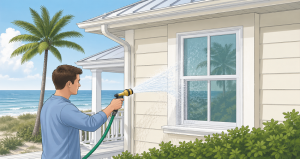
The exterior of your home takes the brunt of the Atlantic or Gulf spray. The simplest and most effective maintenance tip is the “Weekly Freshwater Flush.” Use a hose to rinse down your siding, windows, and decks every Sunday evening.
This washes away the salt before it has a chance to “cure” under the intense Monday morning sun. This simple habit can double the life of your exterior paint and window seals.
Frequently Asked Questions (FAQ)
1. Why do my floors always feel “tacky” or sticky?
This is caused by salt residue attracting humidity. If you mop with too much soap, the soap bonds with the salt and creates a film. Switch to a vinegar-and-water rinse to “strip” the salt away.
2. Can I use a pressure washer on my beach house exterior?
Use caution. High pressure can force salt-laden water deep into your wall cavities or under the siding, leading to hidden mold. A “soft wash” or standard garden hose is safer for regular maintenance.
3. How do I get the sand out of my area rugs?
In Florida, we recommend “beating” rugs outside the old-fashioned way once a month. Vacuums often can’t pull the heavy sand particles from the base of the rug fibers.
4. What is the best way to clean “salt-fogged” glass?
If a vinegar wash doesn’t work, the glass may be etched. A specialized glass polishing compound can sometimes restore the clarity, but prevention with regular cleaning is best.
5. How do I protect my electronics from salt air?
Keep windows closed during high-wind days and ensure your home is well-sealed. For outdoor TVs, always use a custom-fit, weather-resistant cover when not in use.
Conclusion
Effective Cleaning Tips For Florida Beach Houses are all about consistency and neutralizing the environment. While the ocean presents unique challenges, a proactive routine focused on sand defense and salt neutralization will keep your home healthy and vibrant for decades. By integrating these professional strategies, you spend less time scrubbing and more time enjoying the sunset.
If the task of deep-cleaning your coastal retreat feels overwhelming, you can always explore apartment cleaning options or professional services that specialize in beach house care.
Remember, in Florida, maintenance is an investment, not just a chore. Reclaim your view, protect your surfaces, and enjoy the best of Florida living!
Your Weekend Challenge: Give your ocean-facing windows a vinegar rinse and your exterior fixtures a freshwater flush this Sunday—your home will thank you!