How to Clean a Dishwasher Filter (Step-by-Step Guide)
A dishwasher should make cleaning dishes easier, but a dirty filter can leave food particles on plates, cause unpleasant odors, and interfere with cleaning performance. Fortunately, cleaning a removable dishwasher filter is usually a straightforward household maintenance task that requires only a few basic supplies.
If you have noticed cloudy dishes, bits of food after a wash cycle, or a bad smell when you open the dishwasher, checking the filter is a sensible first step.
This guide explains how to clean a dishwasher filter, where to find it, which supplies to use, how often to clean it, and what to do if the dishwasher still does not work properly. Because filter designs vary, always follow your appliance manufacturer’s instructions before removing any parts.
Dishwasher Drain Filter: 7 Easy Tips for a Spotless Clean
Why Is Cleaning a Dishwasher Filter Important?
The dishwasher filter catches food particles and other debris during a wash cycle. Depending on the appliance, it may also help prevent debris from entering parts of the drainage or circulation system.
Over time, grease, food residue, and other deposits can collect on the filter. Regular inspection and cleaning help keep the filtration system working as intended.
Cleaning the filter may help with:
- Cleaner dishes: Removing trapped debris can reduce the chance of food particles returning to dishes during a wash.
- Fewer unpleasant odors: Food residue left in a damp dishwasher can contribute to bad smells.
- Better water circulation: A heavily soiled filter may interfere with normal washing performance.
- Routine appliance care: Checking the filter can help you notice debris buildup or damage before it becomes a bigger concern.
A dirty filter is not the only possible cause of poor cleaning or drainage problems. Spray arms, detergent, water supply, loading habits, and other components can also affect results.
What You Need to Clean a Dishwasher Filter
Gather these supplies before starting:
- Warm running water
- A soft cleaning brush or old toothbrush
- A soft sponge or cloth
- Mild dish soap, if permitted by the manufacturer’s instructions
- A towel for wiping up water
- Household gloves, if preferred
You usually do not need specialized cleaning equipment for routine filter maintenance.
Avoid wire brushes, steel wool, and abrasive scouring pads. These can damage some filter materials. Do not use harsh chemicals or mix cleaning products.
How to Clean a Dishwasher Filter in 7 Easy Steps
Step 1: Turn Off the Dishwasher
Make sure the dishwasher is not running. Open the door and allow hot components and water to cool before reaching inside.
If you need to inspect an area containing standing water, broken glass, or sharp debris, proceed carefully. Do not put your fingers into an inaccessible drain opening or dismantle pump components.
Step 2: Remove the Bottom Rack
Slide the lower dish rack out of the dishwasher. If necessary, remove it according to the instructions in your owner’s manual.
Look at the bottom of the dishwasher tub, particularly around the drain area and beneath the lower spray arm. On many models, the filter is located here.
The exact position depends on the make and model. Some dishwashers have removable cylindrical or mesh filters, while others use a different filtration system.
Step 3: Remove the Filter Carefully
Check your owner’s manual for the correct removal method. Many removable filters unlock by turning, then lift out of the filter housing.
Other models use clips or a different mechanism.
Do not force the filter if it will not move. Applying excessive pressure may break a locking tab or damage the assembly. If you cannot identify the filter or determine how it releases, consult the manufacturer’s support page or manual.
Before removing it, take a quick photo of how the filter sits in place. This can help you reinstall it correctly.
Step 4: Remove Loose Food Debris
Hold the filter over a trash can or sink and remove visible food particles. Dispose of solid debris in the trash rather than pushing it into the sink drain.
Check the filter’s mesh and crevices for trapped residue. If you see broken glass or sharp objects, avoid handling them directly.
Do not remove additional dishwasher components unless the manufacturer recommends doing so.
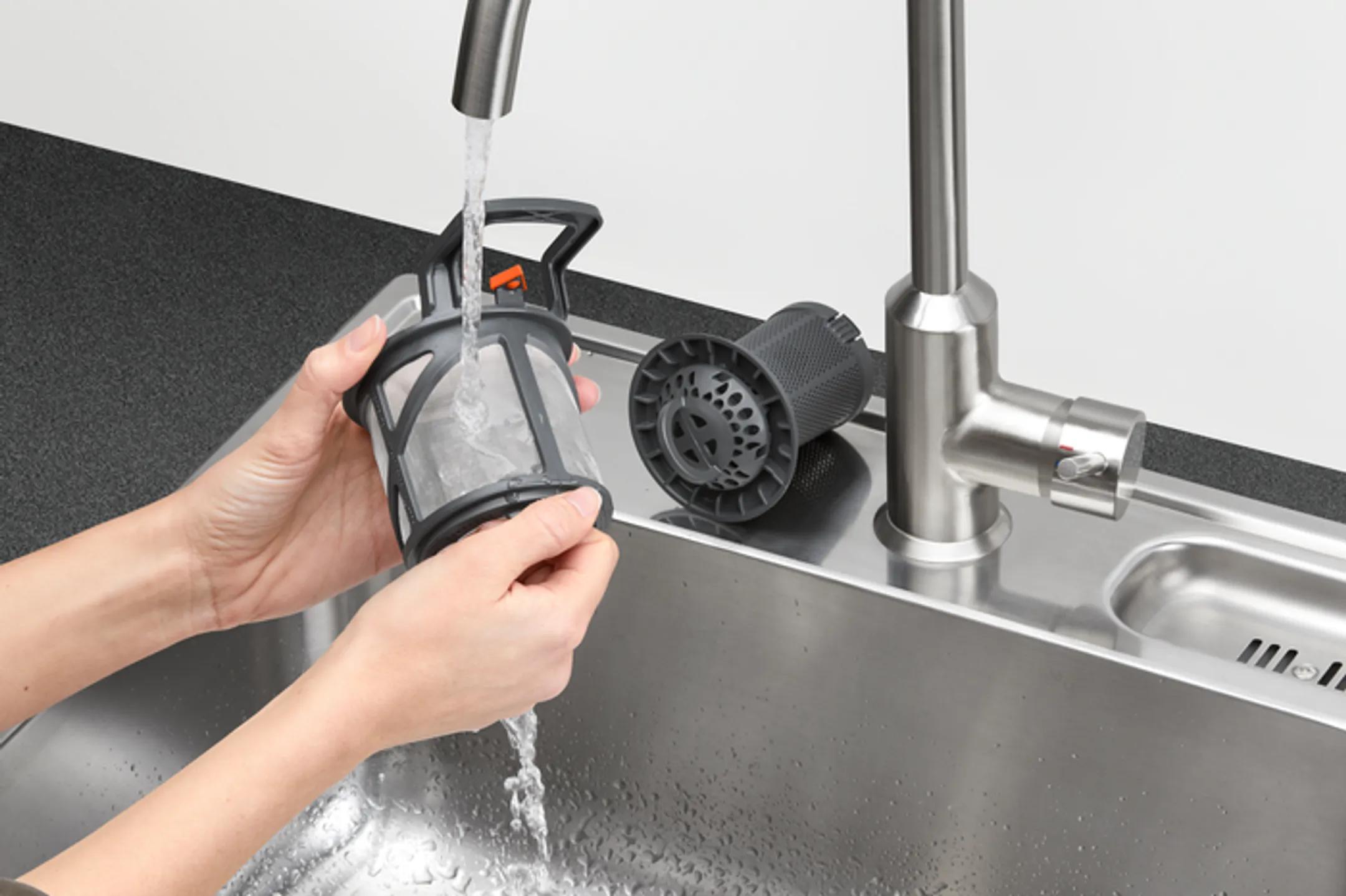
Step 5: Rinse and Gently Scrub the Filter
Rinse the removable filter under warm running water to loosen food particles.
Use a soft brush or sponge to clean the mesh and other accessible surfaces. If the filter has stubborn residue, use a little mild dish soap only if the manufacturer permits it, then rinse thoroughly.
For mineral deposits, follow the appliance manufacturer’s recommendations. Some deposits may require a different cleaning method.
Avoid abrasive tools, aggressive scrubbing, and unapproved chemicals. These may damage the filter or its coating.
If the filter appears cracked, warped, or otherwise damaged, check whether a replacement is needed.
Step 6: Clean the Accessible Filter Area
While the filter is removed, inspect the surrounding area for loose food debris. Wipe accessible surfaces with a damp cloth.
Keep debris out of the drain opening. Do not pour large amounts of water into the filter housing or reach into the pump unless your manual specifically provides instructions for that task.
If you find standing water that does not drain, repeated drainage errors, or an obstruction you cannot safely reach, consult the manufacturer’s troubleshooting instructions.
Step 7: Reinstall the Filter Securely
Place the filter back in its original position and lock it according to the manufacturer’s instructions. Check that all filter components are properly seated and that the locking mechanism is secure.
Return the bottom rack to the dishwasher.
Never run the dishwasher with a required filter missing or incorrectly installed. A loose or improperly fitted filter may allow debris to pass into areas it is designed to protect.
Once everything is reassembled, run a suitable wash cycle if recommended by your appliance manual. Check the next load for normal cleaning results and any unusual odors or drainage issues.
How Often Should You Clean a Dishwasher Filter?
The best cleaning schedule depends on the appliance, how frequently it is used, and the amount of food residue entering the dishwasher.
For many dishwashers with removable filters, checking the filter regularly and cleaning it approximately once a month is a practical starting point. Some manufacturers recommend different intervals, so your owner’s manual should take priority.
You may need to inspect it more often if you:
- Run the dishwasher daily.
- Frequently wash dishes with substantial food residue.
- Notice unpleasant odors.
- Find visible buildup on the filter.
- See food particles remaining on otherwise clean dishes.
Some models use self-cleaning or maintenance-free filtration systems. These may not require the same routine cleaning procedure as a removable filter. Follow the instructions for your specific model rather than assuming every dishwasher has the same design.
Can You Clean a Dishwasher Filter With Vinegar?
Vinegar is often mentioned in household cleaning advice, but it is not necessary for routine dishwasher filter cleaning.
For most removable filters, rinsing with water and gently brushing away debris is the appropriate starting point. Use soap or a method for mineral deposits only when permitted by the manufacturer.
If you want to use vinegar to clean or deodorize the dishwasher interior, first check your appliance manual. Some manufacturers allow specific vinegar-cleaning methods, while others caution against certain products or procedures.
Never mix vinegar with bleach or other cleaning chemicals. Combining household cleaners can release hazardous gases or cause other harmful reactions.
Signs Your Dishwasher Filter Needs Cleaning
Watch for these common warning signs:
1. Food Particles on Clean Dishes
If plates or utensils have food residue after a cycle, inspect the filter and spray arms. Also check that dishes are loaded correctly and that the appropriate detergent is being used.
2. An Unpleasant Smell
A sour or rotten-food odor may indicate trapped food debris. Check the filter and accessible interior surfaces, and remove visible residue.
If the smell persists after cleaning, inspect the manufacturer’s troubleshooting guidance.
3. Poor Cleaning Performance
A dirty filter can contribute to poor washing results, but it is not the only possible cause. Incorrect loading, blocked spray-arm openings, detergent problems, or water-supply issues may also be responsible.
4. Water Remaining in the Dishwasher
A small amount of water in some parts of the sump may be normal, depending on the model. However, substantial standing water or repeated drainage errors may indicate a blockage or another mechanical issue.
Clean the filter if the manual recommends it, then follow the manufacturer’s drainage troubleshooting steps.
Common Dishwasher Filter Cleaning Mistakes to Avoid
Keep these mistakes in mind when maintaining your dishwasher.
- Forcing the filter out: Different models have different locking mechanisms. Check the manual before turning or pulling.
- Using abrasive tools: Steel wool and harsh scouring pads can damage filter materials.
- Using unapproved chemicals: Strong cleaners may damage components and can create safety hazards.
- Ignoring the filter’s locking mechanism: A filter that is not securely installed may not protect the appliance properly.
- Assuming every dishwasher has a removable filter: Some systems require a different maintenance procedure.
- Cleaning only when a problem appears: Regular inspection can help you notice residue before it builds up substantially.
- Ignoring persistent symptoms: If odors, dirty dishes, leaks, or drainage problems continue, investigate other possible causes rather than repeatedly cleaning the same filter.
Simple Dishwasher Filter Maintenance Checklist
Use this quick checklist during routine kitchen cleaning:
-
Check the filter for visible food debris.
-
Remove and rinse the filter if the manual permits it.
-
Gently brush away stubborn residue with a soft brush.
-
Wipe accessible surfaces around the filter.
-
Check the filter for damage.
-
Reinstall and lock the filter correctly.
-
Check the next wash cycle for normal performance.
Keep your dishwasher’s maintenance instructions somewhere easy to find so you can follow the correct procedure for your model.
Frequently Asked Questions
Where is the dishwasher filter located?
On many dishwashers, the filter is at the bottom of the tub, beneath the lower rack and near the drain or lower spray arm. Its exact position and design vary by model.
Can I clean my dishwasher filter without removing it?
You can wipe accessible surfaces and remove loose debris, but thorough cleaning of a removable filter generally requires taking it out as directed by the manufacturer. Do not force a filter that is not designed to be removed.
Should I use hot or cold water to clean the filter?
Warm running water is generally suitable for rinsing many removable filters. Follow your appliance manufacturer’s instructions, and avoid exposing yourself to excessively hot water.
Can a dirty dishwasher filter cause bad smells?
Yes. Trapped food residue can contribute to unpleasant odors. Cleaning the filter and accessible interior surfaces may help, but persistent smells can have other causes.
How often should I clean a dishwasher filter?
For many removable-filter models, checking and cleaning it about once a month is a reasonable starting point. Follow the manufacturer’s recommended schedule, particularly if your dishwasher uses a different filtration system.
What if my dishwasher filter will not come out?
Stop rather than forcing it. Check the owner’s manual for the correct release mechanism and model-specific instructions. Contact the manufacturer if you still cannot remove it safely.
Can I run my dishwasher without its filter?
Do not operate the dishwasher without a required filter properly installed. Consult the manual if you are unsure whether your model has a removable filter or a maintenance-free filtration system.
Why are my dishes still dirty after cleaning the filter?
The filter may not be the only issue. Check spray-arm openings, loading arrangement, detergent use, and the appliance’s troubleshooting instructions. If poor performance continues, professional service may be necessary.
Final Thoughts
Cleaning a dishwasher filter is a simple maintenance task that can help reduce food residue, prevent some unpleasant odors, and support normal washing performance. Start by checking your owner’s manual, remove only the components designed to be removed, rinse and gently brush the filter, and reinstall it securely.
A regular inspection schedule is easier than waiting until a problem develops. If cleaning the filter does not resolve persistent odors, poor cleaning, or drainage problems, consult your manufacturer’s troubleshooting guide before attempting more involved repairs.
1 thought on “How to Clean a Dishwasher Filter: 7 Easy Steps”