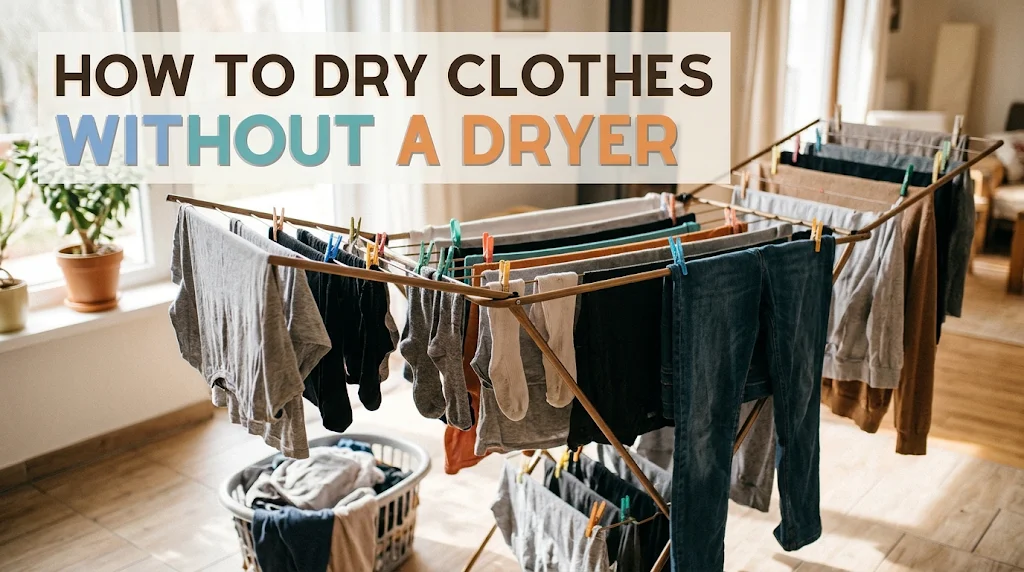
Learning how to dry clothes without dryer can save electricity, protect delicate fabrics, and make laundry easier when you do not have access to a traditional tumble dryer. Whether you live in a small apartment, want to reduce energy costs, or need to dry clothes during rainy weather, several simple methods can help you get the job done.
Air drying allows moisture to evaporate naturally from fabric. Proper airflow, suitable temperatures, and lower humidity can help speed up the process. The key is to remove excess water before hanging your laundry and give each garment enough room to dry.
In this guide, you will discover how to dry clothes without dryer using indoor and outdoor methods, household items, and practical techniques that help prevent unpleasant odors.
How to Dry Clothes Without Dryer: 9 Effective Methods
You do not need expensive equipment to dry laundry effectively. These nine practical methods can help you dry clothes using items and spaces you may already have at home.
1. Use a Clothes Drying Rack
A clothes drying rack is one of the easiest ways to dry clothes without dryer. It provides multiple hanging surfaces while allowing air to circulate around wet garments.
To get better results:
- Shake each garment before placing it on the rack.
- Spread clothes across separate bars instead of stacking them.
- Leave small gaps between individual items.
- Place thicker garments where air can reach both sides.
- Turn larger items occasionally to expose damp areas.
Choose a sturdy rack that can support wet clothing without bending or tipping over.
For apartments and smaller homes, a folding drying rack is especially useful because it can be stored when not in use.
2. Hang Clothes Outside in Fresh Air
Outdoor air drying is often one of the most effective ways to dry clothes naturally.
If the weather is suitable, hang your clothes on a clothesline, balcony drying rack, or outdoor garment stand.
Sunlight provides warmth, while moving air helps moisture evaporate from the fabric. However, strong sunlight may fade some colored materials over time.
Follow these outdoor drying tips:
- Choose a location with good airflow.
- Avoid overcrowding the clothesline.
- Use clothespins to secure garments.
- Turn thicker clothing when necessary.
- Move delicate or dark-colored fabrics away from prolonged direct sunlight.
In hot and sunny areas of Florida, outdoor drying can be convenient. However, high humidity, rain, and limited airflow may slow the process.
Check the local weather before hanging an entire load outside.
3. Use a Fan to Speed Up Drying
A fan can help dry clothes faster by moving air across wet fabric.
This method is especially useful when learning how to dry clothes without dryer indoors or when outdoor weather is unsuitable.
Here is how to do it:
- Place a drying rack in a suitable room.
- Spread the garments apart.
- Position a pedestal or oscillating fan at a safe distance.
- Direct airflow across the clothing rather than concentrating it on one small area.
- Turn thicker garments occasionally.
A fan does not remove moisture from the room. It improves air movement, so combining it with proper ventilation or dehumidification can produce better results.
Keep electrical appliances away from dripping water and follow the manufacturer’s safety instructions.
4. Roll Wet Clothes in a Dry Towel
Using a clean, dry towel is a simple way to remove excess moisture before air drying.
This technique works particularly well for smaller garments, lightweight shirts, and delicate clothing that should not be twisted or wrung aggressively.
Follow these steps:
- Place a clean, absorbent towel on a flat surface.
- Lay the wet garment on top of the towel.
- Roll the towel and garment together.
- Press gently along the roll to transfer moisture into the towel.
- Unroll the fabric and hang it on a drying rack.
Use a second dry towel if the first becomes saturated.
Avoid excessive pressure on delicate fabrics, wool, or garments that require special care.
5. Hang Clothes on Individual Hangers
Regular clothes hangers can help dry shirts, blouses, lightweight sweaters, and other garments without taking up much space.
Instead of folding clothes over a crowded drying rack, hang them individually.
For better results:
- Use sturdy plastic or wooden hangers.
- Straighten collars and sleeves.
- Leave enough space between garments.
- Hang items in a ventilated area.
- Keep clothing away from walls and damp surfaces.
This method can also help reduce wrinkles because garments maintain their natural shape while drying.
Check that the hanger is suitable for wet clothing, especially when dealing with heavier garments.
6. Use a Dehumidifier When Drying Clothes Indoors
Indoor laundry drying releases moisture into the surrounding air. In humid homes, that moisture may contribute to condensation and dampness.
A dehumidifier removes water vapor from the air and can make an indoor drying space more suitable.
To use one effectively:
- Place your clothes on a drying rack.
- Position the dehumidifier in the same room.
- Follow the manufacturer’s recommended clearance and operating instructions.
- Keep the room appropriately enclosed if recommended for your model.
- Empty the water tank or check the drainage system regularly.
A dehumidifier can be particularly useful during humid Florida weather when outdoor air drying is difficult.
Monitor indoor humidity with a hygrometer. The U.S. Environmental Protection Agency recommends keeping indoor relative humidity below 60%, ideally between 30% and 50%.
7. Use a Bathroom With Proper Ventilation
A bathroom can provide a convenient place to dry clothes when outdoor space is unavailable.
However, bathrooms can also become humid, especially after showers.
If you choose this method:
- Use a freestanding drying rack.
- Turn on the bathroom exhaust fan.
- Open a window when outdoor conditions allow.
- Keep clothes separated.
- Avoid placing wet garments directly on bathroom fixtures.
- Make sure the room has enough airflow.
Do not leave wet laundry in a closed, poorly ventilated bathroom for extended periods.
The goal is to remove moisture from the room rather than allow it to collect on windows, walls, and ceilings.
8. Dry Small Clothing Items on a Mesh Rack
Small items such as socks, underwear, baby clothes, and lightweight accessories can dry effectively on a mesh drying rack.
A mesh rack provides a flat surface that allows air to reach more of the fabric.
To use it:
- Remove excess water from each item.
- Arrange garments in a single layer.
- Avoid overlapping fabrics.
- Position the rack in a ventilated location.
- Turn items over when necessary.
This method is particularly helpful for delicate garments that should not be stretched or hung from clips.
Always check garment care labels before selecting a drying method.
9. Take Advantage of Warm, Well-Ventilated Rooms
A moderately warm room with good airflow can help clothes dry more efficiently than a cold, stagnant space.
You can position a drying rack in a naturally warmer area of your home, provided it is safe and properly ventilated.
Keep these points in mind:
- Avoid placing clothes directly against heating equipment.
- Do not cover heaters, vents, or electrical appliances.
- Keep garments away from open flames.
- Maintain reasonable airflow.
- Use a dehumidifier when indoor humidity becomes excessive.
Never use an unvented fuel-burning heater as a clothes-drying solution. Such heaters can add moisture and introduce combustion pollutants into indoor air.
How to Dry Clothes Without Dryer Indoors Without Creating Musty Smells
Drying clothes indoors is convenient, but moisture management is important.
When wet laundry releases water into a room, indoor humidity can increase. If the room has inadequate ventilation, moisture may collect on colder surfaces and contribute to condensation and mold problems.
The following habits can help:
Improve Air Circulation
Avoid placing a drying rack in a tightly enclosed corner. Leave space around the rack so air can move freely.
A pedestal or ceiling fan can help circulate air throughout the room.
Control Indoor Humidity
Use a hygrometer to monitor indoor humidity.
According to the EPA, indoor relative humidity should remain below 60%, with 30% to 50% being the preferred range when possible.
A dehumidifier or air conditioner may help manage excessive moisture.
Avoid Overloading the Drying Rack
Too many clothes on one rack restrict airflow and slow evaporation.
Separate large loads into smaller groups when necessary.
Make Sure Clothes Are Completely Dry
Check thick seams, waistbands, pockets, collars, and folded areas before putting clothes away.
Never place damp clothing directly into a wardrobe or storage container. Trapped moisture can cause unpleasant odors.
If you regularly wash bulky bedding, read our guide to Adult Weighted Blanket: 7 Easy Cleaning Tips for additional fabric care and drying advice.
For more information about moisture prevention, consult the EPA’s guide to mold, moisture, and your home.
How to Dry Clothes Faster Without a Dryer Overnight
Sometimes you need clean, dry clothing by the following morning. While results depend on the fabric, room conditions, and starting moisture level, these steps can improve your chances.
Before bedtime:
- Run an additional spin cycle if the fabric and washing machine instructions permit it.
- Use a clean, dry towel to absorb excess moisture from suitable garments.
- Hang clothes individually instead of folding them over a rack.
- Leave enough space between each garment.
- Use a fan to improve air circulation.
- Use a dehumidifier if indoor humidity is high.
- Check thicker garments before going to bed.
Lightweight shirts and thin fabrics generally dry faster than jeans, hoodies, and thick cotton towels.
Do not assume every garment will be completely dry by morning. Allow additional time when necessary.
How Long Does It Take to Air Dry Clothes?
There is no universal drying time because several conditions affect evaporation.
| Clothing type | General drying considerations |
|---|---|
| Thin T-shirts | Usually dry faster with good airflow |
| Lightweight shirts | Often dry relatively quickly when hung individually |
| Underwear and socks | Small and lightweight items may dry faster |
| Jeans | Thick seams and heavy fabric take longer |
| Hoodies | Thick material and pockets retain moisture |
| Towels | Dense cotton fibers require more drying time |
| Sweaters | May need flat drying to protect their shape |
These are relative comparisons, not guaranteed drying times. Temperature, humidity, fabric thickness, and ventilation all influence the result.
Common Mistakes to Avoid When Air Drying Clothes
Even simple drying methods can become ineffective when basic precautions are ignored.
Avoid these common mistakes:
- Overcrowding the drying rack: Clothes need enough space for air circulation.
- Leaving laundry in the washing machine: Remove wet clothes promptly to reduce the chance of stale odors.
- Drying everything in a closed room: Poor ventilation allows moisture to accumulate.
- Ignoring fabric care labels: Some materials need flat drying or shade.
- Putting damp clothes away: Moisture trapped in wardrobes can lead to musty odors.
- Using direct heat carelessly: Excessive heat can damage fabrics and create safety risks.
- Ignoring indoor condensation: Water collecting on windows or walls may indicate excessive humidity.
Following these precautions can make air drying more effective and help keep your home comfortable.
Frequently Asked Questions
1. What is the fastest way to dry clothes without dryer?
Remove excess water with an appropriate spin cycle, spread clothes on a drying rack, and use a fan to improve airflow. A dehumidifier can also help when indoor humidity is high.
2. Can I dry clothes overnight without a dryer?
Yes, some lightweight garments may dry overnight if they have good airflow and suitable room conditions. Thick clothing may need additional time.
3. Is it safe to dry clothes inside the house?
Yes, when done carefully. Use a well-ventilated space, leave room between garments, and monitor indoor humidity to reduce condensation and moisture problems.
4. Does a fan help clothes dry faster?
Yes. A fan increases air movement around wet garments, which can help moisture evaporate more efficiently. It works best when combined with proper ventilation.
5. Can I use an air conditioner to dry clothes?
An air conditioner can help in some situations because cooling systems remove moisture from indoor air during normal operation. Some models also include a dedicated dry mode. Check the manufacturer’s instructions for your specific unit.
6. Why do clothes smell musty after air drying?
Musty odors can develop when clothes remain damp for too long, are crowded together, or dry in poorly ventilated spaces. Improve airflow and make sure garments are completely dry before storing them.
7. Is air drying better for clothes than using a dryer?
Air drying can reduce exposure to the mechanical tumbling and heat associated with conventional dryers. It may help extend the life of some garments, although results depend on the fabric and drying conditions.
Final Thoughts
Learning how to dry clothes without dryer gives you practical alternatives for everyday laundry. Clothes drying racks, outdoor clotheslines, fans, towel rolling, and dehumidifiers can all help when used appropriately.
The most important factors are removing excess water, allowing enough airflow, and controlling indoor moisture. Choose a drying method that suits your available space, local weather, and garment care instructions.
With a little preparation, you can keep your laundry fresh and dry without relying on a traditional clothes dryer.
2 thoughts on “How to Dry Clothes Without a Dryer: 9 Easy Tips”