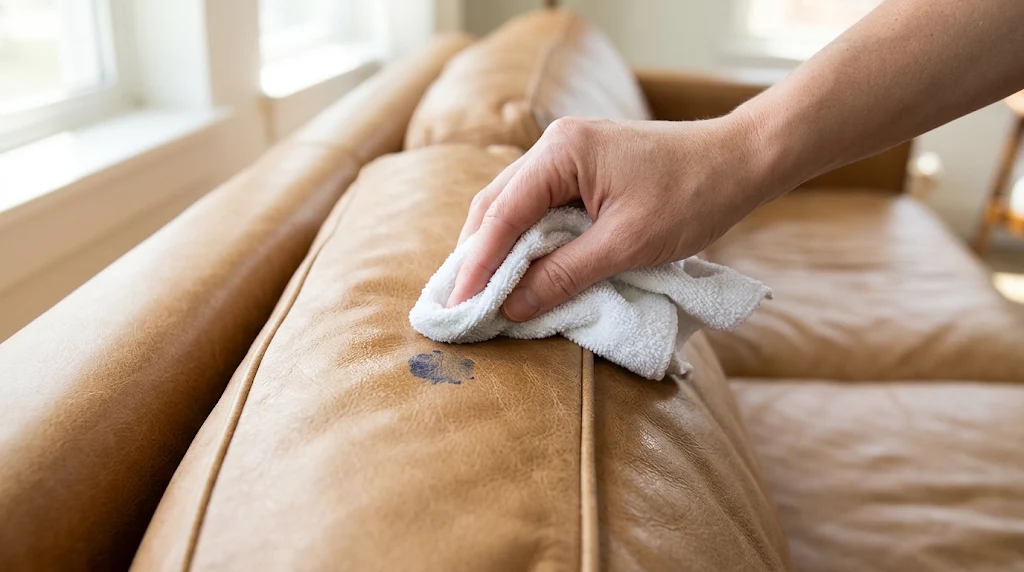
An ink stain on your favorite leather sofa can be frustrating, especially when it appears on white, cream, or light-colored upholstery. Whether the mark comes from a leaking ballpoint pen, a permanent marker, or a child’s drawing, knowing how to remove ink from leather couch surfaces can help you avoid unnecessary damage.
The most important thing is to identify the type of leather before applying a cleaning product. Finished leather, aniline leather, suede, nubuck, and faux leather have different cleaning requirements.
Fresh ink marks are generally easier to treat than older stains. However, using the wrong household cleaner or scrubbing too aggressively can make the problem worse.
In this guide, you will learn how to remove ink from leather couch surfaces safely, which cleaning products to consider, how to handle dried ink, and when professional cleaning is the better option.
1. Identify Your Leather Couch Type Before Cleaning
Before attempting ink removal, determine what material your couch is made from. Different leather finishes have different levels of resistance to moisture and cleaning chemicals.
According to LeatherCare’s guide to removing ink and ballpoint pen marks from leather, identifying the leather type is an essential first step because an unsuitable cleaning method can increase the damage.
Finished or Pigmented Leather
Finished leather has a protective color coating on its surface. It is commonly used for household sofas because the coating provides some resistance to everyday dirt and stains.
A leather-specific ink remover may work on this material when the furniture manufacturer permits it.
Aniline and Semi-Aniline Leather
Aniline leather has a natural appearance and absorbs liquids more easily because it has little or no protective surface coating. Semi-aniline leather has a light protective finish but can still be sensitive.
Avoid experimenting with alcohol, household solvents, or strong cleaning products on these surfaces. Consult a leather cleaning specialist if ink is present.
Suede and Nubuck Leather
Suede and nubuck have soft, textured surfaces that require specialized maintenance.
Ordinary leather ink removers and wet cleaning methods may damage their texture or cause discoloration. Professional treatment is usually the safer option for noticeable ink stains.
Faux Leather
Faux leather is made from synthetic materials rather than animal hide. Its surface may look similar to finished leather, but its cleaning requirements can differ.
Check the furniture manufacturer’s instructions and use only a cleaner specifically approved for that material.
2. Gather the Right Supplies for Removing Ink
Having the correct supplies ready can help you avoid unnecessary rubbing and repeated cleaning attempts.
Useful supplies include:
- Clean white microfiber cloths
- Cotton swabs
- A leather-specific ink remover approved for your couch
- A suitable leather cleaner
- A soft, clean towel
- Disposable gloves, if recommended by the cleaning product
- Clean water, only when the product instructions require it
Avoid starting with bleach, ammonia, nail polish remover, abrasive sponges, or multipurpose household cleaners.
Not every cleaning product is compatible with leather furniture. Always read the product label and check the manufacturer’s care instructions before using anything.
For additional general cleaning guidance, see the BISSELL guide to cleaning a leather couch.
3. How to Remove Ink from Leather Couch: 7 Safe Steps
Once you have identified the leather type and prepared your supplies, follow these steps for compatible finished leather.
Step 1: Act Quickly When You Notice the Ink
Fresh ink stains are generally easier to treat because the ink has had less time to penetrate the surface.
If the mark is still wet, use a clean, dry white cloth to gently blot excess ink.
Do not rub the stain. Rubbing can spread the ink over a larger area and make the affected section more difficult to clean.
Use a fresh part of the cloth each time you blot so that transferred ink does not return to the leather.
Step 2: Check the Manufacturer’s Cleaning Instructions
Before applying an ink remover, check the care label or contact the furniture manufacturer.
Find out whether the couch is made from finished leather and which cleaning products are approved.
Some furniture manufacturers specifically recommend dedicated ink-removal products for compatible leather surfaces. Others restrict the use of solvents and household cleaning chemicals.
If you cannot confirm the leather type, avoid experimenting.
Step 3: Test the Ink Remover in a Hidden Area
Never apply a new cleaning product directly to a visible ink stain without testing it first.
Choose a small, inconspicuous area, such as the back or underside of a removable cushion.
Apply the product according to its instructions and allow the test area to dry as directed.
Check for:
- Color transfer onto the cloth
- Unexpected darkening
- Changes in texture
- Sticky or damaged surface coating
- Discoloration
If you notice any unusual reaction, stop immediately.
A successful spot test does not guarantee that every leather surface will react identically, but it helps identify obvious compatibility problems.
Step 4: Apply a Leather-Specific Ink Remover
For compatible finished leather, use an ink remover specifically designed for leather upholstery.
Follow the manufacturer’s application instructions carefully.
A cautious approach is to:
- Apply a small amount of the approved product using the recommended applicator.
- Work only on the affected ink mark.
- Allow the product to work for the specified time.
- Avoid applying unnecessary pressure.
- Use a clean white cloth to remove dissolved ink and product residue as directed.
- Repeat only if the product instructions permit another application.
Some specialized products are designed to lift ink gradually rather than requiring aggressive scrubbing.
For example, LeatherCare’s ink and dye removal instructions explain how specialized products can be used on suitable pigmented leather. However, their recommendations should not be applied automatically to aniline leather, suede, or nubuck.
Step 5: Clean Away Any Remaining Product Residue
After the ink has been treated, follow the cleaner’s instructions for removing any remaining product.
If the label recommends wiping the area, use a clean, soft cloth and the specified cleaning method.
Avoid soaking the leather or allowing liquid to collect around seams and stitching.
If ink continues transferring onto the cloth, change to a clean section rather than spreading the residue across the surrounding surface.
Stop if the leather begins losing its color or protective finish.
Step 6: Allow the Leather to Dry Naturally
Once the cleaning process is complete, allow the treated area to dry naturally.
Keep the couch away from direct sunlight, radiators, space heaters, and other concentrated heat sources.
Do not use a hair dryer to speed up drying.
Excessive heat can affect leather’s appearance and condition. Follow the product instructions regarding drying time before using the couch again.
Step 7: Apply a Compatible Leather Conditioner if Recommended
Some finished leather furniture benefits from conditioning after cleaning.
However, conditioning is not necessary for every leather type or every ink-removal product.
Check the furniture manufacturer’s instructions before applying a conditioner.
If conditioning is recommended:
- Choose a conditioner approved for your leather.
- Test it in a hidden area.
- Apply a small amount to a clean cloth.
- Spread it evenly according to the label.
- Remove excess product if instructed.
- Allow the surface to dry or absorb the conditioner as directed.
Avoid applying random oils or household moisturizers to your couch.
4. How to Remove Dried Ink from Leather Couch Surfaces
Dried ink can be more difficult to remove than fresh marks.
Once ink has penetrated the protective coating or entered the leather’s pores, ordinary surface cleaning may not be enough.
Start by identifying the leather type and checking the manufacturer’s recommendations.
For compatible finished leather:
- Avoid scraping dried ink with sharp objects.
- Do not use abrasive pads or stiff brushes.
- Test an approved leather ink remover in a hidden area.
- Follow the product’s instructions without increasing the recommended amount.
- Stop if the leather finish begins changing.
Older ink stains may require professional cleaning, color restoration, or specialized leather repair.
The Lederzentrum guide to removing ballpoint pen and ink marks from leather explains that older marks can be particularly difficult to remove without affecting the leather’s original color.
Repeatedly applying stronger household chemicals is not a reliable solution. It may remove the leather’s original color along with the ink.
5. How to Remove Ink from a White Leather Couch
Ink marks are especially noticeable on white and cream-colored furniture.
Although the basic treatment process is similar, light-colored leather requires additional care because discoloration and color transfer are easier to see.
Here are some practical precautions:
- Use clean white cloths to monitor color transfer.
- Test every cleaning product in a hidden area.
- Apply only a leather-specific product approved for the furniture.
- Work carefully around the edges of the ink mark.
- Avoid rubbing the stain into surrounding areas.
- Stop if the white finish begins looking dull or discolored.
Do not assume that bleach, alcohol, or nail polish remover will safely restore white leather.
If the ink has left a dark shadow after cleaning, the surface may need professional color correction rather than additional stain removal.
6. How to Remove Permanent Marker from Leather
Permanent marker stains can be more challenging than ordinary ballpoint pen marks.
The ink formulation, the amount applied, and the type of leather all influence how difficult the mark will be to remove.
For compatible finished leather, check whether the manufacturer-approved ink remover is also suitable for permanent marker stains.
Use the product only according to its instructions.
Avoid trying several different solvents one after another. Mixing cleaning approaches can increase the risk of damaging the leather’s protective coating.
For large marker drawings, deep stains, or marks that have been present for a long time, contact a leather restoration professional.
7. Common Mistakes to Avoid When Removing Ink from Leather
The wrong cleaning method can create a bigger problem than the original stain.
Avoid these common mistakes:
Using Too Much Rubbing Alcohol
Rubbing alcohol may be recommended for certain materials, but it is not universally safe for leather furniture.
It can affect some protective finishes and remove color. Use it only if the furniture manufacturer specifically approves it.
Applying Nail Polish Remover
Nail polish remover may contain acetone or other solvents that can damage leather coatings.
Do not use it as a general-purpose leather ink remover.
Scrubbing the Ink Aggressively
Hard scrubbing can spread the stain and damage the leather’s surface.
Allow a compatible cleaning product to work according to its instructions instead of applying excessive pressure.
Using Too Much Water
Leather is not washable in the same way as ordinary fabric upholstery.
Excessive moisture can cause discoloration or other problems, particularly with porous leather.
Using the Wrong Leather Cleaner
A product designed for finished leather may not be appropriate for suede, nubuck, or unfinished leather.
Always check product compatibility before cleaning.
When Should You Hire a Professional Leather Cleaner?
Some ink stains are too difficult or risky to treat at home.
Consider professional assistance if:
- The ink stain is several days old and deeply embedded.
- The leather is aniline, suede, or nubuck.
- The stain covers a large area.
- The couch has become discolored after an attempted cleaning.
- The protective coating is peeling or damaged.
- An approved ink remover has not produced satisfactory results.
A professional leather cleaner can identify the material, assess the damage, and determine whether cleaning or color restoration is appropriate.
Before hiring someone, ask about their experience with leather upholstery rather than assuming that every general upholstery cleaner specializes in leather restoration.
For additional furniture maintenance advice, read our guide on how to clean leather furniture.
You can also explore our guide to the best leather cleaner and conditioner for furniture when choosing products for routine leather care.
Frequently Asked Questions
1. What is the safest way to remove ink from a leather couch?
For compatible finished leather, use a manufacturer-approved leather ink remover after testing it in a hidden area. Blot fresh excess ink without rubbing, follow the product instructions, and avoid aggressive scrubbing.
2. Can rubbing alcohol remove ink from a leather couch?
Rubbing alcohol may remove certain ink marks, but it can also damage leather finishes and remove color. Do not use it unless your furniture manufacturer specifically approves it.
3. How do you remove ballpoint pen ink from leather?
For compatible finished leather, a specialized leather ink remover may help lift ballpoint pen marks. Test the product first and follow its instructions carefully.
4. Can you remove dried ink from a leather sofa?
Sometimes. However, dried ink is more difficult to remove, especially if it has penetrated the protective finish. Older stains may require professional cleaning or color restoration.
5. How do you remove ink from a white leather couch?
Use only a cleaning product approved for the specific leather finish. Test it in an inconspicuous area and monitor for color changes. Avoid bleach and unapproved solvents.
6. Does vinegar remove ink from leather?
Vinegar is not a reliable universal ink remover for leather. Its acidity may affect some finishes, so use a product specifically formulated for your furniture instead.
7. Can permanent marker be removed from leather?
Some permanent marker stains on finished leather may respond to a specialized leather ink remover. Deep or extensive marks may require professional restoration.
8. Does leather conditioner remove ink stains?
No. Leather conditioner is designed for leather maintenance, not ink removal. Use an appropriate stain-removal product first and condition only if recommended by the furniture manufacturer.
Final Thoughts
Learning how to remove ink from leather couch surfaces starts with identifying the material and choosing a compatible cleaning method.
For fresh marks on finished leather, gently blot excess ink and consider a specialized leather ink remover after performing a hidden-area test. Avoid aggressive scrubbing, unapproved solvents, and excessive moisture.
Dried ink, permanent marker stains, and marks on delicate leather may require professional treatment.
The most important thing is to protect the leather while treating the stain. A careful approach can help preserve your furniture’s appearance and prevent unnecessary damage.