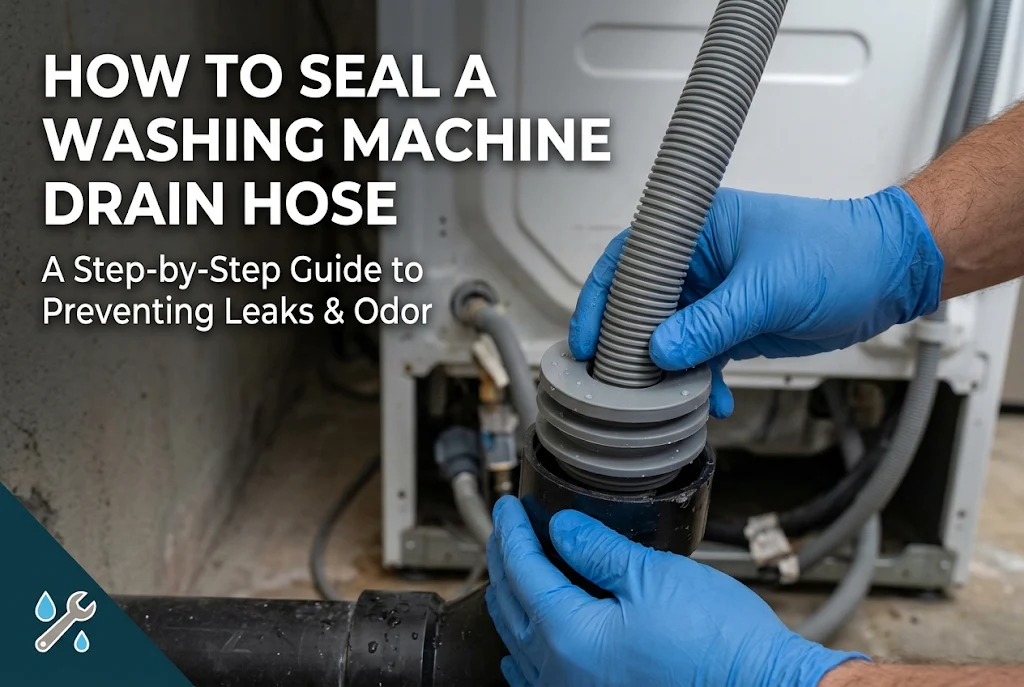
A washing machine drain hose seal plays an important role in keeping your laundry area clean, preventing unwanted water leaks, and managing unpleasant drainage odors. When the connection between a washing machine drain hose and the household drain is loose or incompatible, water may escape onto the floor or odors may enter the laundry room.
However, choosing the correct seal is not simply about finding a rubber ring that fits around a pipe. Different drainage systems require different connection methods, and some washing machine installations must maintain an air gap to prevent water from siphoning out of the appliance.
Whether you are replacing an old seal, installing a new washing machine, or troubleshooting a drainage problem, understanding how these components work can help you make a better decision.
This guide explains the different types of washing machine drain hose seals, how to choose the right one, common installation mistakes, and practical ways to prevent leaks and drainage odors.
What Is a Washing Machine Drain Hose Seal?
A washing machine drain hose seal is a rubber, silicone, or other compatible sealing component designed for a particular drain connection. Depending on the plumbing arrangement, it may help reduce gaps, stabilize a hose connection, or limit unwanted odor movement around a suitable floor-drain fitting.
Some products are designed as flexible rubber grommets, while others use silicone sleeves, adapters, or drain covers.
The correct product depends on the type of drainage system and the washing machine manufacturer’s instructions.
A washing machine drain hose seal should not automatically be treated as a universal airtight connector. Many conventional standpipe installations require an air gap between the drain hose and the standpipe.
Why Is a Drain Hose Seal Important?
A suitable connection component can help address several common laundry-room problems:
- Water leakage: A compatible gasket or connector can help prevent water escaping at a fitting designed to be sealed.
- Unpleasant odors: An appropriate floor-drain cover or odor-control fitting may reduce odors when used with a compatible drainage arrangement.
- Loose connections: A properly sized support or adapter can help keep the hose in its intended position.
- Drainage problems: A correctly configured connection helps the appliance discharge wastewater as designed.
- Laundry room cleanliness: Preventing leaks and unwanted gaps can make the surrounding area easier to maintain.
Remember that a seal cannot repair a cracked drain hose, blocked pipe, damaged drain fitting, or defective washing machine pump.
7 Essential Tips for Choosing a Washing Machine Drain Hose Seal
Choosing the right component is important because washing machine drainage systems do not all use the same connections.
1. Identify Your Washing Machine Drainage System
Before purchasing a washing machine drain hose seal, identify how your appliance releases wastewater.
Most residential washing machines use one of these arrangements:
Standpipe drainage
A standpipe is a vertical drainpipe designed to receive wastewater from the washing machine. The drain hose enters the opening and is usually supported by a curved hose guide or retaining accessory.
For many conventional standpipe arrangements, the hose must remain loose enough to maintain the required air gap.
Laundry sink drainage
Some washing machines discharge wastewater into a utility sink or laundry tub. In this arrangement, a curved hose guide and retaining strap help prevent the hose from slipping out during the drain cycle.
A standpipe sealing plug is not necessarily appropriate for this setup.
Floor drain connection
Some laundry rooms have a dedicated floor drain. These arrangements may use a compatible drain adapter, cover, or odor-control fitting.
The correct component depends on the floor drain’s design. Do not block a required air opening or create an airtight connection unless the appliance and plumbing instructions specifically permit that configuration.
Identifying your drainage arrangement first will help you avoid buying an incompatible product.
You can also review the LG washing machine drain hose installation guide for additional manufacturer-specific installation advice.
2. Measure the Drain Pipe Before Buying a Seal
One of the most common mistakes is purchasing a washing machine drain hose seal without checking the dimensions.
A product that looks suitable may be too loose or too tight for your existing drain opening.
Before purchasing a replacement, check:
- The inside diameter of the drain opening.
- The outside diameter of the drain hose.
- The thickness and shape of the existing gasket, if applicable.
- Whether the fitting is designed for a round, tapered, or threaded connection.
- Whether the product supports your particular drain arrangement.
Manufacturers and replacement-part suppliers may list measurements in inches or millimeters.
For example, a product advertised for a particular pipe opening may not fit another opening simply because both are described as washing machine drain seals.
Measure carefully and compare the dimensions with the product specifications.
If the drain connection is part of a permanent plumbing installation, ask a qualified plumber to confirm compatibility before modifying it.
3. Choose Between Rubber and Silicone Drain Hose Seals
Rubber and silicone are commonly used in flexible sealing products, but their performance depends on the specific material, design, and intended application.
Rubber drain hose seals
Rubber components are commonly used for gaskets, washers, and flexible connectors.
Potential advantages include:
- Flexibility around compatible fittings.
- Availability in different shapes and sizes.
- Suitability for replacement applications when the original specification is known.
Over time, some rubber materials may become brittle, compressed, or damaged.
Silicone drain hose seals
Silicone components are also available for washing machine drain connections and floor-drain accessories.
Potential advantages include:
- Flexibility.
- Resistance to moisture.
- Availability in different shapes and dimensions.
However, silicone products are not automatically compatible with every washing machine or household drain.
When choosing between rubber and silicone, prioritize the manufacturer’s specifications, material suitability, dimensions, and intended use rather than appearance alone.
4. Check Whether the Seal Is Designed for Leak Prevention or Odor Control
Not every washing machine drain hose seal performs the same function.
Some products are designed to fit around a pipe opening, while others are marketed as odor-control drain covers.
Before purchasing, determine which problem you are trying to solve.
For connection leakage: Look for a compatible gasket, hose connector, or replacement fitting designed for the actual leaking joint.
For an unstable hose: Use the manufacturer’s supplied hose guide, retaining strap, or approved support.
For floor-drain odors: Investigate whether the floor drain has a suitable trap and whether an approved odor-control accessory is compatible with its design.
A drain cover may reduce odors in some situations, but it cannot correct a missing, damaged, or improperly installed plumbing trap.
If sewer-like odors persist, have the plumbing system inspected rather than simply covering the drain opening.
5. Maintain the Required Air Gap
This is one of the most important parts of washing machine drain hose installation.
A common misconception is that the washing machine drain hose should always be tightly sealed inside the standpipe.
That is not correct for many standard residential installations.
Whirlpool specifically advises against sealing the drain hose to the standpipe with tape. Its guidance explains that an air gap allows airflow and helps prevent siphoning.
When the hose is pushed too far into the standpipe or sealed airtight, water may continuously drain from the washer while it is filling.
For additional guidance, read the Whirlpool drain hose installation instructions to understand proper hose positioning and prevent drainage problems.
This can lead to poor washing performance and repeated filling cycles.
To avoid this problem:
- Follow the installation instructions for your exact washer model.
- Maintain the specified air gap.
- Do not use tape or improvised sealant to close the standpipe opening.
- Use the supplied hose guide and retaining strap.
- Avoid inserting more hose than the manufacturer permits.
A washing machine drain hose seal should never be used to defeat an air-gap requirement.
6. Inspect the Hose and Drain Connection for Damage
Even a correctly selected seal may not solve a drainage problem if another component is damaged.
Before replacing the seal, inspect the accessible parts of the connection.
Look for:
- Cracks along the drain hose.
- Loose or damaged clamps.
- A distorted rubber gasket.
- Corrosion or damage around a metal fitting.
- Cracks in the drainpipe opening.
- Signs of water collecting around the connection.
- Kinks or flattened sections of hose.
If the hose itself is cracked, replacing only the gasket will not provide a reliable repair.
Use a compatible replacement hose or fitting recommended for your washing machine.
Avoid pulling or twisting the hose aggressively because this can damage the connection at the back of the appliance.
7. Test the Drainage Connection After Installation
After installing a compatible replacement component, test the washing machine before returning to normal use.
First, make sure all connections are positioned according to the appliance instructions.
Reconnect the washer safely and run an appropriate drain or rinse cycle.
Observe the connection while the machine releases wastewater.
Check for:
- Water leaking around the fitting.
- The hose moving or slipping.
- Water overflowing from the standpipe.
- Unusual drainage sounds.
- Water remaining in the washer.
- Continuous filling and draining.
If water escapes, stop the cycle and investigate the problem.
Do not continue operating a washing machine with an active leak. Water can damage flooring, cabinets, and nearby belongings.
How to Install a Washing Machine Drain Hose Seal
The installation method depends on the type of component you purchased.
A replacement gasket for a mechanical fitting requires a different approach from an odor-control floor-drain cover.
For a compatible replacement fitting, use these general precautions:
Step 1: Turn off the washing machine
Stop the appliance and disconnect its power before working around the drain connection. If you need to disconnect plumbing components, follow the manufacturer’s safety instructions.
Step 2: Prepare the surrounding area
Place towels and a shallow container near the hose because residual water may remain inside it.
Step 3: Inspect the existing connection
Check the hose, fitting, and existing gasket for damage. Identify why the original connection is leaking or unstable.
Step 4: Remove the old component if appropriate
Only remove a replaceable gasket or connector when the product instructions allow it. Do not dismantle factory-installed components unnecessarily.
Step 5: Install the compatible replacement
Position the new gasket or adapter according to its instructions. Avoid stretching, twisting, or forcing it into an incompatible opening.
Step 6: Check the drainage arrangement
Make sure the hose is properly supported and that the required air gap is maintained where applicable.
Step 7: Test for leaks
Run an appropriate test cycle and watch the connection while wastewater drains.
If the connection requires changes to permanent plumbing, consult a qualified plumber.
For a more detailed hose-positioning guide, see our existing article: Installing a Washing Machine Drain Hose: 7 Easy Steps.
Common Washing Machine Drain Hose Seal Problems and Solutions
A drainage problem does not always mean that the seal needs replacing.
The following table can help you identify possible causes.
| Problem | Possible cause | Recommended action |
|---|---|---|
| Water leaking around a fitting | Damaged gasket or loose compatible connection | Inspect and replace the correct component |
| Hose slipping out | Missing or damaged support | Use an approved retaining strap |
| Unpleasant drain odors | Trap, vent, or drainage problem | Inspect the plumbing system |
| Washer continuously drains | Siphoning or incorrect hose position | Check the installation instructions |
| Water overflowing from standpipe | Blocked or undersized household drain | Contact a plumber |
| Slow drainage | Kinked hose, obstruction, or pump problem | Inspect accessible components and consult service guidance |
| Seal does not fit | Incorrect dimensions or incompatible design | Confirm measurements and product compatibility |
Why Does My Washing Machine Drain Hose Keep Leaking?
A washing machine drain hose may leak because of a damaged hose, loose fitting, unsuitable gasket, or overflowing household drain.
Start by identifying where the water originates.
If water escapes from a connection designed to use a gasket, inspect the gasket and fitting for damage.
If water rises out of the standpipe, the problem may be a blocked or undersized household drain rather than a defective washing machine drain hose seal.
A plumber can investigate recurring standpipe overflow.
Why Does My Laundry Room Smell Like Sewage?
Persistent sewage-like odors may indicate a problem with the drain trap, plumbing vent, or floor-drain arrangement.
A washing machine drain hose seal alone may not resolve the underlying issue.
Check whether the odor comes from the washing machine, the standpipe, or a nearby floor drain.
If the source is unclear or the smell persists, arrange a plumbing inspection.
How to Maintain Your Washing Machine Drain Hose Connection
Regular inspection can help you identify problems before they cause significant water damage.
Follow these practical maintenance habits:
- Inspect visible drain hose sections periodically.
- Check for cracks and flattened areas.
- Keep the hose free from sharp bends.
- Make sure the hose support remains secure.
- Watch for water around the drain opening after laundry cycles.
- Avoid pushing the washing machine too close to the wall.
- Follow the appliance manufacturer’s cleaning and maintenance recommendations.
If you move the washing machine, check the drain hose position again before using the appliance.
Also, avoid pouring harsh chemical drain cleaners directly into the washing machine or its hose unless the manufacturer specifically approves the product and method.
When Should You Call a Professional?
Some washing machine drainage issues can be resolved by replacing an accessible, compatible hose component.
However, certain problems require professional attention.
Contact a qualified plumber if:
- The standpipe repeatedly overflows.
- Water leaks from inside the wall.
- The drainpipe is cracked or damaged.
- Sewer odors continue despite basic checks.
- You need to modify permanent plumbing.
- You are unsure whether the drain arrangement meets applicable local requirements.
Contact an appliance technician if the washing machine continues to display drainage errors after the hose and accessible connection have been checked.
Avoid opening electrical compartments or dismantling the drain pump unless you have the appropriate training and model-specific instructions.
Frequently Asked Questions
1. What is a washing machine drain hose seal used for?
A washing machine drain hose seal is a compatible rubber, silicone, or other sealing component used for a particular drain connection. Depending on its design, it may help seal a fitting, reduce an unwanted gap, or control odors around a suitable floor-drain opening.
2. Should a washing machine drain hose be sealed tightly?
Not in a conventional standpipe installation that requires an air gap. The hose should be supported securely without creating an airtight connection. Always follow your washing machine manufacturer’s instructions.
3. Are rubber or silicone washing machine drain seals better?
Neither material is universally better. The right choice depends on the connection design, dimensions, material specifications, and intended use.
4. Can a washing machine drain hose seal stop bad odors?
A compatible odor-control fitting may help reduce odors around certain drain openings. However, persistent sewer odors can indicate a problem with the trap, vent, or household plumbing that requires professional attention.
5. How do I know what size drain hose seal to buy?
Measure the relevant pipe opening and hose dimensions. Compare those measurements with the manufacturer’s product specifications. Do not assume that a universal-looking seal will fit every washing machine drain.
6. Why does my washing machine keep draining while filling?
Incorrect hose height, excessive insertion depth, or an airtight standpipe connection can contribute to siphoning. Check the installation requirements for your exact washer model.
7. Can I use plumber’s tape to seal a washing machine drain hose?
Do not use plumber’s tape to create an airtight seal between a washing machine drain hose and a standpipe when an air gap is required. Use the approved hose guide and retaining accessories instead.
Final Thoughts
Choosing the right washing machine drain hose seal can help address certain connection, leakage, and odor problems, but the correct solution depends on your drainage system.
Before buying a replacement, identify the connection type, measure the relevant dimensions, and check the manufacturer’s recommendations. Most importantly, do not create an airtight standpipe connection when your installation requires an air gap.
Regular inspections, correct hose positioning, and timely professional assistance can help keep your laundry area clean and your washing machine draining properly.