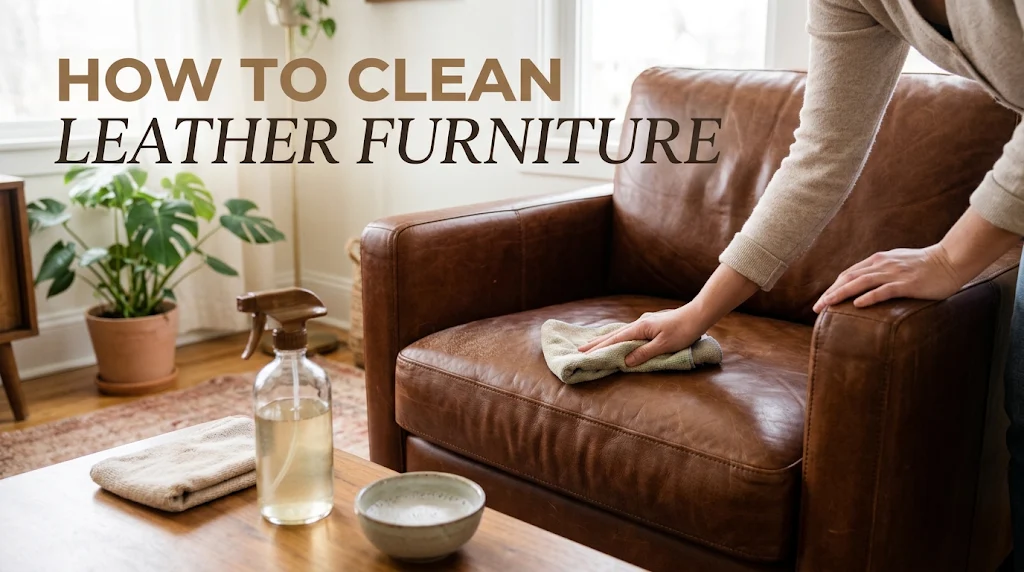
Leather furniture can add comfort and style to a living room, but everyday use gradually leaves behind dust, body oils, fingerprints, food spills, and other marks. Without proper care, leather may lose its natural appearance and become dull or discolored.
Learning how to clean leather furniture correctly helps maintain its appearance while reducing the risk of scratches, stains, and surface damage. However, leather requires a different cleaning approach from fabric upholstery. Using too much water or the wrong household cleaner can damage its protective finish.
The good news is that regular maintenance does not have to be complicated. With a few appropriate supplies and careful cleaning techniques, you can keep leather sofas, chairs, and other furniture looking their best.
This guide explains how to identify your leather type, clean everyday dirt, handle common stains, and protect your furniture for long-term use.
Why Is Proper Leather Furniture Cleaning Important?
Leather is durable, but it is not completely resistant to damage. Dust and small particles can collect in seams, while body oils and everyday contact gradually affect frequently used areas.
Regular cleaning helps you:
- Remove dust, loose dirt, and everyday residue.
- Prevent grime from accumulating in seams and creases.
- Address fresh spills before they become difficult stains.
- Maintain the appearance of the leather surface.
- Identify scratches, fading, or other damage early.
- Keep furniture more comfortable and presentable.
The most important rule is to use a cleaning method suitable for your particular leather. Different finishes react differently to moisture and cleaning products.
Understand Your Leather Furniture Before Cleaning
Before choosing a leather furniture cleaner, identify the material and finish of your sofa or chair. Check the manufacturer’s care instructions or contact the furniture retailer if you are unsure.
1. Protected or Finished Leather
Protected leather, also called pigmented leather, has a surface coating that provides additional resistance to everyday spills and stains.
It is commonly used for household sofas and chairs. When the manufacturer permits it, you can usually clean this type of leather with a suitable furniture leather cleaner and a soft cloth.
2. Aniline and Semi-Aniline Leather
Aniline leather has a more natural appearance and little or no protective surface coating. Semi-aniline leather has a light protective finish.
Both types can be more sensitive to moisture, cleaning chemicals, and discoloration than protected leather.
Avoid experimenting with homemade cleaning solutions. Follow the manufacturer’s instructions and consider a professional leather cleaner for stubborn marks.
3. Suede and Nubuck
Suede and nubuck have textured surfaces that require specialized care.
Do not apply ordinary leather cleaners, wet cloths, or leather conditioners unless the product specifically states that it is suitable for these materials.
Use an appropriate suede or nubuck brush for routine maintenance and consult a specialist for difficult stains.
What You Need to Clean Leather Furniture
Gather your supplies before starting. Having the correct materials ready helps prevent unnecessary handling and damage.
| Cleaning supply | Purpose |
|---|---|
| Soft microfiber cloths | Remove dust and wipe surfaces |
| Vacuum with a soft brush attachment | Clean seams and crevices |
| Leather-specific cleaner | Remove compatible surface dirt |
| Clean, soft sponge | Apply approved cleaning products |
| Leather conditioner | Maintain compatible finished leather |
| Clean white cloth | Blot spills and remove residue |
Avoid using abrasive scrubbers, stiff brushes, bleach, ammonia, alcohol-based household cleaners, or multipurpose sprays.
Always check product labels and furniture care instructions before applying anything to the leather.
For additional leather furniture care advice, check the Ashley Furniture care and cleaning guide. You can also review the BISSELL leather couch cleaning guide for more cleaning recommendations. Always follow the manufacturer’s instructions before applying a cleaning product to your furniture.
How to Clean Leather Furniture: 7 Safe Steps
Follow these steps to clean compatible finished leather furniture without unnecessary moisture or aggressive scrubbing.
Step 1: Check the Manufacturer’s Care Instructions
Start by checking the furniture manufacturer’s cleaning and maintenance recommendations.
Look for information about:
- The type of leather used.
- Approved cleaning products.
- Whether water-based cleaning is permitted.
- Suitable conditioning products.
- Special instructions for stains and spills.
If you cannot identify the leather type, avoid applying liquids or cleaning chemicals until you receive appropriate guidance.
This simple precaution can help prevent accidental discoloration and damage.
Step 2: Remove Loose Dust and Dirt
Before using a cleaning product, remove dust and loose debris from the furniture.
Use a clean, dry microfiber cloth to wipe the visible surfaces gently. Pay particular attention to the backrest, armrests, seat cushions, and other frequently touched areas.
For dust trapped between cushions or inside seams, use a vacuum cleaner with a soft brush attachment.
Keep the vacuum on a suitable low setting and avoid using a rotating brush directly against the leather.
Do not rub the surface aggressively. Small particles trapped beneath a cloth can create scratches if you apply too much pressure.
Step 3: Test Your Leather Furniture Cleaner
Choose a cleaner specifically formulated for your leather type.
Before cleaning the entire sofa, test the product in a small, inconspicuous area, such as the back or underside of a cushion.
Follow the product’s directions and allow the test area to dry sufficiently.
Check for:
- Color changes.
- Unexpected darkening.
- Sticky residue.
- Changes in texture.
- Signs of surface damage.
If you notice an unusual reaction, stop using the product.
Never assume that a cleaner suitable for one leather sofa will automatically work on another.
Step 4: Gently Clean the Leather Surface
Once you have confirmed that the product is compatible, begin cleaning small sections.
Follow these instructions:
- Apply a small amount of leather cleaner to a soft cloth, unless the product label directs otherwise.
- Gently wipe the surface using light, even movements.
- Work in manageable sections.
- Avoid soaking the leather or allowing liquid to collect in seams.
- Use a separate clean cloth to remove residue when instructed.
- Repeat only when the product instructions permit it.
For a large sofa, work systematically across the backrest, armrests, seat cushions, and sides.
Avoid concentrating on one small spot with excessive pressure. Uneven cleaning can sometimes leave visible differences in appearance.
Step 5: Remove Spills and Common Stains Carefully
Spills should be handled promptly, but different stains require different approaches.
Food and drink spills
Remove any solid material carefully. Use a clean, dry cloth to blot excess liquid.
Do not rub the spill into the leather. If necessary, follow the manufacturer’s recommended cleaning method for the specific leather finish.
Grease and oil stains
Blot excess grease with a clean, dry cloth without rubbing.
Avoid applying water to an oil or grease stain unless the manufacturer specifically recommends it. Some leather care guides advise allowing residual grease to dissipate naturally rather than attempting aggressive spot cleaning.
Ink marks
Ink stains can be particularly difficult to remove from leather.
Avoid rubbing the mark with alcohol, nail polish remover, or ordinary household stain removers. These products may damage the finish.
Use a specialized leather ink remover only when it is approved for your leather type. For older or significant ink stains, contact a professional leather cleaning specialist.
Pet accidents
Remove solid material and blot excess liquid promptly.
Use a compatible leather-safe cleaner according to its instructions. If an odor remains because liquid has penetrated the cushion padding, professional treatment may be necessary.
The safest approach is to identify the stain first and select a suitable treatment rather than experimenting with several household products.
Step 6: Allow the Furniture to Dry Naturally
After cleaning, allow the leather to dry naturally in a well-ventilated room.
Use a clean, dry microfiber cloth to remove any remaining surface moisture if recommended by the cleaner’s instructions.
Keep the furniture away from:
- Direct sunlight.
- Space heaters.
- Radiators.
- Hair dryers.
- Other concentrated heat sources.
Excessive heat can dry out leather and contribute to cracking or changes in texture.
Do not use the furniture until the cleaned surface has dried according to the product instructions.
Step 7: Apply a Suitable Leather Conditioner
Cleaning removes surface dirt, while conditioning helps maintain compatible leather finishes.
Once the furniture is completely dry, check whether conditioning is recommended for your particular leather.
If appropriate:
- Select a conditioner designed for furniture leather.
- Test it on a hidden area first.
- Apply a small amount to a clean, soft cloth.
- Spread it gently and evenly according to the product instructions.
- Remove excess product if directed.
- Allow the furniture to dry or absorb the conditioner as instructed.
Do not use ordinary cooking oils, petroleum products, or random moisturizers as leather conditioners.
Some unfinished leather types and suede or nubuck require different products or no conventional conditioning at all.
How Often Should You Clean Leather Furniture?
The ideal cleaning schedule depends on furniture usage, household conditions, pets, and the manufacturer’s recommendations.
A practical maintenance routine looks like this:
| Maintenance task | Suggested frequency |
|---|---|
| Remove visible dust | Weekly |
| Vacuum seams and crevices | Weekly or as needed |
| Wipe compatible surfaces | According to the care instructions |
| Address spills | Immediately |
| Deep cleaning | When needed and as recommended |
| Apply leather conditioner | According to the manufacturer |
Avoid deep cleaning too frequently. Excessive use of cleaning products can affect the protective finish.
In Florida, humidity, household activity, and frequent use of air conditioning can influence how furniture collects dust and dries after cleaning. Good ventilation and prompt spill removal are particularly useful.
Common Mistakes to Avoid When Cleaning Leather Furniture
Even a good leather cleaner can cause problems when used incorrectly.
Here are some mistakes worth avoiding:
Using too much water: Excess moisture can penetrate vulnerable leather and contribute to discoloration or stiffness.
Using bleach or ammonia: Harsh chemicals may damage the leather finish.
Scrubbing with abrasive materials: Rough sponges and stiff brushes can leave scratches.
Applying vinegar or baking soda without checking compatibility: Homemade remedies are not universally safe for leather upholstery.
Using the wrong conditioner: Products formulated for finished leather may not be appropriate for aniline leather, suede, or nubuck.
Drying with direct heat: Hair dryers and heaters can cause uneven drying and damage.
Ignoring manufacturer instructions: A cleaning method that works for one sofa may be unsuitable for another.
When in doubt, use the gentlest manufacturer-approved method or consult a professional.
How to Keep Leather Furniture Clean for Longer
Good maintenance can reduce the need for frequent deep cleaning.
Consider these practical habits:
- Dust furniture regularly with a soft microfiber cloth.
- Clean fresh spills promptly.
- Keep sharp objects away from leather surfaces.
- Avoid placing furniture in direct sunlight.
- Keep leather away from concentrated heat sources.
- Be careful with clothing dyes that may transfer onto light-colored leather.
- Keep pets’ claws trimmed to reduce accidental scratches.
- Follow the manufacturer’s recommended cleaning and conditioning schedule.
If you have children or pets, consider using suitable furniture covers when the sofa is not in use. Choose covers that do not trap excessive moisture against the leather.
When Should You Hire a Professional Leather Cleaner?
Some cleaning problems are better handled by a specialist.
Consider professional assistance if:
- The leather has extensive ink or dye stains.
- The surface has developed severe discoloration.
- Leather is peeling, cracking, or becoming unusually stiff.
- The furniture has valuable or delicate aniline upholstery.
- Cleaning attempts have not improved the stain.
- The stain appears to have penetrated the cushion padding.
Before hiring a cleaning provider, ask whether they have experience with your specific leather type.
You can also review our guide on choosing a house cleaning company to understand what to ask a cleaning provider before scheduling a service. Confirm separately that the company offers specialized leather upholstery cleaning.
Frequently Asked Questions
1. What is the best way to clean leather furniture at home?
The best approach is to remove loose dust with a soft cloth or vacuum brush, use a manufacturer-approved leather cleaner when appropriate, and avoid excessive moisture. Always test new products on a hidden area first.
2. Can I use dish soap to clean leather furniture?
Do not assume that ordinary dish soap is safe for every leather finish. Some manufacturers permit specific mild cleaning solutions, while others advise against soaps and detergents. Follow your furniture manufacturer’s instructions.
3. Can I use vinegar to clean a leather couch?
Vinegar is not a universal leather cleaner. Its acidity may affect certain finishes or cause discoloration. A compatible leather-specific cleaning product is a safer starting point.
4. How do I remove stains from a leather couch?
First, identify the type of stain and leather finish. Blot fresh spills instead of rubbing them, then follow the manufacturer’s recommended treatment. Stubborn ink, grease, or dye stains may require professional attention.
5. Should I condition leather furniture after cleaning?
Conditioning may be beneficial for compatible finished leather, but it is not appropriate for every leather type. Check the manufacturer’s recommendations and use a suitable furniture leather conditioner.
6. How can I prevent leather furniture from cracking?
Keep leather away from excessive heat and direct sunlight, remove dust regularly, clean spills promptly, and use an appropriate conditioner when recommended by the manufacturer.
7. Can I use a steam cleaner on leather furniture?
Do not use a steam cleaner unless the furniture manufacturer explicitly approves that method. Heat and moisture can damage some leather finishes.
8. Is faux leather cleaned the same way as genuine leather?
No. Faux leather and genuine leather can have different cleaning requirements. Check the manufacturer’s instructions and use products specifically approved for the material.
Final Thoughts
Learning how to clean leather furniture is an important part of maintaining a comfortable and attractive home. Regular dusting, careful stain removal, appropriate cleaning products, and proper drying can help preserve the appearance of leather sofas and chairs.
The most important step is identifying your leather type before applying any cleaning solution. Avoid harsh chemicals, excessive water, and aggressive scrubbing.
With consistent maintenance and manufacturer-approved products, you can keep your leather furniture looking presentable while reducing the risk of unnecessary damage.
If a stain is difficult to remove or the leather is already damaged, professional assistance is often a better choice than experimenting with stronger cleaning solutions.
2 thoughts on “How to Clean Leather Furniture: 7 Safe Steps”