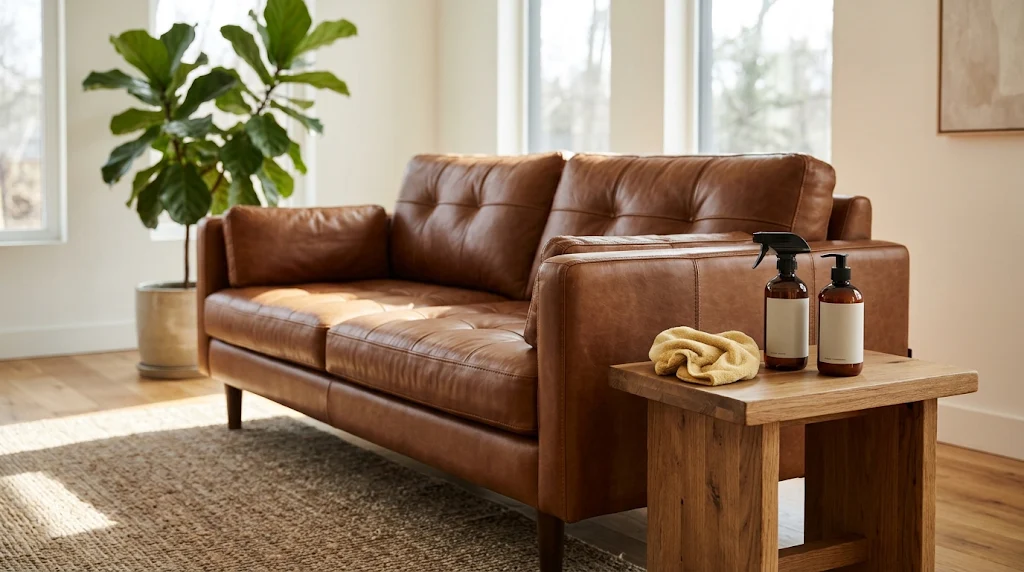
Leather furniture can make a living room look elegant and comfortable, but everyday use gradually leaves behind dust, body oils, food residue, and stains. Without proper care, a leather sofa or chair may lose its original appearance.
Choosing the best leather cleaner and conditioner for furniture is an important part of maintaining leather upholstery. The right product can help remove everyday dirt and maintain a suitable leather finish without unnecessary damage.
However, not every leather cleaner works on every type of leather. Some products are designed for smooth, finished leather, while others have different limitations.
This guide compares four leather care options, explains their intended uses, and helps you choose a suitable product for your furniture.
4 Best Leather Cleaner and Conditioner for Furniture
The following products are worth considering for different leather furniture care needs. Their descriptions are based on available manufacturer information. They are not ranked by independent performance testing.
1. Weiman Leather Cleaner and Conditioner
Best for: Convenient cleaning and conditioning of finished leather furniture
Weiman Leather Cleaner and Conditioner is a convenient option for people who prefer a combined cleaning and conditioning product.
Its formula is designed to remove dirt and residue while conditioning and protecting compatible leather surfaces. The manufacturer specifically lists leather sofas, couches, and chairs among its recommended uses.
Key features:
- Combines cleaning and conditioning in one application.
- Contains conditioning oils.
- Includes the manufacturer’s UVX-15 protection claim.
- Suitable for smooth, finished leather.
- Can be used on compatible leather furniture.
Important limitation: Weiman advises against using this product on suede, nubuck, unfinished leather, and Natuzzi-brand leather.
How to use it:
Test the product in an inconspicuous area first. Shake the bottle, spray the solution onto a clean, soft cloth, and gently buff the compatible leather surface according to the manufacturer’s directions.
Our assessment: This is a practical option for homeowners who want a simple maintenance product for compatible finished leather sofas and chairs.
Product information: https://weiman.com/leather-cleaner-conditioner
2. Lexol Leather Cleaner and Conditioner
Best for: Separate cleaning and conditioning treatments
Lexol offers a leather care system with separate cleaner and conditioner products.
This approach is useful for furniture owners who want to clean the surface first and condition it afterward rather than relying on a single combined formula.
Lexol specifically identifies leather sofas and chairs in its furniture care guidance.
Key features:
- Separate cleaner and conditioner options.
- Designed for routine leather maintenance.
- Suitable for compatible leather furniture.
- Allows cleaning and conditioning to be performed as separate steps.
How to use it:
Start by removing loose dust and dirt with a soft cloth. Apply the cleaner according to its label instructions and allow the leather to dry as directed.
Next, use the conditioner sparingly on a clean cloth and follow the product directions. Test both products on a hidden area before treating the entire sofa.
Our assessment: Lexol is worth considering if you prefer a two-step leather care routine and want products from a brand that specifically discusses furniture applications.
Product information: https://lexol.com/education/
3. Leather Honey Leather Cleaner and Conditioner
Best for: A separate cleaning and conditioning routine
Leather Honey offers separate products for cleaning and conditioning leather.
Its cleaner is marketed for leather furniture and several other materials, including vinyl and faux leather. The company’s conditioner is designed for genuine leather, with specific material limitations.
This combination may suit homeowners who want to select the cleaning and conditioning stages separately.
Key features:
- Separate leather cleaner and conditioner.
- Cleaner is marketed for furniture upholstery.
- Fragrance-free cleaner formula according to the manufacturer.
- Conditioner is applied in a thin, even layer.
- Manufacturer provides detailed application instructions.
Important limitation: Leather Honey states that its conditioner should not be used on suede. Always check the individual product label and your furniture manufacturer’s care instructions.
How to use it:
Clean the compatible leather surface first using the cleaner’s directions. Allow it to dry completely.
Apply a small amount of conditioner to a lint-free cloth and spread a thin, even layer over the appropriate leather surface. Allow it to dry according to the manufacturer’s instructions, then remove excess product if necessary.
Our assessment: This is a useful option for people who prefer separate cleaning and conditioning products and are comfortable following a more detailed application process.
Product information:
https://www.leatherhoney.com/products/leather-honey-leather-cleaner
https://www.leatherhoney.com/pages/leather-care-best-leather-conditioner-leather-cleaner
4. Chemical Guys Leather Cleaner and Conditioner
Best for: People who prefer a dedicated leather care range
Chemical Guys offers several leather cleaning and conditioning products, including separate cleaning and conditioning formulas and combined products.
The brand describes its leather care range as suitable for certain furniture applications in addition to automotive interiors.
Key features:
- Dedicated leather cleaning products.
- Separate conditioner options.
- Combined cleaner and conditioner options.
- Microfiber-friendly application.
- Product choices for different maintenance needs.
How to use it:
Remove loose dust and debris first. Apply the appropriate cleaner to a microfiber cloth or follow the product’s specific instructions.
Wipe the surface gently and remove residue as directed. Once the leather is clean and dry, apply a compatible conditioner using a separate clean cloth.
Important limitation: Product compatibility depends on the exact formula and leather finish. Do not assume every item in the brand’s range is suitable for every furniture material.
Our assessment: Chemical Guys is another option worth comparing if you prefer choosing individual products for cleaning and conditioning.
Product information: https://www.chemicalguys.com/collections/leather-cleaner-and-conditioner
Comparison of the Best Leather Furniture Care Products
Choosing between leather furniture care products becomes easier when you compare their intended uses.
| Product | Main purpose | Suitable application |
|---|---|---|
| Weiman Leather Cleaner and Conditioner | Combined cleaning and conditioning | Smooth, finished leather |
| Lexol Leather Cleaner and Conditioner | Separate cleaning and conditioning | Compatible leather furniture |
| Leather Honey Cleaner and Conditioner | Two-step leather maintenance | Materials approved by each product label |
| Chemical Guys Leather Care | Different cleaning and conditioning options | Compatible leather and furniture applications |
Remember that the best choice depends on the manufacturer’s care instructions, the leather finish, and the condition of your furniture.
How to Choose the Right Leather Cleaner and Conditioner
Before purchasing a leather furniture cleaner, consider the following factors.
1. Identify Your Leather Type
The first step is identifying the material used in your sofa or chair.
Different leather finishes require different cleaning methods.
Finished leather: This type has a protective surface coating. Many furniture leather cleaners and conditioners are specifically designed for this material.
Aniline leather: Aniline leather has little or no protective surface coating. It can be more sensitive to moisture and cleaning products.
Semi-aniline leather: This material has a light protective finish but may still require more careful treatment than fully protected leather.
Suede and nubuck: These materials have textured surfaces and require specialized cleaning products. Ordinary leather conditioners may not be appropriate.
If you are unsure about your furniture’s material, contact the manufacturer before purchasing a cleaning product.
2. Check the Product Ingredients and Label
Do not select a leather cleaner based only on its advertising claims.
Read the product label and check whether it is intended for furniture upholstery.
Avoid using products that are not approved for your leather type. Furniture manufacturers may also prohibit certain ingredients or cleaning methods.
For example, some manufacturers advise against products containing harsh chemicals, abrasives, solvents, or unsuitable oils.
3. Decide Between a Two-in-One Product and Separate Products
Leather care products generally come in two main formats.
Two-in-one products: These combine cleaning and conditioning in one application. They may be convenient for routine maintenance when the manufacturer approves the formula.
Separate products: These allow you to clean the furniture first and condition it afterward. They provide more control over each step.
Neither format is automatically better. Choose according to your furniture’s care requirements.
4. Consider the Furniture’s Condition
A regularly maintained sofa may need only occasional cleaning and conditioning.
However, heavily soiled furniture may require a dedicated cleaner before applying conditioner.
If your leather has deep stains, peeling, cracking, or significant discoloration, a regular conditioner may not solve the problem. Professional assessment may be more appropriate.
5. Test Before Applying the Product
Always perform a spot test in a hidden area.
Apply the product according to its directions and allow the test area to dry.
Look for:
- Unexpected color changes.
- Dark patches.
- Sticky residue.
- Changes in texture.
- Discoloration or damage.
If you notice an unusual reaction, stop using the product.
How to Use Leather Cleaner and Conditioner on Furniture
Using a suitable product correctly is just as important as selecting the right one.
Follow these general steps when permitted by your furniture manufacturer.
Step 1: Remove Loose Dust
Use a clean, soft microfiber cloth to remove surface dust.
Pay attention to seat cushions, armrests, backrests, and seams.
A vacuum cleaner with a suitable soft brush attachment can help remove dirt from difficult-to-reach areas.
Step 2: Test the Cleaner
Choose a cleaner approved for your leather type.
Test it in a hidden area and follow the manufacturer’s directions.
Do not continue if the product changes the leather’s appearance or texture.
Step 3: Clean Small Sections
Apply the cleaner to a soft cloth if the product instructions recommend this method.
Gently wipe the surface in manageable sections. Avoid excessive pressure, aggressive scrubbing, and unnecessary moisture.
Step 4: Remove Residue
Some products require wiping away remaining residue with a separate clean cloth.
Follow the label instructions rather than assuming every cleaner works the same way.
Step 5: Allow the Leather to Dry
Let the furniture dry naturally in a well-ventilated area.
Avoid direct sunlight, hair dryers, heaters, and other concentrated heat sources.
Step 6: Apply a Compatible Conditioner
Once the leather is completely dry, check whether conditioning is recommended.
Apply a small amount to a clean cloth and spread it evenly according to the manufacturer’s instructions.
Avoid applying excessive conditioner.
Step 7: Complete the Maintenance
Remove excess product if directed and allow the furniture to dry or absorb the conditioner for the recommended period.
Avoid using the furniture until the product instructions say it is ready.
Common Mistakes to Avoid When Cleaning Leather Furniture
Even a suitable leather cleaning product can cause problems when used incorrectly.
Here are some common mistakes to avoid.
Using household cleaning sprays: General-purpose cleaners may contain ingredients that are unsuitable for leather finishes.
Applying too much conditioner: Excess product may leave a greasy or sticky surface.
Ignoring the leather type: A cleaner designed for finished leather may not work on suede or unfinished leather.
Scrubbing aggressively: Excessive pressure can damage the surface or affect its appearance.
Skipping the spot test: A product that works on one sofa may react differently with another leather finish.
Using excessive water: Too much moisture can cause problems with certain leather materials.
Ignoring manufacturer instructions: Furniture warranties and care requirements may specify which products are acceptable.
How Often Should You Clean and Condition Leather Furniture?
There is no universal cleaning schedule for every leather sofa.
The appropriate frequency depends on furniture usage, environmental conditions, the type of leather, and manufacturer recommendations.
A simple maintenance routine may include:
- Dusting regularly with a soft cloth.
- Removing fresh spills promptly.
- Checking seams and crevices for accumulated dirt.
- Cleaning when the surface needs attention.
- Conditioning only when recommended for the leather type.
Avoid excessive cleaning or conditioning. Applying products more frequently does not necessarily improve the furniture’s condition.
When Should You Hire a Professional Leather Furniture Cleaner?
Some leather furniture problems require more than ordinary home maintenance.
Consider contacting a specialist if your sofa has:
- Deep ink or dye stains.
- Significant discoloration.
- Peeling or cracking.
- Severe water damage.
- Stubborn stains that do not respond to approved cleaning products.
- Delicate or valuable aniline upholstery.
Before hiring someone, ask whether they have experience with your specific leather material.
You can also read our guide on [how to clean leather furniture] (https://cleaninginflorida.org/how-to-clean-leather-furniture/) for additional maintenance and cleaning instructions.
Frequently Asked Questions
1. What is the best leather cleaner and conditioner for furniture?
The best option depends on the leather type and manufacturer instructions. Weiman is one convenient choice for compatible finished leather, while Lexol and Leather Honey offer separate cleaning and conditioning options.
2. Can I use leather car cleaner on my sofa?
Some leather care products are suitable for both automotive interiors and furniture. However, not every car leather cleaner is appropriate for sofas. Check the product label before using it.
3. Should I clean leather furniture before conditioning it?
Generally, compatible leather should be cleaned before conditioning. Dirt and residue should not be trapped beneath a conditioning product. Follow the specific product instructions.
4. Can leather conditioner damage furniture?
Yes. An unsuitable conditioner may cause discoloration, residue, or other surface problems. Always check compatibility and test the product in a hidden area.
5. Can I use leather cleaner on faux leather?
Some cleaners are formulated for both genuine and faux leather, but others are not. Check the manufacturer’s instructions for your specific furniture material.
6. Can I use leather conditioner on suede?
Do not use an ordinary leather conditioner on suede unless the product specifically states that it is suitable. Suede requires specialized care.
7. Is a two-in-one leather cleaner and conditioner better?
A two-in-one product can be convenient for compatible leather furniture. Separate products may provide more control when cleaning and conditioning are required as different steps.
8. How do I keep my leather sofa from cracking?
Keep the furniture away from excessive heat and direct sunlight, remove dust regularly, clean spills promptly, and use a compatible conditioner when recommended by the manufacturer.
Final Thoughts
Choosing the best leather cleaner and conditioner for furniture requires more than comparing product names or advertising claims.
Weiman, Lexol, Leather Honey, and Chemical Guys offer different leather care options worth considering. However, the right choice depends on your sofa’s material, finish, and manufacturer recommendations.
Before applying any product, identify your leather type, read the label, and perform a hidden-area test.
With suitable products and careful maintenance, you can keep compatible leather furniture clean and maintain its appearance without unnecessary damage.