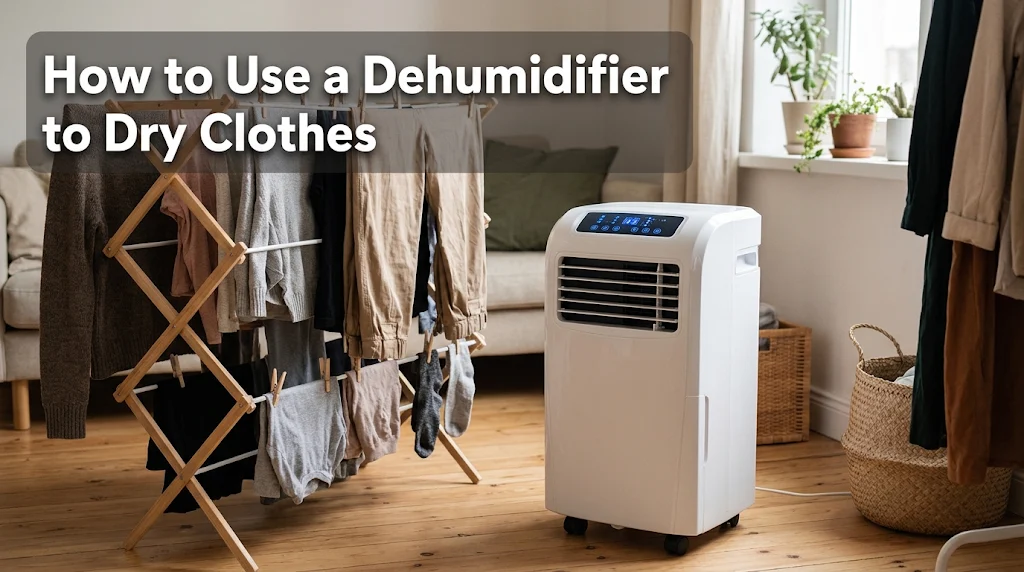
A dehumidifier for air drying clothes can make indoor laundry easier, especially when outdoor humidity, frequent rain, or limited living space makes traditional air drying difficult. Instead of allowing moisture from wet clothes to build up in your home, a dehumidifier collects water vapor from the surrounding air and helps maintain a more suitable drying environment.
This approach can be particularly useful in Florida, where humid weather can make indoor laundry take longer to dry. When combined with a clothes drying rack and proper air circulation, a dehumidifier can help reduce excess moisture and unpleasant laundry odors.
However, using a dehumidifier correctly matters. The room, appliance capacity, clothing arrangement, and humidity level all affect the results.
In this guide, you will learn how to use a dehumidifier for indoor laundry, choose the right equipment, reduce energy consumption, and keep clothes fresh while they dry.
1. How a Dehumidifier for Air Drying Clothes Works
A dehumidifier does not directly blow hot air onto clothing like a traditional tumble dryer. Instead, it removes moisture from the surrounding air.
When wet clothes hang indoors, water gradually evaporates from the fabric and enters the room. If the air already contains substantial moisture, evaporation may become slower.
A dehumidifier helps by collecting some of that water vapor.
Most conventional portable dehumidifiers work through a refrigeration process:
- A fan draws humid room air into the appliance.
- The air passes over a cold evaporator coil.
- Water vapor condenses into liquid water.
- The collected water flows into a tank or drainage system.
- The appliance releases drier air back into the room.
As moisture is removed, the surrounding air can accept additional water vapor from wet clothing.
This creates more favorable conditions for air drying.
Why this matters in Florida: High outdoor humidity can make natural ventilation less effective. On humid or rainy days, using an indoor dehumidifier may be more practical than opening windows and allowing additional moisture into the room.
2. Set Up Your Clothes Drying Area Correctly
The location of your drying rack and dehumidifier can influence how effectively your laundry dries.
You do not need a dedicated laundry room. A suitable spare room or another appropriate indoor space may work.
Follow these steps:
Choose a Suitable Room
Select a room where you can safely operate the appliance and arrange your clothes without blocking walkways.
A smaller enclosed room may be easier to dehumidify than an entire open-plan living area.
Avoid locations with active water leaks, standing water, or excessive dampness that requires separate attention.
Position the Drying Rack
Place your drying rack where air can move around the garments.
Keep these points in mind:
- Leave space between individual garments.
- Avoid folding thick clothing over itself.
- Separate towels and jeans from lightweight shirts.
- Keep clothes away from walls and damp surfaces.
- Make sure the rack is stable and suitable for wet laundry.
A crowded drying rack restricts airflow and can slow the drying process.
Position the Dehumidifier
Place the dehumidifier in the same room as the drying rack, following the manufacturer’s clearance and placement instructions.
Keep the air intake and outlet unobstructed.
Do not place wet clothing directly over the appliance or allow dripping water to reach its electrical components.
For additional guidance, see the ENERGY STAR dehumidifier recommendations.
3. How to Choose a Dehumidifier for Air Drying Clothes
Choosing an appropriately sized dehumidifier is important for indoor laundry.
Portable dehumidifiers are commonly rated by how many pints of moisture they can remove in 24 hours.
However, a larger capacity is not automatically necessary for every laundry room. The correct choice depends on room size, existing humidity, moisture load, and operating conditions.
ENERGY STAR provides capacity guidance for different room conditions.
For example, its published guidance includes:
| Room condition | Suggested capacity for small to medium spaces under 2,000 sq. ft. |
|---|---|
| Slightly to moderately damp | 20–30 pints per day |
| Very damp | 25–40 pints per day |
| Wet conditions | 30–50 pints per day |
These are general selection ranges, not a guarantee that a particular unit will dry a load of laundry within a certain time.
Before purchasing, consider:
- The size of your drying room.
- How frequently you wash clothes.
- Whether you regularly dry heavy towels or bedding.
- The room’s typical humidity.
- The appliance’s energy efficiency.
- Whether continuous drainage is available.
For a household that frequently dries laundry indoors, a model with a suitable capacity and convenient drainage can make daily use easier.
Always check the manufacturer’s specifications before purchasing.
4. Maintain the Right Indoor Humidity
Humidity plays an important role in indoor air drying.
When too much moisture accumulates in a room, condensation may appear on windows, walls, and other cool surfaces.
The U.S. Environmental Protection Agency recommends keeping indoor relative humidity below 60%, ideally between 30% and 50% when possible.
For an indoor laundry setup, a hygrometer can help you monitor relative humidity rather than relying on how the room feels.
How to Monitor Humidity
- Place a digital hygrometer in the drying room.
- Check the humidity before hanging wet clothes.
- Start the dehumidifier according to its operating instructions.
- Monitor humidity while laundry dries.
- Adjust the humidistat setting when necessary.
Avoid trying to make the room excessively dry.
The goal is to manage moisture, not to force humidity to the lowest possible setting.
A dehumidifier with an adjustable humidistat is useful because it can automatically regulate operation according to the selected humidity level.
If you notice persistent condensation, damp walls, or a musty smell, investigate the underlying moisture problem rather than relying on the appliance alone.
5. Combine a Dehumidifier With a Fan
A dehumidifier and a fan perform different jobs.
A dehumidifier removes moisture from the air, while a fan improves air movement around wet garments.
Combining the two can create a more effective indoor drying setup.
How to Arrange Them
- Put the clothes drying rack in an open area of the room.
- Position the dehumidifier according to its manufacturer’s instructions.
- Place a fan at a safe distance from the rack.
- Direct airflow across the clothing.
- Leave enough space between garments.
- Turn thicker clothing when necessary.
Avoid directing the fan so close that clothes become tangled or unstable.
Make sure electrical appliances remain away from dripping water and follow all electrical safety instructions.
This arrangement is especially useful for thick fabrics that tend to retain moisture around seams, pockets, waistbands, and folded sections.
6. Reduce Energy Consumption While Drying Clothes
Running an appliance for extended periods can increase electricity consumption.
Although a dehumidifier can help manage indoor moisture, it still uses electricity. The actual operating cost depends on the model, its power consumption, runtime, and your electricity rate.
Here are several practical ways to manage energy use.
Choose an ENERGY STAR Certified Model
ENERGY STAR states that certified dehumidifiers use 20% less energy than similarly sized conventional models.
You can compare certified options using the official ENERGY STAR Product Finder.
Remove Excess Water Before Drying
Use an appropriate washing machine spin cycle to remove as much water as the fabric and garment care instructions permit.
Less remaining water means less moisture must evaporate from the clothes.
For delicate garments, follow the washing machine and clothing manufacturer’s recommendations.
Avoid Overloading the Drying Rack
Spread clothing across the available space.
Overlapping garments restrict airflow and can increase drying time.
Drying smaller groups may be more practical than placing an entire large load on one crowded rack.
Use Automatic Humidity Controls
If your dehumidifier has an adjustable humidistat, use it to manage the desired humidity level.
This can help prevent unnecessary continuous operation once the room reaches the selected setting.
Check Filters and Drainage
Clean or maintain filters according to the manufacturer’s schedule.
A blocked filter or poorly maintained appliance may affect airflow and performance.
Also, empty the water tank when necessary or use a compatible continuous drainage arrangement.
7. Prevent Musty Smells and Moisture Problems
One of the most frustrating problems with indoor laundry is the development of musty odors.
Clothes that remain damp for extended periods may develop unpleasant smells. Excess indoor moisture can also contribute to condensation and mold problems.
The EPA identifies moisture control as the key to preventing mold growth.
Use these habits to keep your laundry area in better condition:
- Remove wet laundry from the washing machine promptly.
- Avoid overcrowding your drying rack.
- Use a dehumidifier when indoor humidity is excessive.
- Allow sufficient airflow around garments.
- Check thick fabric sections before storing clothes.
- Keep laundry away from damp walls and surfaces.
- Empty and maintain the dehumidifier’s water tank.
- Investigate persistent leaks and condensation.
Never put damp clothes directly into wardrobes, drawers, or storage containers.
If you notice recurring musty odors, check whether clothes are drying completely and whether the washing machine itself needs cleaning.
A dehumidifier can help control moisture in the room, but it cannot repair plumbing leaks, clean contaminated materials, or solve every existing mold problem.
For additional moisture-control advice, consult the EPA guide to mold, moisture, and your home.
Dehumidifier vs. Fan vs. Traditional Clothes Dryer
Different appliances serve different purposes. The best option depends on your laundry volume, available space, budget, and drying needs.
| Feature | Dehumidifier | Fan | Traditional clothes dryer |
|---|---|---|---|
| Main function | Removes moisture from air | Moves air around clothes | Dries clothes inside a drum |
| Helps with indoor humidity | Yes | No, not by itself | Depends on dryer type and ventilation |
| Requires electricity | Yes | Yes | Yes or gas, depending on model |
| Suitable for indoor drying rack | Yes | Yes | Not required |
| Best use | Managing indoor moisture | Improving airflow | Regular machine drying |
A dehumidifier is particularly useful when you want to air-dry laundry indoors without allowing moisture to accumulate excessively.
A fan is a useful companion, while a traditional dryer may be more convenient for households that regularly need large loads dried quickly.
You can also read our guide on how to dry clothes without a dryer for additional indoor and outdoor drying methods.
Common Mistakes When Using a Dehumidifier for Laundry
Even a suitable appliance may not work effectively if it is used incorrectly.
Avoid these common mistakes:
1. Choosing an undersized appliance: A small unit may struggle when the room is very humid or the laundry load is large.
2. Blocking airflow: Placing clothes directly against the appliance can interfere with normal operation.
3. Leaving windows open: In humid Florida weather, outdoor air may introduce additional moisture into the room. Follow the appliance manufacturer’s room-enclosure recommendations.
4. Ignoring the water tank: A full tank may trigger automatic shutoff, interrupting dehumidification.
5. Expecting instant results: Thick towels, jeans, and hoodies naturally take longer to dry than lightweight fabrics.
6. Ignoring maintenance: Dirty filters and neglected drainage systems can affect appliance performance.
7. Ignoring fabric care labels: Some garments need flat drying, shade, or other special treatment.
Following the manufacturer’s operating instructions is essential for safe and effective use.
Frequently Asked Questions
1. Can a dehumidifier dry clothes indoors?
Yes. A dehumidifier can help clothes dry indoors by removing water vapor from the surrounding air. It works best when combined with a drying rack and adequate air circulation.
2. What is the best humidity level for drying clothes indoors?
There is no single humidity setting guaranteed to work best for every fabric or room. The EPA recommends indoor relative humidity below 60%, ideally between 30% and 50% when possible. A hygrometer can help you monitor the room.
3. Should I use a fan with a dehumidifier when drying clothes?
Yes. A fan improves air circulation around garments, while a dehumidifier removes moisture from the air. Using both can improve the indoor drying environment.
4. Can I leave a dehumidifier running overnight?
Many dehumidifiers are designed for extended operation, but you should follow the manufacturer’s instructions. Check the water tank, automatic shutoff, drainage arrangement, and electrical safety requirements before leaving the appliance unattended.
5. Does a dehumidifier prevent clothes from smelling musty?
It can help reduce excess indoor moisture that contributes to damp conditions. However, it does not guarantee odor prevention. Clothes must dry completely, and washing machine odors or other moisture sources should also be addressed.
6. Is a dehumidifier cheaper to run than a tumble dryer?
It depends on the appliances, their energy consumption, operating time, and local electricity rates. Compare the rated power consumption and expected runtime rather than assuming every dehumidifier will be cheaper.
7. Can I use a dehumidifier in a small apartment?
Yes. A portable dehumidifier can be suitable for a small apartment if its capacity matches the room and it can operate safely with adequate clearance and drainage.
Final Thoughts
Using a dehumidifier for air drying clothes can be a practical solution when humid weather or limited outdoor space makes laundry difficult.
The best results come from combining the right appliance with a well-arranged drying rack, suitable air circulation, and regular humidity monitoring.
For Florida households, managing indoor moisture is particularly important during humid or rainy periods. Choose an appropriately sized dehumidifier, maintain it properly, and make sure clothes are completely dry before storing them.
With a sensible setup, you can make indoor air drying more manageable while helping maintain a comfortable, moisture-controlled home.