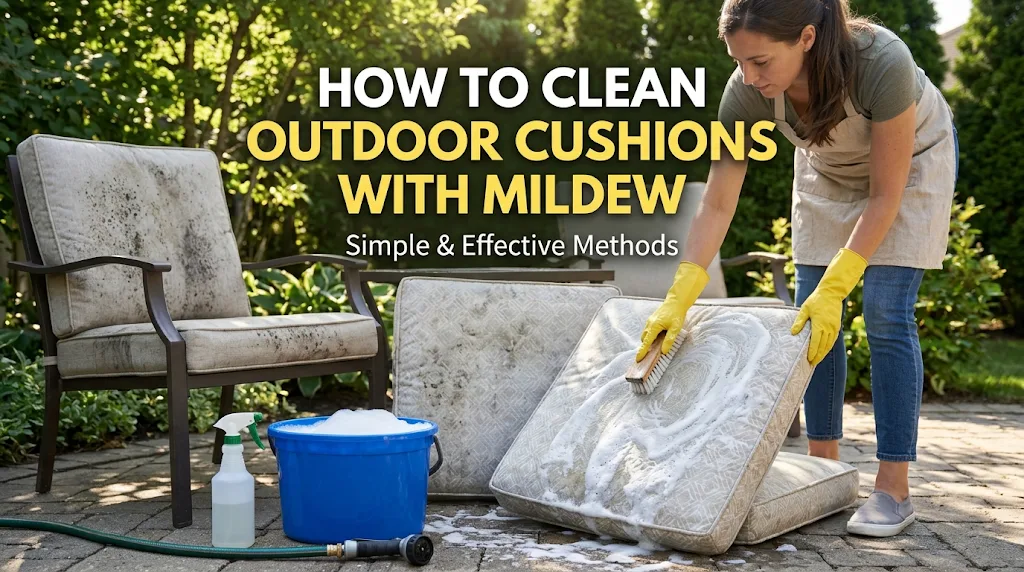
Learning how to clean outdoor cushions with mildew is important for keeping patio furniture fresh, comfortable, and attractive. Outdoor cushions are regularly exposed to rain, humidity, dirt, pollen, and changing weather conditions. Over time, these conditions can contribute to mildew stains, unpleasant odors, and moisture problems.
This is especially relevant for Florida homeowners, where warm temperatures and humid weather can make it difficult for outdoor cushions to dry completely.
Fortunately, many outdoor cushions can be cleaned at home using mild soap, water, and a soft-bristle brush. However, the correct cleaning method depends on the fabric, cushion construction, and severity of the stains.
In this guide, you will learn how to clean outdoor cushions with mildew safely, choose appropriate cleaning products, remove stubborn stains, and prevent moisture problems from returning.
Why Do Outdoor Cushions Develop Mildew?
Outdoor cushions spend much of their time exposed to environmental conditions. Even furniture placed under a covered patio can collect moisture and dirt.
Mildew may develop when moisture remains on the fabric or when dirt and other organic materials accumulate on its surface.
Here are some common causes:
- High humidity: Moist air slows evaporation and makes it harder for cushions to dry.
- Frequent rainfall: Wet cushions can retain moisture, particularly when their filling becomes saturated.
- Poor ventilation: Furniture placed against walls or in enclosed areas may not receive enough airflow.
- Accumulated dirt: Pollen, dust, food residue, and other debris can collect on outdoor fabrics.
- Improper storage: Storing damp cushions in sealed containers can trap moisture.
Florida homeowners should pay particular attention to shaded patios, covered porches, and outdoor furniture that stays wet after rainfall.
What You Need to Clean Outdoor Cushions With Mildew
Gather your supplies before starting. Using suitable cleaning tools helps remove dirt without unnecessarily damaging the fabric.
| Cleaning supply | Purpose |
|---|---|
| Mild liquid soap | Loosens everyday dirt |
| Lukewarm water | Creates a gentle cleaning solution |
| Soft-bristle brush | Removes surface buildup |
| Microfiber cloth | Wipes away dirt and moisture |
| Garden hose | Rinses compatible outdoor fabrics |
| Spray bottle | Applies cleaning solution |
| Protective gloves | Protects your hands |
| Clean towels | Absorbs excess water |
You may also need a manufacturer-approved outdoor fabric cleaner for stubborn stains.
Avoid choosing a strong chemical simply because it is advertised as a mold remover. Some products can discolor fabric, weaken stitching, or damage cushion materials.
How to Clean Outdoor Cushions With Mildew: 7 Easy Steps
Follow these seven steps to clean outdoor cushions while reducing the risk of fabric damage.
Step 1: Identify the Cushion Fabric
Start by checking the manufacturer’s care label. This is important because different materials require different cleaning methods.
Common outdoor cushion fabrics include:
- Solution-dyed acrylic
- Polyester
- Olefin
- Cotton blends
- Other synthetic upholstery materials
Check whether the cushion cover is removable and whether machine washing is permitted.
Some manufacturers allow removable covers to be washed in cold water, while others recommend hand washing or surface cleaning.
For example, Sunbrella provides separate instructions for removable and non-removable upholstery. Read its official Sunbrella upholstery cleaning instructions before choosing a cleaning method for compatible fabrics.
Never assume that a cleaning solution suitable for one outdoor fabric is safe for every cushion.
Step 2: Move the Cushions to a Suitable Cleaning Area
Remove the cushions from the furniture and place them in a well-ventilated cleaning area.
Choose a location where water can drain safely. Avoid cleaning near delicate plants or areas where dirty water can collect.
A shaded location is usually practical because direct sunlight can cause some cleaning solutions to dry too quickly.
Wear protective gloves, particularly when handling visibly contaminated cushions.
Avoid aggressively brushing dry, visible mold because doing so may disturb contaminated dust and debris.
If you have several cushions, separate them to make cleaning easier.
Step 3: Remove Loose Dirt and Debris
Before applying water, remove loose dirt, leaves, pollen, and other surface debris.
Use a soft brush or microfiber cloth to gently clean the fabric. Pay special attention to seams, corners, piping, and areas around zippers.
Avoid using hard brushes because they may damage delicate fibers or stitching.
If your cushions have removable covers, inspect the inner foam separately. Look for persistent dampness, unpleasant odors, or visible contamination.
Removing loose dirt first helps prevent it from spreading during the wet-cleaning process.
Step 4: Prepare a Mild Soap Solution
For compatible outdoor fabrics, mild soap and lukewarm water are a practical starting point.
A useful starting mixture from Sunbrella’s routine-cleaning guidance is:
- One gallon of lukewarm water.
- One-quarter cup of mild liquid soap.
Mix the ingredients in a clean bucket.
Before applying the solution to the entire cushion, test a small hidden area. Check for fading, discoloration, or unwanted changes in the fabric.
Do not use this mixture if the cushion manufacturer recommends a different cleaning product or method.
Step 5: Gently Clean the Mildew-Affected Areas
Dip a soft-bristle brush into the cleaning solution and gently work on the affected fabric.
Use light, controlled movements. Avoid excessive pressure, especially around seams and decorative stitching.
For visible stains, cleaning only a tiny spot may leave an uneven appearance. If the manufacturer’s instructions allow it, clean the entire fabric panel from seam to seam.
This approach can help reduce visible cleaning marks and water rings.
If the stains remain after the initial cleaning, check the manufacturer’s specific stain-removal instructions before trying stronger products.
Step 6: Rinse Away Soap and Dirt
After cleaning, rinse the fabric with clean water.
A garden hose with gentle water pressure may work for compatible outdoor materials. Avoid directing a concentrated pressure-washer stream at the fabric because it can damage stitching and seams.
Rinse the entire cleaned area, including corners and folds.
Soap residue can attract dirt and leave the fabric looking uneven. Make sure the cleaning product has been thoroughly removed.
If the cushion cover is machine washable, follow the manufacturer’s instructions instead of using an unsuitable surface-cleaning method.
Step 7: Dry the Cushions Completely
Proper drying is essential when learning how to clean outdoor cushions with mildew.
After rinsing, gently remove excess water with clean towels. Place the cushions in an open, well-ventilated location.
Follow these practical drying tips:
- Separate cushions instead of stacking them.
- Stand them on their edges when appropriate to help water drain.
- Allow air to circulate around all sides.
- Keep them away from damp floors and surfaces.
- Check the filling before returning cushions to furniture.
Do not use a clothes dryer unless the manufacturer specifically permits it.
The outside fabric may feel dry while the foam filling still contains moisture. Allow sufficient drying time before storing or using the cushions again.
How to Remove Stubborn Mildew Stains From Outdoor Cushions
Some stains may remain after routine soap cleaning. In those cases, a fabric-specific cleaning treatment may be necessary.
Sunbrella publishes a particular mildew-removal method for compatible Sunbrella upholstery fabrics.
Its instructions describe preparing a solution containing:
- One gallon of water.
- One cup of household bleach.
- One-quarter cup of mild soap.
The manufacturer recommends applying the solution to the affected fabric, allowing it to soak for 15 minutes, gently cleaning the surface with a sponge or very soft brush, rinsing thoroughly, and allowing it to air dry.
This is a manufacturer-specific treatment, not a universal cleaning recipe.
Before using bleach:
- Confirm that your cushion fabric is compatible with bleach.
- Read the current manufacturer’s instructions.
- Test an inconspicuous area.
- Protect nearby surfaces and vegetation.
- Wear appropriate protective equipment.
- Follow the product label and rinse thoroughly.
Never mix bleach with vinegar, ammonia, acids, or other cleaning products. Dangerous chemical reactions can occur.
For polyester, printed fabrics, cotton blends, and unidentified materials, use only a manufacturer-approved cleaner.
If stains have penetrated deeply into the cushion filling, professional cleaning or replacement may be more appropriate.
How to Prevent Mildew From Returning on Outdoor Cushions
Cleaning removes existing dirt and stains, but moisture management is equally important.
Here are practical ways to maintain outdoor cushions.
1. Dry Cushions After Rain
Do not leave wet cushions stacked on top of one another.
After rainfall, separate them and allow air to circulate around the fabric. Check the underside as well as the visible surface.
2. Clean Dirt and Spills Regularly
Dust, pollen, food crumbs, sunscreen, and other residue can accumulate over time.
Brush away loose debris regularly and clean spills promptly with a suitable fabric cleaner.
Regular maintenance is generally easier than removing established stains.
3. Improve Air Circulation
Avoid placing outdoor furniture in permanently damp or enclosed areas.
Leave enough space around the furniture for air to circulate. Move cushions to a better-ventilated location when necessary.
4. Store Cushions Properly
Before storing cushions for an extended period, make sure they are completely dry.
Use a clean, dry storage area with suitable ventilation. Avoid sealing damp cushions inside airtight plastic bags.
5. Use Suitable Outdoor Furniture Covers
Protective covers can help reduce exposure to rain, dirt, and debris.
However, covers should not trap moisture. Allow ventilation and follow the furniture manufacturer’s recommendations.
6. Inspect Shaded Areas Regularly
Outdoor cushions under trees, covered patios, and enclosed porches may receive limited sunlight and airflow.
Check these locations regularly for dark spots, dampness, and unpleasant odors.
7. Manage Excess Moisture
Moisture management is important for maintaining a cleaner outdoor and indoor environment.
If humidity is also affecting your indoor laundry area, read our guide on using a dehumidifier for air drying clothes.
Although a dehumidifier does not replace proper outdoor cushion drying, understanding humidity control can help you manage moisture-related problems around your home.
Common Mistakes to Avoid When Cleaning Patio Cushions
Some cleaning mistakes can damage outdoor fabric or allow moisture problems to continue.
Using too much bleach: Strong chemicals can cause discoloration and damage. Only use bleach when the manufacturer approves it.
Scrubbing aggressively: Hard brushing can weaken fibers and damage stitching.
Ignoring the cushion filling: Cleaning the cover does not necessarily resolve moisture or contamination inside the foam.
Storing damp cushions: Trapped moisture can contribute to recurring mildew and unpleasant odors.
Using excessive water pressure: A pressure washer can damage fabric and seams.
Mixing cleaning products: Combining incompatible chemicals can create dangerous reactions.
Skipping the drying process: Returning cushions to furniture before they are completely dry can allow moisture problems to continue.
When Should You Replace Outdoor Cushions?
Not every contaminated cushion can be restored with household cleaning.
Consider professional cleaning or replacement when:
- Mildew has penetrated deeply into the foam filling.
- A persistent musty odor remains after appropriate cleaning.
- The foam is deteriorating or breaking apart.
- Visible growth repeatedly returns.
- The fabric has extensive discoloration or structural damage.
The U.S. Environmental Protection Agency explains that mold can penetrate porous materials, making complete removal difficult or impossible in some cases.
Read the official EPA guide to basic mold cleanup steps for additional guidance on moisture control, cleaning precautions, and porous materials.
If the cushions are expensive or heavily contaminated, consult a qualified cleaning or restoration professional before deciding whether they can be safely restored.
Frequently Asked Questions
Can I use vinegar to clean outdoor cushions with mildew?
Vinegar should not be treated as a universal mildew-removal solution for outdoor fabrics. Its suitability depends on the material and manufacturer’s instructions. Choose an approved fabric cleaner rather than experimenting with household ingredients.
Does baking soda remove mildew from patio cushions?
Baking soda may help absorb some unpleasant odors, but it is not a guaranteed treatment for established mildew. Check the fabric care instructions before applying powders or other household products.
Can outdoor cushion covers go in the washing machine?
Some removable outdoor cushion covers are machine washable, while others are not. Check the care label before removing or washing a cover. Follow the recommended water temperature, detergent, and drying instructions.
How long do outdoor cushions take to dry?
Drying time depends on humidity, airflow, fabric thickness, weather, and cushion filling. Allow enough time for the entire cushion to dry rather than relying only on the outer fabric.
Why do my outdoor cushions keep developing mildew?
Recurring mildew may be associated with persistent moisture, accumulated dirt, poor ventilation, or damp storage. Improve airflow, clean cushions regularly, and dry them completely after rainfall.
Is bleach safe for every outdoor cushion fabric?
No. Bleach is suitable only for materials whose manufacturers specifically approve its use. Some fabrics, dyes, stitching, and cushion components can be damaged by bleach.
Should I replace outdoor cushions with mold inside?
Replacement may be appropriate when contamination has penetrated porous foam, the material is deteriorating, or persistent odors remain after suitable cleaning. A qualified professional can help assess valuable cushions.
Final Thoughts
Learning how to clean outdoor cushions with mildew can help you maintain a cleaner, more comfortable patio. The best approach starts with identifying the fabric, removing loose dirt, using a suitable cleaning solution, rinsing thoroughly, and allowing the entire cushion to dry.
For Florida homeowners, regular maintenance is particularly important because rainfall and humidity can contribute to recurring moisture problems.
Avoid aggressive chemicals unless the fabric manufacturer approves them. With suitable cleaning, proper ventilation, and dry storage, you can help protect your outdoor cushions and keep your patio looking welcoming throughout the year.