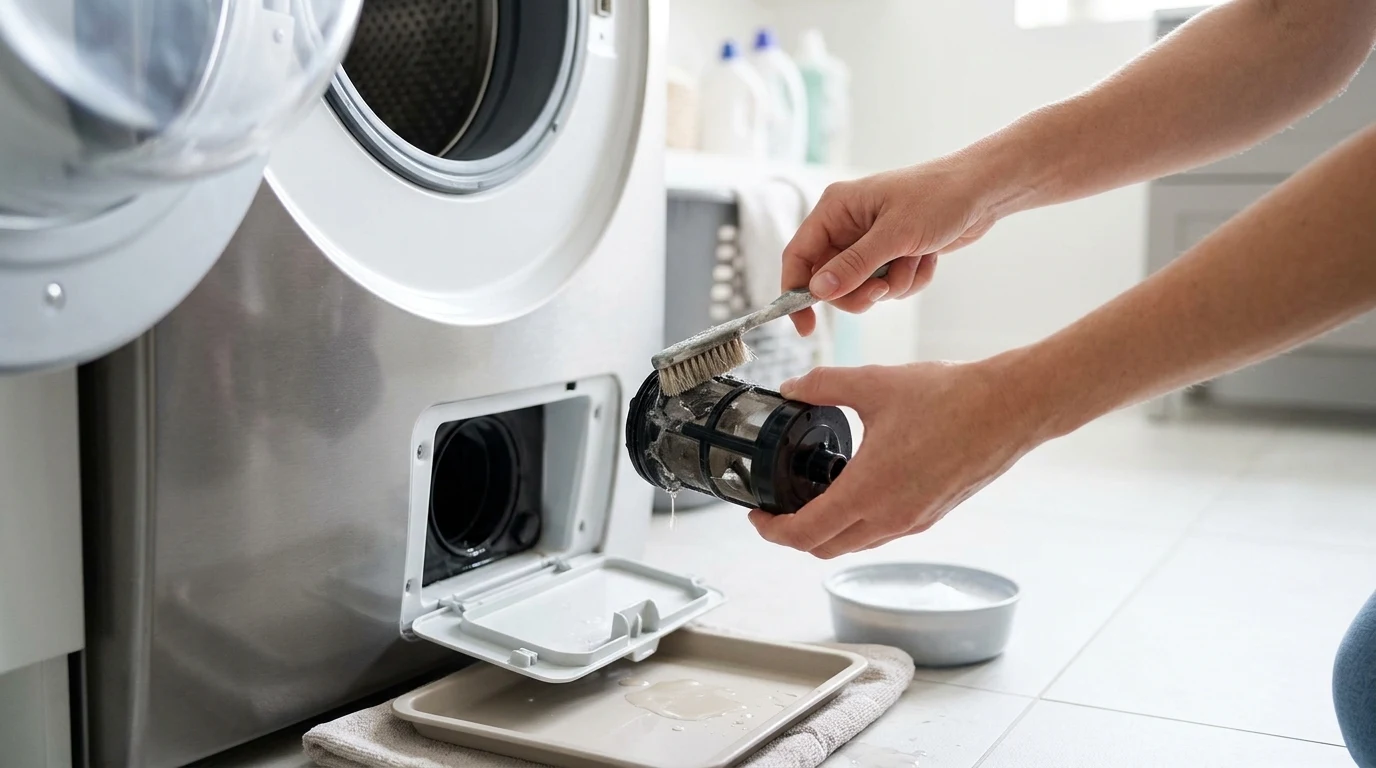
Learning how to clean a washing machine filter is an important part of keeping your laundry appliance in good working condition. Over time, lint, hair, coins, buttons, and other small objects can collect inside certain washer filters. When debris builds up, it may interfere with drainage, cause unpleasant odors, and affect your washer’s performance.
The good news is that cleaning a washing machine filter is usually a straightforward maintenance task. However, the correct process depends on your washer’s design. Many front-load washing machines have an accessible drain pump filter, while some top-load models have a removable lint filter. Other newer machines may use self-cleaning filtration systems.
This guide explains how to clean a washing machine filter safely, where to find it, which supplies you need, and how to recognize signs of a clogged filter.
Why Should You Clean a Washing Machine Filter?
A dirty or clogged washing machine filter can interfere with proper drainage and prevent your washer from completing a wash cycle normally. Over time, lint, hair, coins, fabric fibers, and other debris may collect inside the filter and drainage system.
When buildup is left unattended, it can contribute to several problems:
- Drainage issues: Water may drain slowly or remain inside the drum after a cycle.
- Unpleasant odors: Trapped debris and moisture can contribute to musty smells.
- Longer wash cycles: Drainage problems may cause certain washing machines to pause or extend their programs.
- Washer performance problems: A blocked filter may interfere with normal operation and affect drainage components.
- Error messages: Some washers display drainage-related warnings when water cannot leave the appliance properly.
A dirty filter is not the only possible cause of these problems. A blocked drain hose, faulty drain pump, or household plumbing issue can produce similar symptoms.
If your washer regularly takes longer than expected to finish a cycle, read our guide on problems that cause extended washing cycles.
Regular filter maintenance, when recommended by your washer manufacturer, can help reduce debris buildup and keep your appliance working properly.
Where Is the Washing Machine Filter?
The location of a washing machine filter depends on the appliance type, manufacturer, and model. In some washers, the filter is located behind a small access panel near the bottom front of the machine. Other models may have a lint filter inside the drum, near the agitator, or integrated into the drainage system.
Before trying to remove anything, check your washing machine’s owner’s manual to identify the exact filter location and determine whether it is designed for regular cleaning.
Front-Load Washing Machine Filter Location
Many front-load washing machines have a drain pump filter behind a small access panel near the bottom front of the appliance. You may also find an emergency drain hose behind this panel.
Look for a rectangular or square cover near the lower-left or lower-right corner. The exact location depends on the manufacturer and model.
Not every front-load washing machine has a consumer-accessible drain filter. Check your owner’s manual before opening any panel.
Top-Load Washing Machine Filter Location
Some top-load washers have removable lint filters inside the drum or around the agitator. However, many newer models use self-cleaning filtration systems and do not have a traditional removable filter.
Depending on the model, the filter may be:
- Inside or around the center agitator.
- Attached near the upper rim of the drum.
- Integrated into the washer’s internal drainage system.
- Designed as a self-cleaning component.
Always follow your manufacturer’s instructions rather than forcing open a panel or removing internal components.
Supplies You Need to Clean a Washing Machine Filter
Gather these basic supplies before starting:
| Supply | Purpose |
|---|---|
| Shallow bowl or container | Collects leftover water |
| Old towels | Protects the floor |
| Soft-bristle brush | Removes lint and debris |
| Microfiber cloth | Wipes the filter housing |
| Warm water | Rinses removable filters |
| Cleaning gloves | Protects your hands |
You usually do not need expensive cleaning products.
Avoid strong chemicals, abrasive tools, and sharp objects that could damage the filter or its housing.
How to Clean a Washing Machine Filter: 7 Easy Steps
The following instructions primarily apply to front-load washers with an accessible drain pump filter. Your specific model may use a different procedure.
Step 1: Turn Off and Unplug the Washing Machine
Safety should always come first.
Turn off the washing machine and disconnect its power cord from the electrical outlet before accessing the filter.
If your washer has recently completed a hot wash, wait until the remaining water has cooled. Hot water can cause burns when released from the drain hose or filter opening.
Also, make sure the washing machine is not running a cycle.
Step 2: Locate the Drain Pump Filter Access Panel
Look near the bottom front of your washing machine for a small service panel.
Depending on the manufacturer, you may be able to open it by pressing a latch or gently using a suitable coin.
Do not force the panel open. If it does not open easily, consult your owner’s manual.
Once the panel is open, look for the emergency drain hose and the round filter cap.
Step 3: Drain the Remaining Water
Place a shallow bowl underneath the emergency drain hose.
If your washer has a small drain hose:
- Carefully pull the hose out of its holder.
- Remove the hose cap.
- Allow the remaining water to drain into the container.
- Empty the container if necessary.
- Replace the hose cap securely.
Some washing machines do not have a separate emergency drain hose. In that case, follow the manufacturer’s instructions for removing the remaining water.
Never open the pump filter quickly when water is still trapped inside. A sudden release may spill water across your laundry room floor.
For model-specific instructions, see LG’s official guide to cleaning a washing machine drain pump filter.
Step 4: Remove the Washing Machine Filter
After draining the water, locate the filter cap.
On many models, you can remove it by turning it counterclockwise.
Pull it out carefully and keep a towel underneath to catch any remaining water.
You may find:
- Lint and fabric fibers.
- Hair and pet fur.
- Coins or small buttons.
- Dirt and other foreign objects.
Remove visible debris carefully. Do not use excessive force if the filter feels stuck.
Step 5: Clean the Filter With Warm Water
Rinse the removable filter under warm running water.
Use a soft-bristle brush to remove lint, dirt, and other buildup from the filter’s surface.
Pay attention to small openings where debris can become trapped.
Avoid using a wire brush, sharp tool, or aggressive scrubbing technique. These can damage plastic components or the filter mesh.
If the manufacturer recommends a particular cleaning method, follow those instructions.
Step 6: Clean the Filter Housing
Cleaning the removable filter is only part of the process.
Use a microfiber cloth to wipe the accessible filter housing and remove loose dirt or lint.
You can also carefully inspect the opening for visible foreign objects.
If the pump impeller is visible, check for obvious obstructions without forcing or damaging the component.
Do not push your fingers or tools deep into the pump assembly.
If you notice broken parts, unusual damage, or a component that does not move as expected, stop and contact a qualified appliance technician.
Step 7: Reinstall the Filter and Test the Washer
Once the filter and housing are clean, reinstall the filter.
Follow these steps:
- Position the filter correctly in its housing.
- Turn it clockwise until it is securely tightened.
- Reinstall the emergency drain hose cap.
- Return the hose to its holder.
- Close the access panel.
- Reconnect the washing machine to power.
Run an appropriate rinse or drain cycle according to the owner’s manual.
Watch the filter area for leaks while the washer operates.
If water leaks from the filter cover, stop the machine and check whether the filter is correctly positioned and tightened. Do not continue using the washer if the leak persists.
For another manufacturer-specific example, Samsung provides a step-by-step explanation in its guide to cleaning a Samsung washing machine.
How to Clean a Top-Load Washing Machine Filter
Cleaning a top-load washer filter is different from cleaning a front-load drain pump filter.
First, identify whether your model actually has a removable lint filter.
If your washer has an accessible lint trap:
- Turn off the washing machine.
- Check the owner’s manual for the filter location.
- Remove the lint filter according to the manufacturer’s instructions.
- Remove collected lint and fabric fibers.
- Rinse the filter if the manual allows it.
- Let it drain or dry as instructed.
- Reinstall it securely.
Some top-load washers use self-cleaning filtration systems instead of removable lint traps.
Never remove internal components simply because you cannot find a traditional filter.
How Often Should You Clean a Washing Machine Filter?
The ideal cleaning frequency depends on your washing machine model and household laundry habits.
Some manufacturers recommend monthly cleaning, while others suggest cleaning the filter several times per year.
For example, Samsung recommends cleaning the pump filter on applicable front-load washers at least once a month or approximately every 40 washes.
Your owner’s manual should always take priority over a general cleaning schedule.
You may need to inspect the filter more frequently if:
- You regularly wash pet bedding.
- Your household produces a lot of laundry.
- You frequently wash heavily soiled clothing.
- You notice slow drainage.
- Your washer begins displaying drainage warnings.
Keeping a simple maintenance reminder can help you avoid forgetting this task.
Signs Your Washing Machine Filter May Be Clogged
A clogged filter can cause noticeable changes in washer performance.
Look for these warning signs:
1. Water Is Not Draining Properly
If water remains in the drum after a wash cycle, a blocked filter may be one possible cause.
However, a kinked drain hose, blocked household drain, or faulty drain pump can produce similar symptoms.
2. The Washer Makes Unusual Noises
A washer may make unusual sounds when foreign objects interfere with the drainage system.
Coins, buttons, or other small objects can sometimes become trapped near the pump.
Stop the washer if you hear persistent grinding or abnormal mechanical noises.
3. Clothes Remain Excessively Wet
When a washer cannot drain properly, it may not complete its normal spin process.
As a result, clothes may come out wetter than usual.
4. An Error Code Appears
Some washing machines display a drainage-related error when water cannot leave the appliance as expected.
The meaning of the code varies by brand and model.
Check your owner’s manual before attempting additional troubleshooting.
5. The Laundry Room Smells Musty
Trapped lint, moisture, and residue may contribute to unpleasant odors.
Cleaning the filter may help, but the washer drum, detergent drawer, door gasket, and drainage hose may also need attention.
Common Mistakes to Avoid When Cleaning a Washer Filter
Even a simple maintenance task can cause problems if you rush through it.
Avoid these common mistakes:
- Opening the filter without draining water: This can release water onto the floor.
- Ignoring electrical safety: Always disconnect power before accessing the filter.
- Using sharp cleaning tools: Sharp objects can damage the filter and housing.
- Forgetting the filter seal: Incorrect installation may cause leaks.
- Assuming every washer has a removable filter: Some models use different filtration systems.
- Using excessive force: A stuck filter may require model-specific instructions rather than additional pressure.
- Ignoring persistent drainage problems: A clean filter does not guarantee that the drain pump or hose is working correctly.
What to Do If Your Washing Machine Still Will Not Drain
If you have completed washing machine filter cleaning and the appliance still will not drain, investigate other possible causes.
Start by checking the drain hose for visible kinks or obstructions.
You can also review our guide on installing a washing machine drain hose to understand how an incorrectly positioned hose can affect drainage.
If you notice water leaking around the hose connection, our guide to the washing machine drain hose seal may help you understand the connection and sealing components.
A blocked filter is not the only reason a washer may fail to drain. Read LG’s official washing machine drainage troubleshooting guide for examples of other possible causes, including a kinked drain hose.
If the washer continues to make unusual noises, displays repeated error codes, or fails to drain despite a clean filter and unobstructed hose, contact a qualified appliance repair technician.
Avoid disassembling electrical or internal pump components unless you have the necessary training.
Extra Tips to Keep Your Washing Machine Clean
Regular maintenance can help reduce dirt and moisture buildup inside your appliance.
Here are a few useful habits:
- Remove wet clothes promptly after each cycle.
- Wipe the door gasket when needed.
- Clean the detergent drawer regularly.
- Use the correct amount of detergent.
- Run the manufacturer’s recommended tub-cleaning cycle.
- Leave the door or lid open when appropriate to allow moisture to escape.
- Inspect the drain hose periodically.
- Follow the washer manufacturer’s maintenance schedule.
If you regularly air-dry clothes indoors, managing excess laundry-room humidity can also be helpful. Read our guide to using a dehumidifier for air drying clothes.
These small habits can make routine laundry maintenance easier.
Frequently Asked Questions
How do I know if my washing machine has a filter?
Check your owner’s manual for the filter location and maintenance instructions. Front-load washers may have an accessible drain pump filter near the bottom front, while top-load models may have a lint trap or a self-cleaning filtration system.
Can I clean a washing machine filter myself?
Yes, many washers have filters designed for routine homeowner maintenance. However, the procedure depends on the appliance model. Follow the manufacturer’s instructions and avoid removing internal components that are not designed for consumer access.
How long does it take to clean a washing machine filter?
The task usually takes a short amount of time when the filter is accessible. However, the total time depends on how much water needs draining, how dirty the filter is, and the washer’s design.
Should I use vinegar to clean my washing machine filter?
Do not assume vinegar is suitable for every filter. Warm water and a soft brush are generally sufficient for removing ordinary lint and debris. Use only cleaning products approved by your washer manufacturer.
What happens if I never clean my washing machine filter?
On models with a maintenance filter, accumulated debris may interfere with drainage and contribute to performance problems. Some washers have self-cleaning systems or filters that do not require routine manual cleaning, so follow the model-specific maintenance instructions.
Why is my washing machine still not draining after cleaning the filter?
Other possible causes include a blocked drain hose, clogged household drain, faulty drain pump, or an electrical or control issue. If the problem continues, professional diagnosis may be necessary.
Final Thoughts
Learning how to clean a washing machine filter can help you maintain your appliance and recognize early signs of drainage problems.
The most important step is identifying the correct filter before attempting to remove it. Front-load and top-load washers can have very different filtration systems, and some newer machines do not require manual filter cleaning.
Always disconnect power, allow hot water to cool, drain remaining water carefully, and reinstall the filter securely.
With the correct model-specific instructions and a consistent maintenance routine, you can keep your washing machine cleaner and reduce avoidable drainage issues.