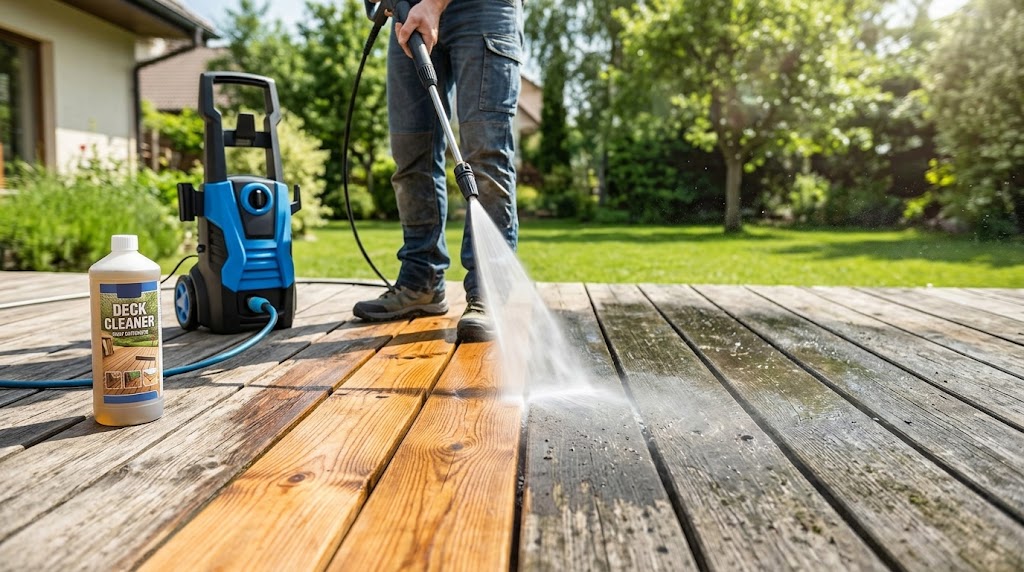
Deck Cleaner for Pressure Washer: How to Choose and Use It Safely
Cleaning an outdoor deck with a pressure washer can save time, especially when dirt, pollen, algae, and mildew accumulate on the surface. However, using the wrong cleaning solution or too much water pressure can damage wooden boards, affect existing finishes, and create problems with composite decking.
Choosing the right deck cleaner for pressure washer use is just as important as selecting the appropriate pressure washer nozzle. Some detergents are specially formulated for pressure-washing equipment, while others are intended for manual application with a pump sprayer and brush.
Before starting, check your deck material and pressure washer manual. This guide explains how to choose a compatible deck cleaner, apply it correctly, and clean different decking surfaces without unnecessary damage.
What Is a Deck Cleaner for a Pressure Washer?
A deck cleaner for a pressure washer is a cleaning solution designed to remove accumulated dirt, grime, and certain stains from outdoor decking when used with compatible pressure-washing equipment.
These products may be formulated for wood, composite, PVC, or other exterior surfaces. Depending on the formula, they can help loosen:
- Ordinary dirt and outdoor grime
- Pollen and environmental buildup
- Algae and green surface staining
- Mold and mildew staining
- Certain grease and food stains
Not every deck cleaner is designed to work through a pressure washer’s detergent system. Some products must be applied separately using a garden sprayer or brush before rinsing.
Always check the product label to confirm its application method, surface compatibility, and equipment requirements.
How to Choose the Best Deck Cleaner for Pressure Washer Use
Buying a cleaner simply because it claims to remove tough stains can lead to disappointing results. Consider these factors before purchasing one.
If you’re still comparing cleaning products for different deck materials and stains, read our guide to the best deck cleaner for every type of deck to understand which option may suit your cleaning needs.
1. Check Deck Material Compatibility
Start by identifying the material used to build your deck.
Wood, composite, and PVC decking have different cleaning requirements. A product suitable for pressure-treated lumber may not be appropriate for every composite surface.
Look for a cleaner that specifically identifies your decking material on its label.
For example:
- Pressure-treated wood: Choose a compatible wood-deck cleaning solution.
- Cedar and other natural wood: Check that the formula is approved for the particular wood species and finish.
- Composite decking: Use a cleaner approved by the decking manufacturer.
- PVC decking: Select a product specifically approved for PVC surfaces.
- Painted or sealed decks: Check compatibility with the existing coating.
When the material is uncertain, consult the deck manufacturer’s maintenance guide before applying chemicals.
2. Choose a Pressure-Washer-Compatible Formula
Some cleaning solutions are designed specifically for pressure washers and can be applied through a detergent siphon, onboard tank, or compatible accessory.
Others are intended for manual application.
For example, Kärcher offers a Deck and Fence Cleaner specifically designed for compatible pressure washers. Its product information identifies wood, composite, and PVC among the intended surface types.
Before purchasing any detergent, check:
- Whether it is approved for pressure washer use
- Whether it works with your machine’s detergent system
- Whether dilution is required
- Whether it is suitable for your decking material
- Whether the manufacturer requires a particular application attachment
Never pour an ordinary household cleaner into a pressure washer detergent tank unless the equipment and cleaning-product manufacturers explicitly permit it.
3. Consider the Type of Stain
Different cleaning problems may require different formulas.
For general dirt and grime, a suitable deck wash may be enough. For algae or mildew staining, choose a product specifically labeled for the problem.
Grease from outdoor cooking may require a compatible degreasing product.
Avoid assuming that one concentrated cleaner will safely remove every type of stain.
4. Review Dilution and Coverage
Concentrated cleaners may need to be diluted before use. The correct mixture depends on the product.
Compare the manufacturer’s stated coverage rather than judging a cleaner by its container size alone.
A product that appears inexpensive may require more concentrate per cleaning job than another option.
Never make a cleaning solution stronger than the recommended concentration. Increasing the amount of chemical does not guarantee better results.
How to Use a Deck Cleaner With a Pressure Washer
Following a consistent cleaning process helps distribute detergent evenly and reduces the chance of damaging the deck.
Step 1: Prepare the Deck
Remove outdoor furniture, flowerpots, grills, rugs, and other objects from the cleaning area.
Sweep away leaves, loose dirt, and debris. Check for raised nails, loose boards, damaged wood, and other problems that should be addressed before washing.
Close nearby windows and doors. Protect electrical fixtures and nearby plants according to the cleaner’s safety instructions.
Step 2: Read the Pressure Washer Manual
Check your equipment manual before connecting detergent or selecting a nozzle.
Confirm which detergent application method is supported by your machine. Some pressure washers use a siphon tube, while others have a separate detergent tank or accessory.
Also check the manufacturer’s recommendations for spray tips, pressure settings, and minimum operating distance.
Step 3: Test a Small Area
Before applying the cleaner to the entire deck, choose a hidden or inconspicuous section.
Apply the product according to its instructions and check for discoloration, surface changes, or unexpected reactions.
This step is especially important for older wood, painted decking, and surfaces with existing finishes.
Step 4: Apply the Cleaner at the Recommended Pressure
Use the detergent application setting or accessory specified by the equipment manufacturer.
Apply the solution evenly over a manageable section of the deck. Follow the cleaning product’s directions for dilution and application.
If the label specifies a waiting period, follow it carefully. Do not allow the solution to dry on the surface unless the product specifically instructs otherwise.
Step 5: Scrub Stubborn Areas
A pressure washer may not remove every stain by itself.
For stubborn dirt, grease, or accumulated grime, use a soft or appropriately rated deck brush if the cleaner’s instructions permit it.
Pay particular attention to corners, edges, railings, and areas where debris collects.
Step 6: Rinse Thoroughly
After the recommended cleaning time, rinse away the detergent and loosened dirt.
Use a compatible nozzle and conservative pressure setting. Work along the direction of the wood grain when cleaning natural wood.
Keep the spray moving instead of concentrating water on one spot.
Make sure the cleaning solution is removed as directed by its manufacturer.
Step 7: Allow the Deck to Dry
Let the deck dry naturally before replacing furniture or applying another treatment.
If you plan to stain or seal the wood, follow the coating manufacturer’s moisture and preparation requirements. Do not assume that every deck is ready for staining after the same drying period.
What Pressure Washer Nozzle Should You Use on a Deck?
Nozzle selection plays an important role in preventing surface damage.
A narrow, concentrated spray can cut into wood fibers, strip finishes, and leave visible marks.
A wider fan spray generally provides a less concentrated stream, but the correct nozzle still depends on your equipment and deck manufacturer’s instructions.
Consider these general precautions:
- Avoid using a zero-degree nozzle on decking.
- Start with the least aggressive setting recommended for the surface.
- Test the spray on an inconspicuous area.
- Keep the nozzle moving consistently.
- Follow the board direction when cleaning wood.
- Maintain the recommended distance from the surface.
Do not rely on a universal PSI recommendation. Different wood species, conditions, finishes, and decking products have different limitations.
For some composite products, manufacturers recommend using a pressure washer only for light rinsing or advise against using one altogether.
Can You Use a Pressure Washer on Wood and Composite Decking?
The answer depends on the decking material and its manufacturer’s instructions.
Cleaning a Wooden Deck
Natural wood can be vulnerable to excessive water pressure.
An aggressive spray may raise the wood grain, create grooves, or remove an existing finish.
For some pressure-treated wood products, the American Wood Council’s treated-wood guidance recommends limiting pressure washing to experienced users or professionals and using very low pressure when appropriate.
A compatible deck cleaner, soft brush, and garden hose may be a safer option for routine cleaning.
If a pressure washer is permitted, follow the decking and equipment manufacturers’ recommendations rather than using a high-pressure setting by default.
For additional guidance on maintaining treated wood, consult the American Wood Council’s treated wood deck maintenance guidance.
Cleaning a Composite Deck
Composite decking is not identical across manufacturers. Different products have different cleaning and maintenance requirements.
Some manufacturers allow carefully controlled pressure washing, while others recommend ordinary soap, water, and a soft brush.
For example, Deckorators’ care guidance recommends using a fan-tip nozzle at the lowest setting for its compatible products, with a specified minimum distance.
Always check your exact deck model’s instructions before using a pressure washer. Using an unapproved cleaning method may also affect warranty coverage.
For product-specific cleaning recommendations, review the Deckorators care and maintenance guidelines.
Common Mistakes to Avoid When Using Deck Cleaner
Even a suitable cleaning product can cause problems if it is used incorrectly.
Using the Wrong Detergent
A general-purpose exterior cleaner may not be suitable for every deck surface.
Choose a product specifically approved for your material and cleaning method.
Applying Too Much Pressure
Excessive pressure can damage wood fibers and certain composite surfaces.
Use the equipment manufacturer’s recommended settings and test first.
Allowing Cleaner to Dry
Some detergents can leave residue or become harder to rinse if they dry on the deck.
Follow the product’s recommended dwell time and work in manageable sections.
Ignoring Nearby Plants
Cleaning solutions and runoff can affect surrounding vegetation.
Protect plants and rinse them before and after cleaning when required by the product instructions.
Mixing Different Chemicals
Never combine cleaning products unless their manufacturers explicitly provide instructions for doing so.
Mixing bleach with ammonia or acids can release dangerous gases. Keep chemicals in their original containers and follow label precautions.
Skipping the Manufacturer’s Instructions
A cleaner may be advertised for outdoor surfaces but still have limitations for certain finishes, materials, or application methods.
Read both the detergent label and the pressure washer manual.
How Often Should You Clean a Deck With a Pressure Washer?
There is no universal cleaning schedule for every deck.
The right frequency depends on local weather, shade, foot traffic, surrounding trees, and the type of decking.
In humid areas such as Florida, decks may experience more frequent moisture exposure, which can encourage surface algae and mildew buildup.
Rather than pressure washing on a fixed schedule, inspect the deck regularly and clean it when visible dirt or staining develops.
For routine maintenance, sweeping away leaves, removing standing water, and cleaning minor dirt with a compatible solution may reduce the need for aggressive washing.
Frequently Asked Questions
What is the best deck cleaner for a pressure washer?
The best option depends on the deck material, type of staining, and pressure washer compatibility. Choose a product specifically designed for your cleaning equipment and approved for your decking surface.
Can I put deck cleaner directly into my pressure washer?
Only if the product and your pressure washer manufacturer permit that application method. Some detergents are designed for a siphon tube or detergent tank, while others must be applied separately with a pump sprayer.
Is pressure washer soap different from regular deck cleaner?
It can be. Pressure washer soap is formulated for use with compatible pressure-washing equipment. Regular deck cleaners may require manual application and may not be suitable for a machine’s detergent system.
Can I use pressure washer detergent on a composite deck?
Only when the detergent label and composite decking manufacturer approve it. Check the exact product and decking model before applying the solution.
Should I use a pressure washer or a deck brush?
For ordinary dirt, a garden hose and suitable brush may be sufficient. A pressure washer can help with some cleaning jobs, but it must be used according to the surface manufacturer’s recommendations.
Does a deck cleaner remove old stain or sealer?
Not necessarily. A deck cleaner is generally intended to remove dirt and certain surface stains. Removing an existing finish may require a compatible wood stripper or sanding rather than higher water pressure.
Can I use a pressure washer to remove mold and mildew?
A compatible cleaner may help remove surface staining, but aggressive pressure washing can damage decking. Select a product labeled for the affected surface and follow its application instructions.
Final Thoughts
Choosing the right deck cleaner for a pressure washer involves more than finding a product that promises powerful cleaning. You also need to consider the deck material, detergent compatibility, stain type, and equipment requirements.
Start with the manufacturer’s maintenance recommendations, test the cleaning solution in a hidden area, and use a conservative cleaning approach. For some decks, a suitable detergent and soft brush may be all you need.
A careful cleaning process can help maintain your outdoor space without exposing the decking to unnecessary chemical or water-pressure damage.