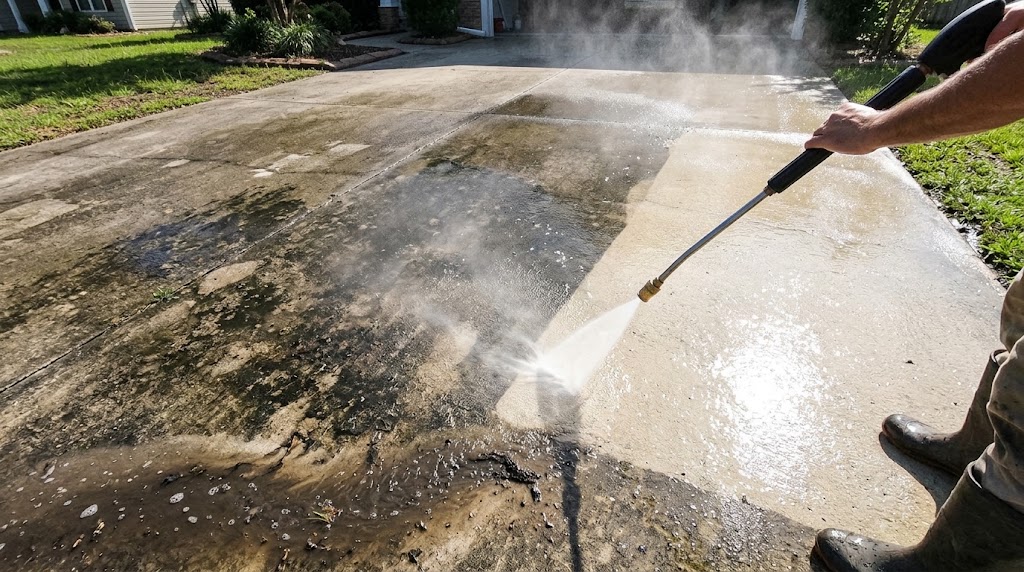
A dirty concrete driveway can make an otherwise attractive home look neglected. Over time, dirt, oil leaks, tire marks, mold, algae, and weather-related stains can collect on the surface. In humid areas like Florida, moisture and limited sunlight can also encourage green algae and mildew growth.
Fortunately, learning how to clean a concrete driveway does not have to involve expensive equipment or complicated cleaning products. With the right supplies and a suitable cleaning method, you can remove many common stains and restore the appearance of your driveway.
Whether you prefer using a garden hose, a homemade cleaning solution, or a pressure washer, this guide explains how to clean concrete safely and effectively.
Why Does a Concrete Driveway Get Dirty?
Concrete is a porous material, which means it can absorb moisture and allow certain contaminants to penetrate its surface. Regular vehicle use, rain, falling leaves, and outdoor activities can gradually make the driveway look stained or discolored.
Some common causes include:
- Oil and grease: Vehicles can leave oil leaks, transmission fluid, and greasy marks.
- Tire marks: Hot tires may leave dark rubber or plasticizer marks on concrete.
- Mold and mildew: Damp, shaded areas can develop organic growth.
- Algae: Moisture and limited sunlight can encourage green algae on outdoor concrete.
- Dirt and mud: Rain, foot traffic, and vehicles bring soil onto the driveway.
- Leaf stains: Wet leaves and other organic debris can leave brown discoloration.
Identifying the type of stain before cleaning is important because different contaminants may require different treatments.
What to Know Before You Clean Concrete
Before mixing cleaning solutions or using a pressure washer, take a moment to inspect your driveway. Concrete is durable, but the wrong tools or chemicals can damage certain surfaces, especially if the concrete is sealed, stamped, decorative, or already cracked.
Is It Safe to Pressure Wash Concrete?
Most sound, properly cured outdoor concrete surfaces can be pressure washed when the correct equipment settings and techniques are used.
However, there is no single PSI setting that works safely for every driveway. The appropriate pressure depends on the concrete’s age, condition, finish, and the pressure washer being used.
Before pressure washing:
- Check for cracks, chips, flaking, and surface deterioration.
- Start with a lower-pressure setting and test an inconspicuous area.
- Keep the spray wand moving instead of concentrating water on one spot.
- Avoid aggressive pressure on decorative, stamped, or damaged concrete.
- Follow the pressure washer manufacturer’s instructions.
If the concrete is severely damaged or deteriorating, consider getting professional advice before pressure washing.
What Cleaning Products Are Safe for Sealed and Unsealed Concrete?
The type of concrete finish matters when selecting a cleaning product.
Sealed concrete: Sealed driveways and decorative surfaces may be more sensitive to harsh chemicals and abrasive tools. Use a pH-neutral cleaner or a product specifically approved for the sealer. Soft or medium-bristle brushes are generally a better starting point than aggressive scrubbing tools.
Unsealed concrete: Unsealed concrete can usually tolerate a wider range of concrete-specific cleaning products. Degreasers may help with oil stains, while suitable outdoor cleaners can address compatible algae and mildew buildup.
Avoid assuming that vinegar or another household ingredient is suitable for every concrete surface. Acidic cleaners may etch or alter certain finishes.
When in doubt, test your cleaning solution and technique on a small, inconspicuous section before treating the entire driveway.
Tools & Supplies You’ll Need to Clean Concrete
Before you start scrubbing, gathering the right tools and cleaning products will save time and help you achieve better results. Most ordinary concrete cleaning jobs require only a few basic supplies, while stubborn stains may need specialized products.
Here is what to have on hand:
- Broom or shop vacuum: For removing leaves, dust, loose dirt, and debris before washing.
- Stiff-bristle nylon scrub brush: Helps loosen grime and target stubborn surface stains.
- Concrete cleaner or degreaser: Choose a product according to the type of stain, such as oil, grease, or organic buildup.
- Bucket or spray bottle: For preparing and applying cleaning solutions according to product instructions.
- Garden hose or pressure washer: A garden hose works for routine cleaning, while a pressure washer can help with heavier surface buildup.
- Safety gear: Protective gloves, goggles, and suitable footwear help reduce exposure to splashes and debris.
Optional supplies:
- Baking soda and dish soap: These may be useful for certain light surface-cleaning tasks, but test the mixture first and avoid assuming it will remove deep stains.
- Absorbent material or cat litter: Useful for absorbing fresh oil spills before applying a degreaser.
- Concrete-compatible outdoor cleaner: Can help treat certain algae and mildew stains when used according to its label.
Handy tip: If your driveway is sealed, avoid acidic solutions and aggressive brushes. Start with a compatible pH-neutral cleaner to reduce the risk of damaging the finish.
Once you have gathered your supplies and checked the concrete’s condition, you are ready to start cleaning.
How to Clean a Concrete Driveway: 7 Easy Steps
Follow these steps to clean an ordinary concrete driveway. For heavily stained areas, you may need to repeat the appropriate treatment.
Step 1: Remove Vehicles and Loose Debris
Start by moving vehicles, bicycles, garden equipment, and other objects away from the driveway.
Next, use a broom or leaf blower to remove:
- Fallen leaves
- Loose dirt and dust
- Grass clippings
- Small stones
- Other outdoor debris
Removing loose material first prevents dirt from spreading when you apply water and detergent.
Also check nearby drainage areas. Identify where the water will flow before cleaning so that dirty runoff does not enter a storm drain.
Step 2: Pre-Rinse the Concrete Surface
Use a garden hose with a suitable spray nozzle to rinse the driveway.
Start near the higher end of the surface and work toward the lower area. This helps move loose dirt away from the sections you have already cleaned.
Avoid directing excessive water toward neighboring properties, landscaped areas, or public storm drains.
If your driveway has significant dirt buildup, rinse one manageable section at a time rather than flooding the entire surface.
Step 3: Apply a Suitable Concrete Cleaning Solution
Choose a cleaner based on the type of dirt or staining.
For everyday grime, a mild detergent diluted according to its label can be a reasonable starting point.
For stubborn dirt, consider a commercial concrete cleaner. If the driveway has oil stains, use a product specifically designed as a concrete degreaser.
Apply the solution according to the manufacturer’s directions.
A few important precautions:
- Test the cleaner in a small, inconspicuous area first.
- Follow the recommended dilution ratio.
- Avoid allowing the product to dry on the concrete.
- Protect nearby plants from chemical overspray.
- Never mix different cleaning chemicals.
Do not assume that vinegar, bleach, or another household ingredient is suitable for every concrete surface. Acidic cleaners can alter the surface, while unsuitable chemical products may cause discoloration.
Step 4: Scrub the Driveway With a Stiff Brush
After applying the cleaning solution, use a stiff-bristle nylon brush to loosen dirt and surface stains.
Work in small sections using steady back-and-forth movements.
Pay particular attention to:
- Dark tire marks
- Muddy areas
- Greasy patches
- Corners and edges
- Areas near garage entrances
For ordinary dirt, moderate scrubbing may be enough. Avoid using a metal wire brush because it can scratch or damage some concrete finishes.
If a stain does not disappear immediately, allow the recommended treatment time and repeat the cleaning process when appropriate.
Step 5: Rinse Thoroughly With Clean Water
Once you have finished scrubbing, rinse away the cleaning solution and loosened dirt.
Use a garden hose or an appropriate pressure-washing method. Work systematically so that detergent residue does not remain on the driveway.
Check the surface for:
- Remaining soap
- Visible dirt
- Uneven cleaning
- Persistent stains
If some areas still look dirty, treat those spots again with a suitable cleaner.
Remember that wastewater containing dirt, grease, or chemicals should not automatically be allowed to flow into a storm drain. Follow local wastewater and stormwater requirements.
Step 6: Treat Stubborn Stains Separately
Some stains require more attention than ordinary driveway cleaning.
Instead of repeatedly washing the entire surface, identify the problem and choose an appropriate spot treatment.
For oil and grease stains
Fresh oil spills are easier to handle than old, deeply absorbed stains.
- Absorb excess oil using cat litter or another suitable absorbent material.
- Sweep up the material and dispose of it appropriately.
- Apply a concrete degreaser according to its label.
- Scrub with a stiff-bristle brush.
- Rinse and repeat if necessary.
Avoid spreading fresh oil by wiping it across the concrete.
For older stains, a specialized degreaser may improve the appearance, but complete removal is not always possible.
For mold and mildew
Mold and mildew can develop in damp, shaded areas of a driveway.
- Remove leaves and other organic debris.
- Select an outdoor cleaner labeled for compatible concrete surfaces.
- Apply it according to the product instructions.
- Scrub if the product directions recommend it.
- Rinse or allow the treatment to work as directed.
If you are considering an outdoor treatment such as Wet & Forget, read our Wet and Forget Reviews to understand its intended uses, limitations, and application requirements.
For green algae
Green algae commonly appears where water remains on the concrete or sunlight is limited.
Use a suitable outdoor algae cleaner and follow its label. Remove the underlying moisture problem where possible by improving drainage and clearing nearby debris.
Avoid walking on algae-covered concrete because the surface may become slippery.
For tire marks
Use a concrete cleaner or degreaser labeled for tire marks. Apply it to the affected area, allow the recommended dwell time, and scrub with a suitable brush.
Stubborn marks may need more than one treatment.
Step 7: Allow the Driveway to Dry and Inspect It
After rinsing, allow the driveway to dry naturally.
Check the surface in daylight to see whether any stains remain. A wet driveway can make discoloration difficult to evaluate accurately.
If some stains are still visible, repeat the appropriate spot treatment rather than automatically applying stronger chemicals.
Once the surface is clean and dry, inspect it for cracks, flaking, or damaged areas. Cleaning will improve appearance, but it will not repair structural damage.
How to Clean a Concrete Driveway Without a Pressure Washer
You do not need a pressure washer to clean every concrete driveway.
For ordinary dirt and light staining, a garden hose, mild detergent, and stiff-bristle brush can be effective.
Follow this simple process:
- Sweep away loose debris.
- Rinse the driveway using a garden hose.
- Apply a suitable diluted detergent or concrete cleaner.
- Scrub dirty areas with a stiff brush.
- Rinse away the cleaning solution.
- Repeat spot treatments where necessary.
- Allow the driveway to dry.
This method is useful for homeowners who do not own a pressure washer or prefer a more controlled cleaning approach.
For heavily embedded dirt or extensive buildup, however, manual cleaning may require more time and effort.
How to Pressure Wash a Concrete Driveway Safely
A pressure washer can help remove stubborn dirt and surface buildup. However, using excessive pressure or holding the nozzle too close can damage concrete, particularly older, deteriorating, or decorative surfaces.
Before starting, review the equipment manufacturer’s instructions.
Use these precautions:
- Select a suitable nozzle and pressure setting.
- Test an inconspicuous area first.
- Keep the spray wand moving.
- Maintain a consistent distance from the surface.
- Avoid concentrating the spray on one spot.
- Wear protective eyewear and appropriate footwear.
- Keep children and pets away from the cleaning area.
Do not assume that a higher PSI setting will produce better results. The appropriate setting depends on the condition and finish of the concrete.
For more information, see The Home Depot’s guide to pressure washing a driveway.
If your driveway is severely cracked, flaking, or deteriorating, consider consulting a professional before pressure washing it.
Common Mistakes to Avoid When Cleaning Concrete
Even a simple cleaning project can cause unnecessary damage if you use the wrong technique.
Here are some mistakes to avoid.
Using Excessive Pressure
A powerful water stream can damage weak or deteriorating concrete. Choose an appropriate setting and test a small area first.
Using the Wrong Cleaning Chemical
Not every household cleaner is suitable for concrete. Acidic products may etch the surface, and some chemicals can damage nearby plants.
Choose a cleaner specifically intended for your type of concrete and stain.
Mixing Cleaning Products
Never mix bleach with ammonia, vinegar, acids, or other household cleaning products. Dangerous chemical reactions can occur.
Use one product at a time and follow its safety instructions.
Ignoring Water Runoff
Dirty water can carry detergents, oil, and other contaminants toward storm drains.
Plan your cleaning method to prevent polluted runoff from reaching waterways. Check local requirements before using commercial cleaning chemicals outdoors.
Cleaning Only Small Spots on a Discolored Driveway
Spot cleaning can sometimes leave visible differences between treated and untreated areas.
If the entire driveway has general discoloration, consider cleaning a larger, consistent section using the same appropriate method.
How Often Should You Clean a Concrete Driveway?
The ideal cleaning schedule depends on your local weather, driveway usage, surrounding trees, and the amount of dirt buildup.
For many homeowners, occasional seasonal cleaning combined with regular sweeping is a practical maintenance approach.
You may need more frequent attention if:
- Your driveway stays shaded and damp.
- Trees drop leaves and organic debris regularly.
- Vehicles frequently leak oil or other fluids.
- Algae or mildew repeatedly appears.
- Your property experiences heavy rain and muddy runoff.
In Florida, humidity and frequent rainfall can contribute to recurring outdoor buildup. Removing leaves, improving drainage, and addressing fresh spills promptly can make future cleaning easier.
How to Keep Your Concrete Driveway Clean Longer
After cleaning, a few simple habits can help maintain the appearance of your driveway.
1. Sweep regularly: Remove leaves, dirt, and debris before they accumulate.
2. Clean oil spills quickly: Absorb fresh spills before they penetrate deeper into the concrete.
3. Improve drainage: Prevent water from collecting in low areas.
4. Remove organic debris: Do not allow wet leaves and grass clippings to remain on the driveway.
5. Inspect shaded areas: Check regularly for algae and mildew buildup.
6. Consider a suitable concrete sealer: Depending on the driveway’s condition and finish, a compatible sealer may help reduce future staining. Follow the manufacturer’s preparation and application instructions.
7. Use appropriate cleaning products: Select cleaners designed for your particular concrete surface.
For more outdoor maintenance ideas, explore our guides to the best deck cleaner and homemade deck cleaner.
Frequently Asked Questions
What is the best way to clean a concrete driveway?
For ordinary dirt, use a garden hose, suitable detergent, and stiff-bristle brush. For stubborn stains, choose a specialized concrete cleaner or degreaser. A pressure washer can also help when used appropriately.
Can I clean a concrete driveway without a pressure washer?
Yes. Sweep the surface, rinse it with a garden hose, apply a suitable cleaning solution, scrub with a stiff brush, and rinse thoroughly. This approach works well for many everyday cleaning jobs.
What is the best cleaner for a concrete driveway?
The best cleaner depends on the stain. Mild detergent may work for general dirt, while a concrete degreaser is more appropriate for oil and grease. Outdoor cleaners labeled for concrete can help treat compatible algae and mildew stains.
How do I remove old oil stains from a concrete driveway?
Apply a concrete degreaser according to its instructions, scrub with a stiff brush, and rinse appropriately. Old oil can penetrate porous concrete, so complete removal is not always possible. Multiple treatments may be necessary.
Does vinegar clean concrete driveways?
Vinegar is acidic and is not a universal concrete cleaner. It may alter or etch certain concrete surfaces. A cleaner specifically formulated for concrete is generally a more suitable choice.
Is pressure washing safe for every concrete driveway?
No. Older, cracked, flaking, decorative, or deteriorating concrete may be vulnerable to damage. Check the surface condition, follow the equipment instructions, and test a small area before cleaning.
How long does a concrete driveway take to dry after cleaning?
Drying time depends on temperature, humidity, sunlight, wind, and drainage. A driveway may dry faster in warm, sunny weather and more slowly in humid or shaded conditions. Allow the surface to dry completely before applying a sealer.
How can I prevent algae from growing on my concrete driveway?
Remove leaves and debris regularly, improve drainage, and address areas where water collects. Use an outdoor algae treatment labeled for concrete when necessary.
Final Thoughts
Learning how to clean a concrete driveway can help homeowners maintain a cleaner and more attractive outdoor space without unnecessary expense.
Start with sweeping, rinsing, and a suitable cleaning solution. Use a stiff brush for everyday dirt, a concrete degreaser for oil stains, and an appropriate outdoor cleaner for algae and mildew. A pressure washer can be helpful for tougher buildup, provided you use it carefully.
Most importantly, choose cleaning products that are compatible with your driveway, protect nearby landscaping, and manage wastewater responsibly.
With regular maintenance and the right cleaning approach, you can keep your concrete driveway looking better for longer.