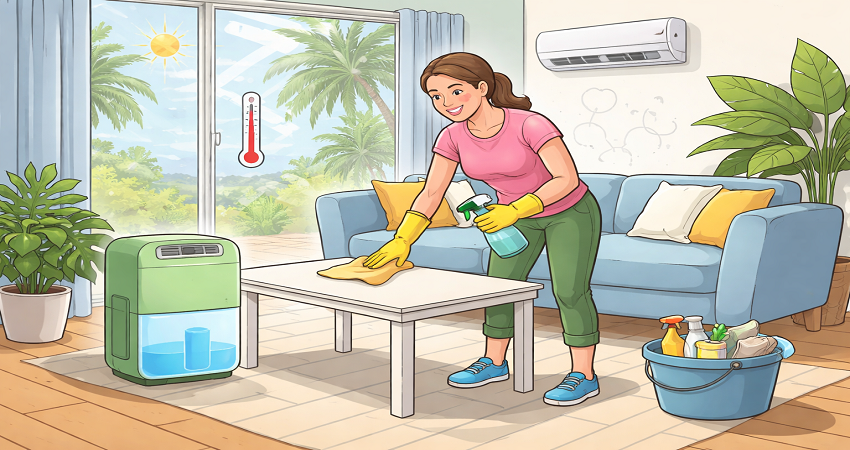

In Florida, the arrival of June signifies more than just vacation season; it marks the beginning of a relentless battle against atmospheric moisture. With relative humidity levels frequently peaking between 75% and 90%, the “Sunshine State” essentially becomes a giant greenhouse.
For homeowners, this means that a standard spring cleaning routine is insufficient. To maintain a healthy living environment, you need The Ultimate Florida Summer Cleaning Checklist For High Humidity. In 2026, efficiency is the name of the game.
You don’t just need to clean; you need to dehumidify, sanitize, and protect. This blueprint is specifically engineered to help you navigate the tropical challenges of a Florida summer without letting your home fall victim to the “musty” trap.
I’ve spoken with many residents who noticed that their homes felt “sticky” even with the AC running. This is often because the indoor dew point has risen to a level where dust bonds to surfaces, creating a grime that standard dusting won’t remove.
A strategic checklist doesn’t just make your home look better—it preserves the structural integrity of your drywall and flooring.
If you find the buildup has already become too much to handle, you might want to compare your DIY efforts with the house cleaning cost in Florida for a professional deep-clean reset. Below is your 2026 summer survival guide.
The “Humidity Logic”: Why Your Routine Must Change
In a dry climate, cleaning is about removing loose particles. In Florida, cleaning is about managing viscous dust. When high humidity meets common household dust, it creates a paste-like substance that settles in hard-to-reach places.
The Ultimate Florida Summer Cleaning Checklist For High Humidity prioritizes “Dry-First” methods to ensure you aren’t turning dust into mud.
Furthermore, moisture management is the only way to prevent the dreaded “Old Florida” smell, which is essentially the scent of microscopic fungal growth. For a deeper dive into odor control, see our guide on removing mildew smells naturally.
1. The HVAC & Airflow Protocol (Monthly)
Your Air Conditioning unit is your primary defense against the Florida summer. If the AC isn’t optimized, your cleaning efforts are wasted.
- Filter Swap: Use a MERV 8 to 11 filter. High-humidity air carries more spores, so your filter will clog faster in July than in January.
- Drain Line Flush: Pour a cup of vinegar down your AC condensate drain line to prevent algae clogs. A clogged line can lead to a flooded (and moldy) closet.
- Vent Detailing: Hand-wipe every register. Condensation on metal vents attracts dust. If you see black spotting, refer to our guide on cleaning air vents in Florida humidity.
2. Moisture-Critical Zones: Kitchen & Bath
These rooms generate their own humidity, making them the front lines of your Florida Summer Cleaning Checklist For High Humidity.
- The “Squeegee” Law: In 2026, every Florida shower should be squeegeed daily. This removes the standing water that humidity would otherwise keep on the tile for hours. For the stubborn stains that do form, check out how to clean bathroom tiles for hard water.
- Kitchen Degreasing: Humid air traps grease. Wipe the tops of your cabinets and your range hood filters bi-weekly. This is the best way to clean greasy kitchens in Florida during the peak of summer heat.
2026 Summer Cleaning Frequency Table
| Task | Frequency | Humidity Benefit |
|---|---|---|
| Dust with Microfiber | Bi-Weekly | Lifts damp dust before it bonds to furniture. |
| AC Drain Line Flush | Monthly | Prevents emergency clogs and indoor flooding. |
| Floor “Dry-Buffing” | Every 3 Days | Removes sand-scuffs and sticky residue. |
| Upholstery Vacuuming | Weekly | Prevents dust mites from thriving in damp fabric. |
3. The Floor “Anti-Sand” Strategy
Florida sand is abrasive and heavy. In the summer, your feet are often slightly damp when you walk inside, which “glues” sand to your floors.
To maintain your floors, use a Florida Summer Cleaning Checklist For High Humidity that includes a DIY sand-repellent floor spray. This keeps the sand loose and easy to sweep, preventing it from scratching the finish of your tile or vinyl plank flooring.
4. Environmental Protection: Windows & Closets
Your windows are the “seal” of your home. If they are dirty or the tracks are clogged with sand, they won’t close tightly, allowing humid air to seep in.
- Track Extraction: Vacuum out your window and sliding door tracks. In Florida, sand-clogged tracks often lead to seal failure.
- The Closet Reset: High-humidity air stagnates in closets. Once a month, leave your closet doors open for an hour with the AC running to “exchange” the air. Consider placing moisture-absorbing bags in small, windowless rooms.
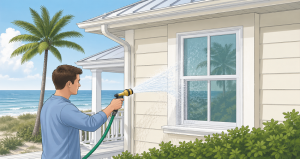
For homes near the coast, remember that salt-air is also a factor; refer to our beach house cleaning tips for more info.
- Pro Tip: Never mop with a soaking wet mop in the summer. Use a damp microfiber flat mop. The less water you introduce to the floor, the faster it will dry, and the lower the risk of “sticky floor syndrome.”
5. Post-Storm Remediation
Florida summer afternoons often bring sudden downpours. Part of The Ultimate Florida Summer Cleaning Checklist For High Humidity is checking your entryways after a storm. Wipe down your door thresholds and check for any water intrusion.
Standing water in a Florida doorway can lead to wood rot and mold within 48 hours. If you’ve just finished a renovation and the summer storms have blown dust everywhere, you may want to look into the post-construction cleaning cost in Florida for a professional extraction.
Sustainable Summer Cleaning
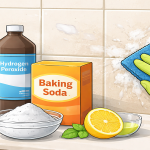
Since we keep our homes sealed tight in the summer, avoiding harsh chemicals is paramount. Using The Ultimate Florida Summer Cleaning Checklist For High Humidity with eco-friendly methods ensures you aren’t trapped in a house full of toxic fumes while the AC recirculates the air. Natural acids like vinegar and lemon are perfect for the “flash-cleaning” required in a humid environment.
Frequently Asked Questions (FAQ)
1. Why does my house smell musty even though I clean every week?
Mustiness is usually caused by stagnant, humid air in hidden areas like behind the sofa or inside the AC closet. Increase airflow and check for hidden “damp spots.”
2. Is it safe to leave my windows open for “fresh air” in the summer?
In Florida, no. Opening windows during the summer introduces massive amounts of humidity and pollen, which can trigger mold growth on your soft surfaces.
3. How often should I deep clean during the summer?
A professional “reset” or deep cleaning in Florida is recommended at the start of June to clear out spring allergens before the humidity peaks.
4. Does running ceiling fans help with cleaning?
Yes. Air movement speeds up the evaporation of cleaning liquids. Always keep fans on while you mop or wipe down surfaces.
5. What is the best way to clean my Florida sunroom?
Sunrooms often have higher humidity than the rest of the house. Use alcohol-based cleaners for the glass to ensure they dry instantly without leaving streaks. See our Florida cooling guide for more.
Conclusion
Mastering The Ultimate Florida Summer Cleaning Checklist For High Humidity is about changing your mindset from “cleaning for looks” to “cleaning for climate control.”
By focusing on airflow, using dry-cleaning techniques, and maintaining your HVAC system, you can keep your home fresh and comfortable all summer long. Don’t let the Florida humidity dictate the quality of your indoor life.
Consistency is the key to preventing mold and maintaining a high-quality home. Whether you follow this weekly Florida checklist yourself or hire professionals, staying proactive will save you time and money. Enjoy the sun, stay cool, and keep your home a dry, healthy sanctuary!
Your Immediate Task: Go check your AC filter right now. If it’s grey and dusty, replace it today—it’s the first step to a cleaner, drier home!