
In 2026, the concept of a “clean home” in Florida has evolved. It is no longer just about the absence of dirt; it is about the presence of health and environmental stewardship. Florida’s unique geographical position—nestled between the Atlantic Ocean and the Gulf of Mexico—makes our indoor air quality highly susceptible to the outdoor climate.
Traditional cleaning agents, often laden with volatile organic compounds (VOCs), can react with the state’s high humidity to create a heavy, chemical-laden atmosphere inside your living space.
Adopting Eco-friendly Ways To Clean Florida Homes is not merely a lifestyle trend; it is a necessary adaptation to protect our delicate local ecosystems and our respiratory health. This guide explores the most effective, non-toxic protocols for maintaining a pristine home in the subtropics.
I’ve assisted many Florida residents who transitioned to green cleaning after noticing that harsh bleaches and ammonia-based products seemed to “linger” in the humid air, causing skin irritation or sneezing. Because the air in Florida homes is often recirculated by AC units to combat the heat, whatever chemicals you spray on your counters eventually end up in your lungs.
If you are curious about the professional side of this transition, you can check the house cleaning cost in Florida for eco-specialist services. Below, we dive into seven mechanical and natural strategies that deliver professional results without the chemical footprint.
1. The “Acetic Acid” Revolution: Vinegar for Florida Humidity
White vinegar remains the cornerstone of any Eco-friendly Ways To Clean Florida Homes strategy. Its natural acidity (acetic acid) is particularly effective at breaking down the calcium and magnesium deposits found in Florida’s hard water.
- The Humidity Connection: In Florida, moisture often leads to a “tacky” residue on walls and baseboards. A 50/50 vinegar and water solution acts as a surfactant, breaking that bond without leaving a soapy film that actually attracts more dust. For those dealing with the common issue of fungal growth, vinegar is known to kill 82% of mold species. If you’ve encountered mold on your surfaces, refer to our protocol to remove mold from walls in Florida homes using these natural methods.
2. High-Velocity Steam: Cleaning with Pure H2O
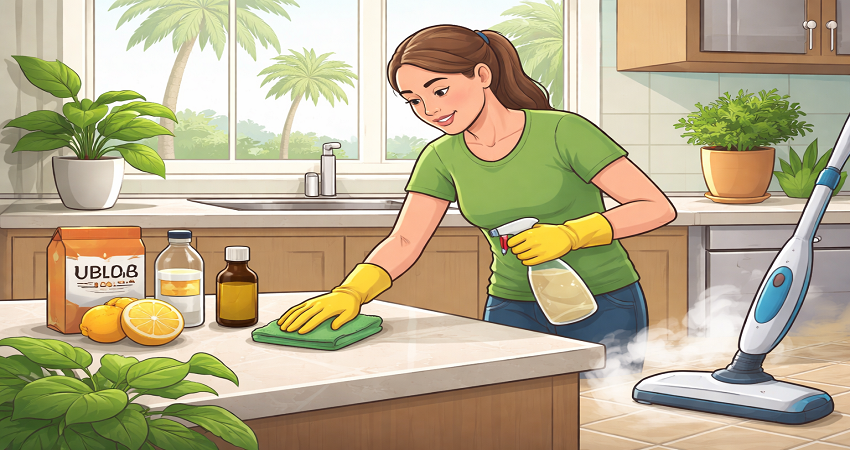
In 2026, steam cleaning has become the gold standard for chemical-free sanitization. By heating water to over 200°F, you can kill 99.9% of bacteria and dust mites on contact.
This is vital for Florida homes where the warm climate allows dust mites to thrive year-round. Steam is also the fastest way to Clean House Fast In Florida Humidity because it provides its own heat for rapid evaporation.
It is an excellent choice for sealed tile floors and grout, which often suffer from hard water staining. For specific tile tips, see our guide on how to clean bathroom tiles for hard water.
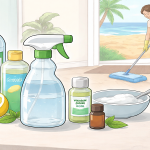
2026 Eco-Friendly Ingredient Efficacy Table
Use this table to understand which natural agent is best for specific Florida cleaning challenges.
| Natural Agent | Primary Function | Florida Specific Use Case |
|---|---|---|
| Baking Soda | Deodorizer & Abrasive | Removing sand-scuffs from entryways. |
| Lemon Juice | Natural Bleach/Disinfectant | Removing rust stains from coastal salt air. |
| Tea Tree Oil | Antifungal Agent | Preventing mildew in dark, humid closets. |
| Isopropyl Alcohol | Flash-Drying Solvent | Cleaning glass in high-humidity zones. |
3. The “Alkaline Scrub”: Baking Soda for Sand Scuffs
Florida sand is abrasive and alkaline. To neutralize its impact and remove the scuffs it leaves on tile and linoleum, baking soda is your best tool. It provides just enough grit to polish surfaces without scratching the finish.
- Deodorizing the Damp: Moisture in the air can trap odors in carpets and upholstery, leading to that “old Florida” musty smell. Sprinkling baking soda, letting it sit for 30 minutes, and vacuuming with a HEPA-filter machine is a key part of Eco-friendly Ways To Clean Florida Homes. If the smell persists, you might need a deeper look at removing mildew smells naturally.
4. Citrus Power: Breaking Down Florida Kitchen Grease
Kitchens in Florida face a unique challenge: the humidity causes airborne cooking oils to turn into a sticky “varnish” on top of cabinets. Lemon juice and orange peels contain d-limonene, a powerful natural degreaser.
For a fast 2026 hack, soak lemon peels in vinegar for two weeks to create a high-potency citrus cleaner. This is the best way to clean greasy kitchens in Florida without inhaling toxic fumes from commercial degreasers.
5. Microfiber Extraction: Moving Beyond Paper Waste
Eco-friendly cleaning isn’t just about what you spray; it’s about how you wipe. In 2026, the use of disposable paper towels is being replaced by split-fiber microfiber.
These cloths are designed to “hook” and lift dust and bacteria rather than just pushing them around. In a state where pollen and sand are constant invaders, microfiber is essential for a Clean House Fast In Florida Humidity approach.
It requires less water, meaning your surfaces dry faster and aren’t left vulnerable to mold. This tool is a staple in any weekly Florida house cleaning checklist.
6. Botanical Defenses: Essential Oils for Mold Prevention
Many Florida residents are moving away from synthetic air fresheners, which merely mask odors with chemicals. Instead, using essential oils like Peppermint, Eucalyptus, and Tea Tree oil provides a functional benefit. Tea Tree oil is a scientifically proven antifungal.
Adding 10 drops to your mop bucket can prevent the microscopic spores that enter through your AC vents from taking root in your floor grout. For more on this, read our guide on cleaning air vents in Florida humidity.
7. The Coastal Protocol: Managing Salt with Fresh Water
If you live near the coast, salt is your primary cleaning challenge. Salt is “hygroscopic,” meaning it pulls moisture out of the air and holds it against your surfaces, causing corrosion and dampness. The most Eco-friendly Way To Clean Florida Homes on the coast is simple: frequent, light applications of distilled water.
This neutralizes the salt ions without the need for heavy detergents. Check out our specialized beach house cleaning tips for a deep dive into salt management.
- Pro Tip: When using natural cleaners in Florida, always clean during the coolest part of the day (early morning or late evening). This allows the natural solutions to “work” on the surface longer before the heat evaporates the liquid components.
Mechanical Eco-Cleaning: The HEPA Vacuum
No amount of vinegar will help if you are just blowing sand and allergens back into the air. A vacuum with a sealed HEPA system is a critical “green” tool. It ensures that the microscopic Florida allergens are physically removed from the environment.
This is especially important after a renovation; see our report on the average post-construction cleaning cost in Florida 2026 to see why professionals prioritize filtration.
Frequently Asked Questions (FAQ)
1. Is vinegar really strong enough to kill bacteria in Florida’s heat?
While vinegar is not an EPA-registered disinfectant, it is a powerful sanitizer. For most household needs, it effectively kills common germs. For high-risk areas like raw meat prep surfaces, you can follow vinegar with a 3% hydrogen peroxide spray for a non-toxic “one-two punch.”
2. Can I use eco-friendly cleaners on my marble countertops?
No. Acidic cleaners like vinegar and lemon will “etch” or eat away at natural stone. For marble or granite, use a pH-neutral castile soap (like Dr. Bronner’s) diluted in water.
3. Do natural cleaners attract bugs in Florida?
Actually, many do the opposite. Essential oils like Peppermint and Lemongrass are natural deterrents for ants and spiders, common pests in the Florida climate.
4. Why does my house smell like a salad after I clean?
The vinegar scent dissipates completely once it dries. To speed this up and add a fresh aroma, add lavender or citrus essential oils to your mixture.
5. How do I keep my house cool while eco-cleaning?
Keep the AC on but ensure the humidity stays low. Natural cleaning requires slightly better airflow to dry effectively. Refer to our cooling and cleaning guide for more.
Conclusion
Adopting Eco-friendly Ways To Clean Florida Homes is an investment in the longevity of your property and the health of your family.
In 2026, we have the tools and knowledge to maintain a spotless home using the power of plants and basic chemistry. By avoiding harsh chemicals, you ensure that your Florida sanctuary remains a place of true rest and rejuvenation.
Start small—replace one chemical cleaner this week with a vinegar or baking soda alternative. As you see the results (and feel the difference in your indoor air), you’ll find that green cleaning is not just better for the planet, but better for your soul.
If you find yourself needing a professional deep-clean reset to start your eco-journey, explore deep cleaning house costs in Tampa or Miami for eco-friendly service providers. Happy cleaning!
Your Green Goal: This weekend, try the “Lemon-Steam” method on your microwave. It’s the perfect introduction to the power of non-toxic cleaning!