In the high-humidity environment of Florida, the kitchen isn’t just a place for culinary creativity—it’s a battleground against a unique form of “sticky” grime. For Florida homeowners in 2026, the combination of subtropical moisture and cooking oils creates a stubborn, resin-like film that clings to every surface.
Finding a Homemade Natural Degreaser For Greasy Florida Kitchens is no longer just an eco-friendly choice; it’s a mechanical necessity to maintain home value and indoor air quality. Traditional chemical cleaners often react poorly with Florida’s humidity, leaving behind streaks or toxic residues that linger in the stagnant air.
This comprehensive guide provides the definitive blueprints for natural, low-cost degreasing solutions specifically engineered for the Florida climate.
I’ve assisted many Florida residents who were frustrated that their expensive “super-degreasers” were leaving a tacky residue on their beautiful wooden cabinets. In our climate, the grease doesn’t just sit on top; it bonds with the atmospheric moisture.
To break this bond, you need a solution that addresses both the lipid (fat) and the mineral content of the grime. While you are refining your kitchen maintenance routine, you might also find it useful to check the house cleaning cost in Florida for professional deep-cleaning services.
However, for 90% of your weekly needs, these homemade solutions will outperform store-bought alternatives. Below is the science and the strategy for a grease-free Florida kitchen.
The Florida “Grease-Trap” Effect
Why do kitchens in Miami or Orlando feel “greasier” than those in dryer climates? It’s a phenomenon called Hygroscopic Bonding. Grease particles released during cooking stay suspended longer in humid air. In Florida, these particles absorb moisture, become heavier, and then “glue” themselves to your cabinets and ceilings.
To effectively Homemade Natural Degreaser For Greasy Florida Kitchens, you cannot just use soap. You need an emulsifier that can penetrate that moisture barrier. Using a summer cleaning checklist for high humidity is a great way to stay ahead of this cycle, but when the buildup happens, you need the right DIY chemistry.
1. The “Citrus-Infused” Vinegar Power-Clean
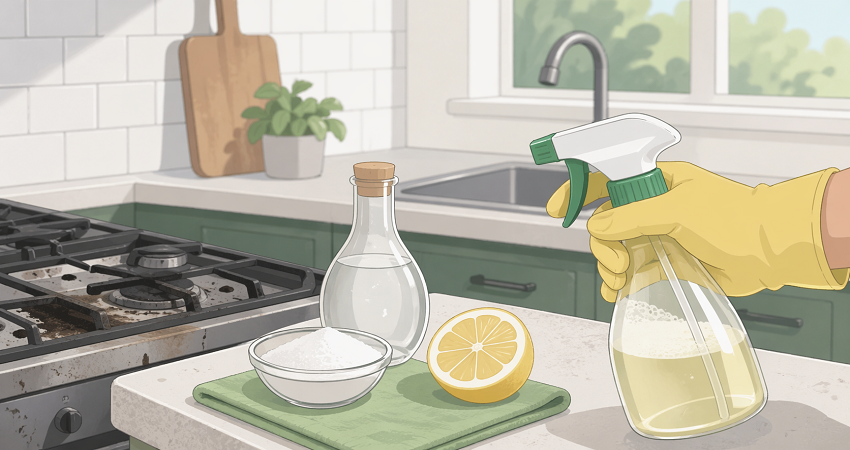
In 2026, the most effective Homemade Natural Degreaser For Greasy Florida Kitchens remains a fermented citrus-vinegar solution. The d-Limonene found in citrus peels is a natural solvent that dissolves heavy oils on contact.
- Recipe: Fill a glass jar halfway with orange or lemon peels. Pour white distilled vinegar over the top until full. Let it “steep” for 2 weeks in a dark pantry.
- The Science: The vinegar breaks the mineral bonds, while the citrus oils dissolve the lipids. This is a cornerstone of Eco-friendly ways to clean Florida homes.
- Application: Strain the liquid into a spray bottle and dilute 1:1 with warm water. This is perfect for range hoods and backsplashes.
2026 Natural Degreaser Performance Table
This table compares the efficacy of different natural ingredients against Florida’s specific grease types.
| Active Ingredient | Best For… | Surface Compatibility |
|---|---|---|
| Concentrated Citric Acid | Burnt-on Stove Grease | Stainless Steel, Ceramic |
| Baking Soda Paste | Textured Cabinets / Walls | Painted Wood, Laminate |
| Castile Soap + EO | Daily Countertop Wiping | Stone (Granite/Marble) |
| Alcohol (70% IPA) | High-Gloss Surfaces | Glass, Modern Finishes |
2. The Baking Soda “Abrasion” Technique
When grease has been sitting on top of Florida kitchen cabinets for months, it turns into a thick, yellowish “shell.” Spraying liquid often just makes it slipperier. For this, you need a Homemade Natural Degreaser For Greasy Florida Kitchens that provides mechanical lift.
Mix 2 parts baking soda with 1 part vegetable oil (yes, oil removes oil!). Rub this paste onto the greasy surface. The baking soda acts as a soft scrub, while the fresh oil softens the old, hardened grease. Once scrubbed, wipe clean with a cloth dipped in warm, soapy water. This is a secret weapon for those following a weekly Florida house cleaning checklist.
3. Managing Humidity and Air Quality
In Florida, your degreasing effort is only as good as your air filtration. If your kitchen air is heavy with pollen and grease, the surfaces will be sticky again by tomorrow.
The Air Filter Connection
Ensure you are maintaining indoor air quality by changing your AC filters regularly. A clogged filter increases indoor humidity, which accelerates grease settling. Additionally, keep your vents clean to prevent “dust-clump” buildup on greasy surfaces; see our vent cleaning guide for more details.
- Pro Tip: Never use a dry cloth to wipe a greasy Florida countertop. The static electricity and friction will only spread the oil further into the pores of the surface. Always use a damp microfiber cloth with your natural degreaser to “trap and lift” the particles.
4. Specialized Case: Granite and Natural Stone
CAUTION: While vinegar is the ultimate Homemade Natural Degreaser For Greasy Florida Kitchens, it is an acid. Do NOT use it on granite, marble, or travertine. The acid will “etch” the stone, leaving permanent dull spots.
For stone, use a mixture of 2 cups water, 1/4 cup rubbing alcohol, and 3 drops of clear dish soap. The alcohol acts as a degreaser and allows the solution to evaporate quickly, preventing the “cloudy” look common in humid Florida kitchens. For more tips on delicate surfaces, see our beach house cleaning tips.
5. Preventing the “Sticky Ceiling” Syndrome
In Florida, grease often rises and sticks to the ceiling corners, where it eventually grows mold due to the heat. To prevent this, spray a light mist of your citrus-vinegar degreaser on a long-handled microfiber mop once a month and swipe the ceiling above your stove.
This prevents the “layering” effect that leads to expensive restoration. If your kitchen has already reached a point of no return, you might investigate the deep cleaning Vs. standard cleaning cost differences to see if a professional “reset” is needed.
Managing Sand and Grease
Florida’s sand is an added complication. Sand gets trapped in the grease on your kitchen floors, acting like sandpaper. To protect your floors, use a DIY sand-repellent spray after you have degreased them. This creates a barrier that prevents the sand-grease “paste” from forming in your grout lines.
Frequently Asked Questions (FAQ)
1. Why does my kitchen feel sticky even after I clean it?
This is usually due to “soap residue.” In Florida’s humidity, soap doesn’t evaporate; it attracts moisture. After using any Homemade Natural Degreaser For Greasy Florida Kitchens, you must do a “clear water rinse” to remove the cleaning agents.
2. Can I use essential oils in my DIY degreaser?
Absolutely. Lemon, Orange, and Peppermint oils are excellent. However, avoid “heavy” oils like sandalwood or patchouli, as they can actually add to the oily film in a humid kitchen.
3. How do I degrease my kitchen’s window tracks?
In Florida, window tracks collect a mix of salt-air, pollen, and grease. Sprinkle baking soda, pour vinegar, let it fizz, and then use an old toothbrush. It works like magic!
4. Is it safe to degrease my oven with vinegar?
Yes, but for ovens, a baking soda paste is better. Apply the paste, let it sit overnight, and then spray with vinegar in the morning. The grease will wipe right off. See our guide on keeping a cool, clean house for more oven-cleaning tips.
5. What is the shelf life of a homemade citrus degreaser?
If kept in a cool, dark place, it will last about 6 months. In the Florida heat, try to store it in the refrigerator to keep the citrus oils from oxidizing.
Conclusion
Mastering a Homemade Natural Degreaser For Greasy Florida Kitchens is about more than just a clean stove; it’s about reclaiming your home from the subtropical elements.
By using the chemistry of citrus, vinegar, and baking soda, you can maintain a professional-level clean without the professional-level price tag. In 2026, the best cleaning technology isn’t found in a chemical lab—it’s found in your kitchen cabinets.
Whether you are prepping for guests or doing a post-renovation cleanup (See our post-construction cleaning costs in Florida for comparison), these natural methods will keep your kitchen healthy and sparkling.
For those in the Tampa area, if the grease has truly taken over, you can always check the deep cleaning costs in Tampa for an expert hand. Stay cool, stay dry, and keep that kitchen shining!
Your 2026 Action Step: Go to your kitchen right now and wipe the top of your refrigerator with a damp cloth. If it’s sticky, mix a quick batch of vinegar and water—you’ll be amazed at how much dust that grease is holding!