
Living in Florida offers an unparalleled lifestyle characterized by stunning sunrises, salty sea breezes, and the relaxed pace of coastal living. However, as any local homeowner will tell you, the same ocean air that we love brings a specific set of challenges to our doorsteps—quite literally.
One of the most frustrating issues I have encountered in my years of maintaining homes across the Sunshine State is the persistent appearance of white, chalky residue on our beautiful floors. If you have ever wondered how to remove salt stains from floors in Florida, you are certainly not alone.
Salt is deceptive. It enters our homes as an invisible mist or as tiny crystals clinging to our flip-flops after a day at the beach. Once inside, Florida’s high humidity helps these particles settle into the pores of our flooring. If ignored, these unsightly white marks don’t just dull the shine of your home; they can actually cause permanent structural damage to delicate materials like hardwood and natural stone.
In this comprehensive guide, I will share the exact, professional-grade natural methods I use to keep Florida floors spotless, ensuring your home remains as beautiful as the coastline outside.
The Science of Salt: Why Florida Homes Suffer More
You might notice that salt stains seem more aggressive here than in other states. This is because Florida’s environment is a “high-chloride” zone. In coastal cities like Miami, Sarasota, or Jacksonville, the air itself carries salt. When the humidity rises—which it does almost every day—moisture in the air binds with salt particles.
When this moisture eventually evaporates from your cool, air-conditioned floors, it leaves behind a concentrated mineral deposit known as salt efflorescence.
Furthermore, our lifestyle involves a lot of “tracking in.” Whether it is salt from a morning walk on the sand or the briny residue from a local boat ramp, our floors act as a magnet. This buildup creates a gritty texture that acts like sandpaper underfoot, scratching the finish of your tiles or wood every time someone walks across the room.
Understanding that salt is an active abrasive is the first step toward realizing why immediate removal is essential for the longevity of your home.
Health and Safety: Beyond the Aesthetic Issue
While we often focus on how bad salt stains look, we should also consider the safety aspect. Salt residue can make floors surprisingly slippery, especially when humidity levels change and the salt “re-hydrates.” For families with young children or elderly residents, these invisible slick spots are a genuine hazard.
Moreover, salt can trap moisture against the flooring material, which can eventually lead to secondary issues. If you are also battling moisture-related smells, you might find our guide on how to remove mildew smell helpful in keeping your home’s air as clean as its floors.
Essential Supplies for Natural Salt Removal
One of my inviolable rules for Florida cleaning is: Avoid harsh chemicals whenever possible. Our unique environment reacts poorly to heavy acids or bleach, which can strip the protective sealants we need to fight humidity.
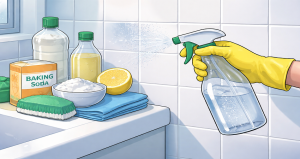
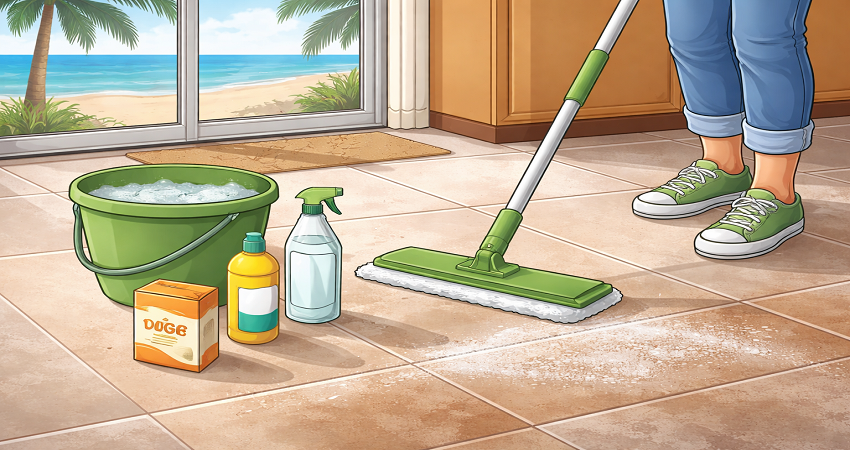
To remove salt stains effectively and naturally, you only need a few household staples:
- Distilled White Vinegar: The acetic acid in vinegar is the perfect neutralizing agent for alkaline salt deposits.
- Warm (Not Boiling) Water: Heat helps dissolve salt crystals faster than cold water.
- Microfiber Cloths and Mops: These trap the salt particles rather than just pushing them around.
- Baking Soda: For those stubborn, “caked-on” stains in high-traffic areas.
- Mild Dish Soap: To break down any oils that might be “locking” the salt to the floor.
Step-by-Step: The Professional Neutralization Method
To remove salt stains from floors in Florida without leaving streaks, follow this specific sequence. I have tested dozens of methods, and this one consistently provides the best results for the Florida climate:
Step 1: Dry Preparation
Never start with a wet mop. Use a soft-bristled broom or a vacuum with a hard-floor setting to remove loose salt crystals. If you apply water directly to a pile of salt, you simply create a salty slurry that will settle deeper into the grout or wood grain.
Step 2: Create the Neutralizing Solution
Mix one cup of white vinegar with one gallon of warm water. Add two drops of mild dish soap. The vinegar breaks the chemical bond of the salt, while the soap lifts the dirt. This is the most effective way to restore the pH balance of your flooring.
Step 3: Controlled Application
Dip your microfiber mop into the solution and wring it out until it is only slightly damp. In Florida, excess water is our enemy. Clean in small sections, allowing the solution to sit for about two minutes (but not long enough to dry) to dissolve the minerals.
Step 4: The Clean Water Rinse
This is the step most people skip. Go back over the area with a fresh mop dampened only with clean, room-temperature water. This removes any loosened salt and the slight vinegar residue, ensuring a streak-free finish.
Tailoring the Method to Your Specific Floor Type
Florida homes feature a variety of flooring, and each requires a slightly different touch. Based on local trends, here is how to adapt your salt-removal strategy:
Hardwood and Engineered Wood
Wood is the most vulnerable to salt damage. Salt draws moisture out of the wood, causing it to shrink or crack. When cleaning, use the absolute minimum amount of liquid. I recommend drying the floor with a clean towel immediately after mopping.
Regular maintenance is key; if you are curious about professional upkeep, you can check the average house cleaning cost per hour in Florida to keep your wood floors in top shape.
Ceramic and Porcelain Tile
Tiles are common in Florida because they stay cool, but salt can make grout look gray and dirty. For grout lines, a paste of baking soda and water can be used with a soft toothbrush to lift deep salt stains. Once clean, consider sealing your grout to prevent future salt penetration.
Polished Concrete and Stone
Concrete floors in Florida garages or modern living rooms often suffer from “efflorescence”—that white powdery substance. While vinegar works, be very careful with natural stones like marble, as vinegar can etch the surface. For stone, stick to pH-neutral cleaners or very diluted soap solutions.
Deep Cleaning Tough Salt Buildup with Baking Soda
Sometimes, salt has been tracked into a rug or a textured tile for so long that a simple mop won’t cut it. In these cases, I use baking soda as a natural abrasive. Sprinkle a light layer of baking soda over the white stains, mist it lightly with your vinegar solution until it fizzes, and let it sit for five minutes.
This chemical reaction physically lifts the salt from the pores of the floor. Gently scrub with a soft cloth and rinse. This is particularly effective for entryways and mudrooms.
Natural Vs. Commercial Salt Removal
| Method | Effectiveness on Salt | Safety (Pets/Kids) | Cost Point |
|---|---|---|---|
| Vinegar & Water | Excellent – Chemically neutralizes salt. | 100% Safe and non-toxic. | Very Low (Pantry staple). |
| Baking Soda Paste | Superior for textured or caked stains. | Safe and eco-friendly. | Minimal. |
| Store-Bought Acid Cleaners | Fast acting but aggressive. | Hazardous fumes; requires ventilation. | High ($15+ per bottle). |
Prevention: Keeping the Salt at Bay
In Florida, prevention is a daily habit. If you live near the coast, you will never fully stop salt from entering, but you can manage it.
- The “Two-Mat” System: Place a heavy-duty coir mat outside your door to scrape off sand and a microfiber mat inside to absorb salty moisture.
- No-Shoe Policy: This is the single most effective way to protect Florida floors. Provide a basket for flip-flops at the entrance.
- Air Management: Keep your AC running to maintain low humidity. If the air is dry, salt is less likely to “stick” to your floor surfaces.
Frequently Asked Questions (FAQ)
1. Why do white stains keep coming back after mopping?
This usually happens because the salt wasn’t neutralized, only moved around. Using plain water just spreads the salt. You must use an acidic agent like vinegar to break the bond, followed by a clean rinse.
2. Can salt stains ruin my hardwood floors permanently?
Yes. Over time, salt crystals scratch the polyurethane finish. Once the finish is gone, salt draws moisture into the wood fibers, causing warping and dark water stains that require professional sanding to fix.
3. Is it safe to use vinegar on my tile grout?
For most ceramic tiles, yes. However, if your grout is unsealed or you have natural stone tiles, use vinegar sparingly and always dilute it 50/50 with water to prevent weakening the grout over several years.
4. How often should I clean salt residue in Florida?
If you live within 5 miles of the coast, I recommend a quick vinegar-wipe of your entryways twice a week. For inland homes, once a week is usually sufficient unless you’ve had a recent beach trip.
5. What is the best way to handle salt on laminate floors?
Laminate is sensitive to standing water. Use a “dry-mopping” technique where the cloth is only damp to the touch. Never let the vinegar solution “puddle” on the seams of laminate flooring.
Conclusion and Final Advice
While salt is an inescapable part of the Florida experience, it doesn’t have to define the look of your home. By understanding how to remove salt stains from floors in Florida using natural, gentle methods, you are preserving the life and value of your property. Consistency is your greatest tool.
A quick weekly routine involving vinegar and baking soda will save you thousands of dollars in flooring replacements down the line.
If you find that your home requires a more intensive cleaning to get back to its original shine, don’t hesitate to look into local experts.
You can explore the house cleaning cost in Florida to find a service that fits your specific needs. Keep your floors polished, your air fresh, and continue enjoying everything the beautiful Florida coastline has to offer!
Ready to transform your home? Start by mixing your natural vinegar solution today and see the difference a balanced pH can make on your floors!