Dishwasher Drain Filter: How to Clean It and Fix Drainage Problems
A dirty dishwasher drain filter can leave food particles on dishes, create unpleasant odors, and contribute to drainage problems. Fortunately, cleaning the filter is usually a straightforward maintenance task that you can do at home with a few basic supplies.
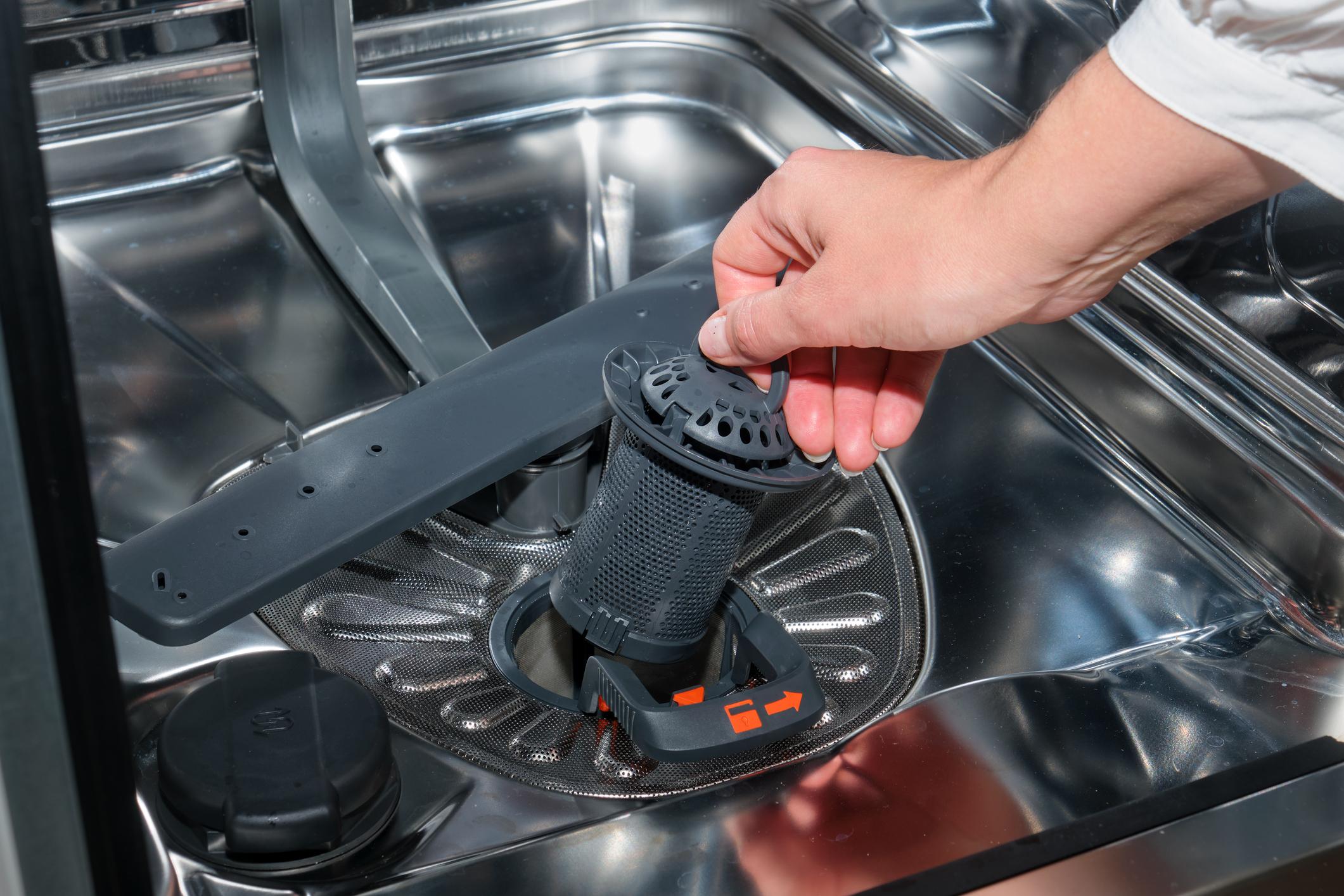
The dishwasher drain filter is typically located at the bottom of the dishwasher tub, beneath the lower rack. It catches food debris and helps prevent particles from entering the drain pump. When debris accumulates, water may not circulate or drain as effectively.
In this guide, you’ll learn how to find, remove, and clean your dishwasher filter, how often to maintain it, and what to check if water remains at the bottom of your appliance. Because filter designs vary, always consult your dishwasher’s owner’s manual before removing any parts.
What Is a Dishwasher Drain Filter?
A dishwasher drain filter is a component that traps food scraps and other debris during the wash cycle. Depending on the model, the filtration system may contain a removable mesh screen, a cylindrical filter, a coarse filter, or a combination of components.
Its primary purpose is to help keep food particles out of the pump and prevent debris from circulating back onto dishes.
Most modern dishwashers have one of two general filtration designs:
- Manual-clean filter: This type collects food particles and needs periodic inspection and cleaning.
- Self-cleaning filtration system: Some models use a grinder or another mechanism to process food particles. Their maintenance requirements differ from those of removable filters.
A clogged filter can contribute to poor cleaning results, unpleasant smells, and drainage trouble. However, these symptoms can also have other causes, including a blocked pump, a kinked drain hose, or a plumbing issue.
Where Is the Dishwasher Drain Filter Located?
In many household dishwashers, the filter sits on the floor of the tub, beneath the bottom dish rack. You may see a round mesh cylinder, a flat screen, or a removable filter assembly near the lower spray arm.
Follow these steps to locate it:
- Turn off the dishwasher and let the interior cool.
- Open the door and remove the lower dish rack.
- Look around the bottom of the tub, particularly near the lower spray arm.
- Identify the filter assembly using your owner’s manual.
- Check whether your model has a removable filter or a maintenance-free system.
Do not force a filter that will not turn or lift out. Some designs use locking tabs or special removal procedures, and forcing the assembly can damage it.
How to Clean a Dishwasher Drain Filter Step by Step
Cleaning a removable filter usually requires warm water, mild dish soap if needed, and a soft brush. You generally do not need harsh chemicals or specialized tools.
Step 1: Turn Off the Dishwasher
Make sure the dishwasher is not running. If you need to reach into the appliance or inspect components near the pump, disconnect power according to the manufacturer’s safety instructions.
Allow hot water and interior surfaces to cool before handling the filter. Wear protective gloves if you are concerned about sharp debris.
Step 2: Remove the Bottom Rack
Slide the lower rack out of the dishwasher to access the filter assembly. Set the rack aside on a stable surface.
Inspect the exposed area for loose food scraps, seeds, labels, or other debris. Remove accessible debris carefully. Broken glass can be difficult to see, so avoid reaching blindly into the sump or pump opening.
Step 3: Remove the Filter Assembly
Follow the instructions for your specific dishwasher model. Many removable filters unlock with a gentle twist before lifting out, while other designs use tabs or multiple filter pieces.
If the assembly includes separate cylindrical and flat filters, take them apart only as directed by the owner’s manual.
Keep track of the parts and their orientation so you can reinstall them correctly.
Step 4: Rinse Away Food Debris
Hold the removable filter under running lukewarm water. Rinse both sides to remove trapped food, grease, and loose particles.
For stubborn residue, use a soft-bristled brush and a small amount of mild dish soap if the manufacturer permits it.
Avoid wire brushes, abrasive scouring pads, and aggressive scraping. These can damage the mesh or protective surfaces.
If mineral deposits remain, consult the appliance manufacturer’s instructions before choosing a cleaning solution.
Step 5: Inspect the Filter and Surrounding Area
Examine the filter for cracks, damaged mesh, warped plastic, or other signs of wear. A damaged filter may need replacement rather than additional scrubbing.
Check the accessible area around the filter for visible debris. Do not disassemble the drain pump or reach into hidden openings unless the manufacturer’s instructions specifically allow it and you can do so safely.
Step 6: Reinstall the Filter Correctly
Place the cleaned filter back into its original position. Align the components and engage the locking mechanism as directed by your owner’s manual.
A loose or incorrectly installed filter can interfere with dishwasher operation and allow debris to pass into areas it should not reach.
Never run the dishwasher with a required filter removed or improperly secured.
Step 7: Test the Dishwasher
Return the lower rack to the tub and close the door. Restore power if you disconnected it.
Run an appropriate short cycle or rinse cycle according to the manufacturer’s instructions. Check whether the appliance drains normally and whether any unusual odor or drainage symptom remains.
If the problem continues, the filter may not be the only cause.
How Often Should You Clean a Dishwasher Drain Filter?
The correct cleaning schedule depends on the appliance design, how often you use the dishwasher, the amount of food residue on your dishes, and the manufacturer’s recommendations.
For a removable filter, inspecting it every few weeks is a practical starting point. Clean it sooner if you notice trapped food, visible buildup, or an unpleasant smell.
| Dishwasher use or condition | Suggested approach |
|---|---|
| Frequent daily use | Inspect regularly and clean when debris accumulates |
| Heavy food residue | Check the filter more frequently |
| Unpleasant odor | Inspect and clean the filter promptly |
| Hard-water deposits | Check the manual for suitable cleaning methods |
| Self-cleaning filter system | Follow the model-specific maintenance instructions |
These are general guidelines, not a universal manufacturer schedule. Some appliances require more frequent cleaning, while others have filtration systems designed to need little routine attention.
Signs Your Dishwasher Filter Needs Cleaning
A filter does not always look completely blocked when it starts affecting performance. Watch for these common warning signs.
1. Water Remains at the Bottom
A small amount of water in a designated sump area can be normal on some models. However, a substantial pool of dirty water after the cycle may indicate a drainage problem.
Inspect the filter first, then check other possible causes if the water remains.
2. Dishes Have Food Particles
If plates, glasses, or utensils come out with bits of food still attached, inspect the filter for accumulated debris. Also check that the spray arms can rotate freely and that dishes are loaded according to the manufacturer’s recommendations.
3. The Dishwasher Smells Bad
Food scraps trapped in a dirty filter can develop an unpleasant odor, especially when the appliance stays damp between cycles.
Cleaning the filter and wiping accessible interior surfaces may help. If the smell persists, check the drain hose, disposal connection, and other areas identified in your owner’s manual.
4. The Dishwasher Makes Unusual Noises
A blocked filter or foreign object near the pump may contribute to abnormal operating sounds. However, grinding, persistent buzzing, or other unusual noises can indicate a mechanical problem.
Stop using the appliance if the noise is severe or accompanied by a burning smell, leaking, or electrical symptoms.
Dishwasher Not Draining After Cleaning the Filter? Try These Checks
If the dishwasher still will not drain after you clean the filter, investigate other possible causes rather than repeatedly scrubbing the same component.
Check the Drain Hose
A kinked, crushed, or obstructed drain hose can restrict wastewater flow.
Switch off the appliance and follow the manufacturer’s instructions before inspecting accessible hose connections. Do not disconnect a hose containing hot water without taking appropriate precautions.
If the hose is damaged, inaccessible, or appears blocked internally, professional service may be necessary.
Inspect the Garbage Disposal Connection
In kitchens where the dishwasher drains through a garbage disposal, a blockage or installation issue at the connection can prevent proper drainage.
If the disposal was recently installed or replaced, check that its dishwasher inlet was prepared correctly according to the disposal manufacturer’s instructions. Many disposals have a knockout plug that must be removed during installation.
Do not put your hands inside the disposal, even when it is switched off.
Check for a Blocked Drain Pump
Food scraps and small foreign objects can sometimes obstruct the drain pump. Some manufacturers provide model-specific instructions for inspecting the pump area.
Only attempt this procedure if the owner’s manual explicitly supports it and you can follow its safety steps. Disconnect power first and use appropriate hand protection if instructed. Broken glass and sharp fragments present a particular risk.
If accessing the pump requires removing covers or electrical components, contact a qualified appliance technician.
Consider a Plumbing Blockage
If your sink also drains slowly or backs up, the problem may be in the shared kitchen drain rather than the dishwasher itself.
A plumber can investigate a blocked drain line or an incorrectly configured connection. Avoid pouring chemical drain cleaners into the dishwasher or using them in a way that conflicts with appliance or plumbing instructions.
When to Call a Professional
Arrange professional service if the dishwasher repeatedly fails to drain, displays a persistent error code, leaks, trips an electrical breaker, or makes severe mechanical noises.
A technician can determine whether the problem involves the pump, drain hose, internal plumbing, control system, or another component.
Common Dishwasher Filter Cleaning Mistakes to Avoid
A few simple precautions can help protect the filtration system.
- Using abrasive tools: Wire brushes and rough scouring pads may damage filter mesh.
- Forcing the filter out: Twisting or pulling against resistance can break locking tabs.
- Reinstalling it incorrectly: An unsecured filter can affect appliance performance.
- Ignoring sharp debris: Glass fragments and sharp objects can cause injuries.
- Using harsh chemicals without checking: Not every cleaner is suitable for every appliance component.
- Assuming every filter is removable: Some dishwashers use self-cleaning or maintenance-free filtration systems.
- Running the appliance without its required filter: The filter must be correctly installed before operation.
The safest approach is to follow the instructions written for your exact make and model.
How to Keep Your Dishwasher Drain Filter Cleaner for Longer
Regular habits can reduce the amount of debris that accumulates in the filtration system.
Scrape large food scraps into the trash. Remove bones, fruit pits, toothpicks, and large food pieces before loading dishes. Follow your dishwasher manufacturer’s guidance on whether pre-rinsing is necessary.
Inspect the filter regularly. A quick inspection can reveal buildup before it contributes to odors or poor cleaning.
Keep the spray arms clear. Food particles and mineral deposits can obstruct spray-arm openings. Clean them only as directed by the manufacturer.
Use the correct detergent. Choose a detergent intended for automatic dishwashers and follow the product’s dosage instructions.
Wipe accessible spills and residue. Remove loose debris from the bottom of the tub when it is safe to do so.
Follow the recommended maintenance cycle. Use an appliance-specific dishwasher cleaner when appropriate, and do not assume that a cleaning cycle replaces manual filter maintenance.
These steps can support normal operation, but they cannot prevent every plumbing or mechanical fault.
For a more thorough kitchen cleaning routine, follow our complete move-out cleaning checklist to help keep your kitchen and other areas of your home clean.
Frequently Asked Questions
Can I clean a dishwasher drain filter without removing it?
You can remove loose debris from accessible areas, but thorough cleaning of a removable filter generally requires taking it out according to the owner’s manual. If your model has a self-cleaning system or a non-removable filter, follow its specific instructions.
Can a dirty dishwasher filter cause standing water?
Yes. A clogged filter can contribute to drainage trouble, but standing water may also result from a blocked pump, restricted drain hose, disposal connection problem, or plumbing blockage.
Should I use vinegar to clean the dishwasher filter?
Warm water and a soft brush are usually sufficient for routine cleaning. Vinegar is acidic and may not be appropriate for every filter or appliance component. Check your manufacturer’s guidance before using it.
Can I run my dishwasher with a dirty filter?
It is better to clean a visibly clogged filter before running another cycle. A blocked filtration system can interfere with performance. Never operate the dishwasher without a required filter or with the assembly incorrectly installed.
How do I know if my dishwasher filter needs replacement?
Look for damaged mesh, cracks, broken locking tabs, warping, or a filter that cannot be secured properly. Replace damaged parts with compatible components recommended for your model.
Why does my dishwasher still smell after cleaning the filter?
Food residue may remain on the tub, door seals, spray arms, drain hose, or other accessible components. A plumbing problem can also contribute to recurring odors. Clean the areas permitted by the owner’s manual and seek professional help if the smell persists.
Are dishwasher filters universal?
No. Filter shapes, locking mechanisms, and replacement parts vary by manufacturer and model. Check the appliance model number and consult the official parts documentation before purchasing a replacement.
Final Thoughts
A clean dishwasher drain filter helps capture food debris and supports effective dishwasher operation. Inspecting the filter regularly, rinsing it with warm water, using a soft brush when needed, and reinstalling it correctly are simple maintenance habits that can help prevent avoidable problems.
If your dishwasher continues to hold dirty water, smell unpleasant, or clean dishes poorly after filter maintenance, investigate the drain hose, pump, and plumbing connections. Persistent or unsafe problems deserve professional attention.
Always prioritize your dishwasher’s model-specific instructions over general cleaning advice. A few minutes of appropriate maintenance can help keep your appliance cleaner and make it easier to identify problems before they become more complicated.
1 thought on “Dishwasher Drain Filter: 7 Easy Tips for a Spotless Clean”