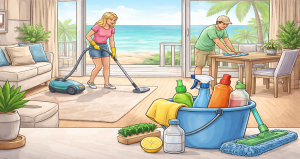
Living in the Sunshine State is a dream for many, offering access to world-class beaches, vibrant cities like Miami and Orlando, and a tropical climate that feels like a perpetual vacation. However, Florida’s environment presents a unique set of challenges for homeowners. Between the relentless solar heat, the thick humidity of the Everglades, and the fine sand that finds its way into every crevice, maintaining a home is a specialized task.
Learning how to Keep House Cool And Clean In Florida Weather is not just about comfort—it is a vital strategy for preserving your property’s value and ensuring a healthy living environment.
In 2026, with rising temperatures and evolving home technology, a modern approach to tropical home maintenance is more essential than ever.
I’ve seen many residents struggle with “The Florida Tacky Feeling”—that sensation where surfaces feel slightly damp and the air feels heavy, even when the AC is running. This is usually caused by an imbalance between temperature and moisture control. When your house is humid, dust bonds to surfaces like glue, making standard cleaning twice as difficult.
This comprehensive guide will provide you with a roadmap to balancing thermal comfort with clinical cleanliness. We will explore everything from HVAC optimization to “sand-shielding” your entryway.
For those moving into a new space, starting with a professional baseline is often best; you can check our apartment cleaning cost in Florida for a fresh start.
The Florida Climate Science: Heat Meets Humidity
In Florida, the “Feels Like” temperature is often 10 degrees higher than the actual thermometer reading. This is due to high relative humidity, which prevents sweat from evaporating off your skin—and moisture from evaporating off your floors.
To successfully Keep House Cool And Clean In Florida Weather, you must treat your home as a sealed ecosystem. If moisture is allowed to linger, it creates a “sticky” environment where allergens thrive and mold begins its colonization. Our 2026 strategy focuses on “Passive Cooling” and “Active Dehumidification” to keep your indoor air light, dry, and crisp.
Step 1: Optimizing Your “Cold Air” Infrastructure
Your HVAC system is the lungs of your Florida home. If it isn’t healthy, your home will be hot, dusty, and expensive to run.
- Monthly Filter Swaps: In Florida, a “3-month” filter lasts about 30 days. High humidity causes filters to damp-clog, forcing your system to work harder and circulate more dust.
- The 78-Degree Rule: Florida’s Public Service Commission recommends setting your AC to 78°F when home. While this sounds warm, it’s the ideal balance for moisture removal without over-stressing the compressor.
- Drain Line Maintenance: Pour a cup of vinegar down your AC condensate drain line every month to prevent algae clogs—a leading cause of indoor water damage in Florida.
- Air Vent Hygiene: Dust loves to settle on damp vents. Regularly wipe them to prevent “ghosting” (dark streaks on the ceiling). For deeper issues, see our guide on cleaning air vents in Florida.
Step 2: Defeating the “Humidity Glue”
The secret to a clean home in Florida is low humidity. When humidity is high (above 60%), dust becomes heavy and sticky, bonding to baseboards and ceiling fans.
- The Whole-Home Dehumidifier: If your AC cannot keep up, a dedicated dehumidifier is the best investment you can make. It allows you to feel comfortable at 75°F instead of 70°F, saving you significant energy costs. Keeping your home dry makes surfaces “slick” again, allowing dust to be easily swept away rather than scrubbed. To address the smells that come with high moisture, refer to our mildew smell removal guide.
Flooring Strategy: Cool Feet, Clean Floors
Your choice of flooring significantly impacts your home’s thermal mass. In Florida, “cold” surfaces are your best friend.
| Material | Cooling Rating | Cleaning Difficulty |
|---|---|---|
| Porcelain Tile | Excellent (Stays cool to the touch) | Low (Resists moisture/mold) |
| Luxury Vinyl Plank | Good | Low (Easy to disinfect) |
| Polished Concrete | Elite (Highest thermal mass) | Very Low |
| Carpet | Poor (Traps heat/moisture) | High (Prone to “Florida Funk”) |
Step 3: The “Entry Shield” (Keeping Sand Out)
Florida sand is abrasive and carries heat. If you live near the coast, sand is a constant enemy to your cleaning routine.
- The “Two-Mat” System: Place a heavy-duty “scraper” mat outside and a microfiber “absorber” mat inside. This removes 80% of the sand and moisture before it hits your main flooring. For those living in beach communities, our beach house cleaning tips offer more localized advice on sand management.
Step 4: Window Treatments and Thermal Barriers
Windows are the primary source of heat gain in a Florida home. Even the best AC cannot fight the direct Florida sun hitting a glass pane.
- Ceramic Tinting: Modern ceramic tints block 99% of UV rays and up to 70% of solar heat without darkening your view.
- Thermal Curtains: Use light-colored, reflective curtains during peak sun hours (10 AM – 4 PM). This keeps the heat from entering the room’s air volume.
- The “Night Flush”: On rare, low-humidity Florida nights (usually in Winter), opening windows can refresh air quality. However, always close them before 8 AM to trap the cool air inside.
Kitchen Habits: Stop Heating Your Home from the Inside
Cooking is a major source of internal heat and humidity. In a Florida summer, your oven is essentially a 400-degree space heater.
- Cook Smart: Use air fryers, slow cookers, or outdoor grills to keep heat out of the kitchen. Always run your exhaust fan while cooking to pull moisture and oils out of the home. This prevents the “greasy wall” syndrome common in humid climates. For deep-cleaning these areas, see our guide on cleaning greasy Florida kitchens.
Step 5: The Daily 10-Minute “Freshness” Routine
Because humidity accelerates grime, a “little and often” approach is the best way to Keep House Cool And Clean In Florida Weather.
- Squeegee the Shower: Takes 30 seconds but prevents 90% of mildew and hard water buildup. (See our hard water cleaning guide).
- Surface Wipe-Down: Use a natural, anti-fungal spray (like water with tea tree oil) on high-touch surfaces to neutralize spores.
- Fan Dusting: Ceiling fans are heat-magnets. Wipe them weekly so they don’t spray dust into the air when you turn them on.
Pro Tip: Ensure your ceiling fans are spinning counter-clockwise in the summer. This creates a “wind-chill” effect by pushing a column of cool air directly down on you. In winter, switch it to clockwise to pull cool air up!
Managing Outdoor Spaces
The cleanliness of your patio directly affects your interior. If your porch is covered in pollen and dust, it will be tracked inside by your AC intake and your feet.
Pressure wash your entryways and lanais twice a year to maintain a “clean zone” around the perimeter of your home. You can find more on this in our deep cleaning price guide.
Frequently Asked Questions (FAQ)
1. Why does my house smell “musty” even though I clean it?
This is usually due to high humidity (above 60%). The “musty” smell is mildew spores in your carpets or upholstery. Use a dehumidifier and check your AC’s evaporator coil for cleanliness.
2. Are essential oil diffusers good for Florida homes?
Use them sparingly. Diffusers add moisture to the air. In a humid Florida room, adding more water vapor can actually encourage mildew growth on nearby fabrics.
3. Does “Auto” or “On” setting for the AC fan work better?
In Florida, always use the Auto setting. When the fan is “On,” it continues to blow air over the wet cooling coils even when the compressor is off, which actually blows humidity back into your house!
4. What is the best way to clean Florida sand off tile?
Never use a standard broom; it just spreads the grit. Use a vacuum with a “hard floor” setting to lift the abrasive particles without scratching the tile finish.
5. Do “Cooling” pillows and sheets actually work?
Yes, materials like bamboo or Tencel are highly breathable and don’t trap body heat, which is essential for a good night’s sleep in Florida’s tropical nights.
Conclusion
Keeping your house cool and clean in Florida is an art form that blends technology with habit. By controlling humidity first, optimizing your AC second, and maintaining a “sand-free” entry, you can enjoy all the perks of Florida living without the stress of a sticky, dirty home. A dry, cool home is not just a luxury—it is the best defense against the natural elements of the subtropics.
If you’re feeling overwhelmed by the humidity and the buildup, consider a professional deep cleaning service to reset your home to a baseline of perfection.
For more specialized tips on Florida living, explore our natural cleaning guide. Stay cool, stay clean, and enjoy the beauty of Florida!
Your Next Move: Check your thermostat’s humidity reading today. If it’s over 60%, it’s time to fire up that dehumidifier!