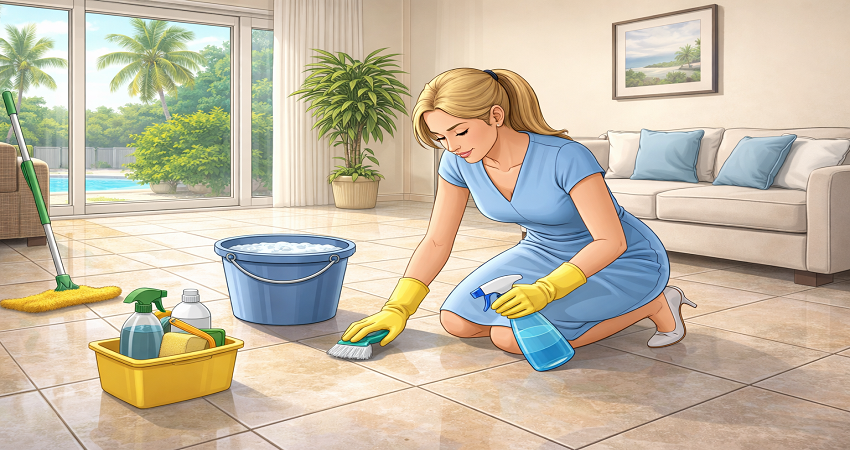

In the architectural landscape of the Sunshine State, tile is more than just a flooring choice—it is a survival strategy. From the ceramic-filled bungalows of St. Petersburg to the porcelain-clad high-rises of Miami, tile floors provide the cool, durable surface necessary to combat the subtropical heat.
However, Florida’s unique environmental factors, specifically the 70%+ relative humidity and the constant influx of abrasive silica sand, present a cleaning challenge unlike anywhere else in the country. Finding the most effective Way To Clean Tile Floors In Florida Homes is essential not just for aesthetics, but for preventing the biological growth that thrives in our moist climate.
In 2026, cleaning technology has evolved to prioritize pH-neutral chemistry and moisture-wicking tools that protect both the tile and the porous grout from the “Florida film” of humidity-bonded dust.
I’ve found that many Florida homeowners mistakenly treat their tile floors like a “set and forget” surface. They use heavy detergents and excessive water, which in our climate leads to sticky residues and rapid grout discoloration.
In Florida, moisture is the primary carrier for allergens and mold spores. If your tile floors aren’t cleaned with a focus on rapid drying and sand extraction, you are inadvertently creating a breeding ground for mildew.
This guide outlines the professional-grade protocol for 2026. For those moving into a new Florida property, establishing a clean baseline is vital; consider reviewing the house cleaning cost in Florida to see how professional deep-cleans set the stage for your weekly maintenance.
The Florida Challenge: Sand and Humidity vs. Tile
The Way To Clean Tile Floors In Florida Homes must account for two primary enemies: abrasion and adhesion.
- The Sand Problem: Florida sand is composed of sharp quartz crystals. When left on tile, it acts like sandpaper under your feet, microscopically scratching the glaze of ceramic or the polish of stone. Over time, this makes the tile “dull” and creates tiny pits where dirt can hide.
- The Humidity Problem: High humidity makes dust “tacky.” Instead of sitting loosely on the surface, dust bonds to the floor, requiring more than just a simple sweep. This is particularly troublesome in areas prone to dampness; check out our guide on removing mildew smells if your floors have already begun to harbor tropical odors.
The 2026 Protocol: Step-by-Step Excellence
To keep your floors pristine, follow this 2026-optimized sequence designed for the Florida environment.
1. Dry Extraction (The “Sand-Shield” Phase)
Never start with a wet mop. In Florida, wetting a sandy floor creates a “mud slurry” that settles deep into the grout lines. Use a vacuum with a specialized hard-floor setting or a high-quality micro-static dust mop. Ensure you get into the corners where sand accumulates.
For beach-front properties, this step is even more critical; see our beach house cleaning tips for specialized sand-management strategies.
2. Solution Selection: The pH Factor
The 2026 Way To Clean Tile Floors In Florida Homes emphasizes pH-neutral cleaners. Why? Because acidic cleaners (like vinegar) can etch natural stone, and alkaline cleaners (like bleach) can slowly degrade the chemical sealers on your grout.
- For Ceramic/Porcelain: A mild solution of warm distilled water and two drops of clear dish soap is often sufficient.
- For Natural Stone: Use a dedicated stone soap to maintain the luster of marble or travertine.
- For Disinfection: Use an enzymatic cleaner that targets the proteins in Florida-specific allergens and mold spores.
Comparing Cleaning Agents for Florida Tile
Choosing the right chemical balance is key to preventing the “sticky floor” syndrome common in humid climates.
| Cleaning Agent | Surface Suitability | Florida Climate Impact |
|---|---|---|
| Neutral Floor Cleaner | All Tile Types | Best: Leaves no residue for humidity to bond to. |
| White Vinegar Solution | Ceramic/Porcelain Only | Good: Dissolves Florida hard-water spots. |
| Steam (Distilled Water) | Sealed Grout/Tiles | Risky: Can force moisture deep into the subfloor. |
| Scented Pine/Oil Cleaners | Avoid All Tiles | Poor: Creates a “magnet” for dust and sand. |
Grout Maintenance: The Frontline of Hygiene
In Florida, grout is the weakest link in your flooring system. Because it is porous, it acts like a sponge for humidity.
- Deep Cleaning Grout: Use a paste of baking soda and water. Apply to the lines, let it sit for 15 minutes to draw out the “wicked” moisture, and scrub with a nylon brush. If you find your grout is consistently darkening, you may need to clean your bathroom tiles for hard water specifically, as Florida’s mineral-heavy water can stain grout permanently. Once clean, always apply a penetrating sealer to prevent moisture from re-entering the pores.
The Importance of “Dry-Mopping” in 2026
A major innovation in the Way To Clean Tile Floors In Florida Homes is the “Two-Step Mop.” After using a damp microfiber mop to clean, follow up immediately with a dry microfiber pad. In our humidity, air-drying can take too long, allowing dust to settle on the damp surface and create streaks.
By dry-buffing the floor, you ensure a streak-free shine and remove any lingering calcium or magnesium from Florida’s hard water.
For a full breakdown of how to maintain your home’s surfaces throughout the week, refer to our Florida weekly cleaning checklist.
The “Kitchen Grease” Factor
Florida kitchens often suffer from “Grease-Grit” buildup, where airborne cooking oils mix with humidity and sand to create a hard-to-remove layer on tile. To tackle this, use a citrus-based degreaser before your standard floor clean. You can find more targeted advice in our guide on the best way to clean greasy kitchens in Florida.
Advanced Protection: Using Dehumidification
The ultimate Way To Clean Tile Floors In Florida Homes involves controlling the environment *after* the cleaning is done.
- AC Calibration: Ensure your AC is set to “Auto” and not just “On” to allow the system to dehumidify the air properly.
- Ceiling Fans: Use fans to move air across the floor while it is being cleaned to facilitate rapid evaporation.
- Hygrometers: Keep your indoor humidity below 55%. If your tile feels “cool and damp,” your humidity is too high.
For more environmental tips, read our cooling and cleaning guide.
Pro Tip: Never use a string mop in a Florida home. String mops are notorious for holding on to bacteria and recirculating dirty water into the grout. Switch to a flat-head microfiber mop with removable pads that can be washed in high heat after every use.
When to Call the Professionals?
If your grout has turned completely black or if you notice “efflorescence” (white salty powder) rising from the tile, your floor may have a deep moisture issue.
Professional tile cleaners use truck-mounted extraction units that pull water and grime out at high pressure—something a home mop simply cannot do. You can evaluate the cost of these specialized services by checking deep cleaning costs in Tampa or Orlando.
Frequently Asked Questions (FAQ)
1. Can I use a steam mop on my tile?
While effective for sanitizing, we advise caution in Florida. If your grout sealer is compromised, the high-pressure steam can force moisture into the subfloor, leading to long-term mold issues behind the baseboards.
2. Why are my tile floors sticky after mopping?
This is usually due to using too much soap. In high humidity, the soap doesn’t evaporate; it stays on the surface and attracts Florida sand. Use a pH-neutral cleaner and a “dry-buff” step to fix this.
3. How do I get sand out of deep grout lines?
A vacuum with a brush attachment is the most effective Way To Clean Tile Floors In Florida Homes when sand is the primary issue. Agitation is key before the mopping phase.
4. How often should I seal my grout?
In Florida, we recommend testing your sealer every year. Pour a few drops of water on the grout; if it beads up, you are safe. If it soaks in, it’s time to reseal.
5. Are “Robot Mops” effective in Florida?
They are great for daily maintenance, but because they use very little water and small pads, they cannot replace a weekly deep manual clean in a high-sand environment.
Conclusion
Maintaining tile floors in the Sunshine State is a balance of chemistry, mechanics, and environmental control. By adopting the 2026 Way To Clean Tile Floors In Florida Homes, you protect your investment from the abrasive sand and invasive humidity that define our region.
A clean floor is the foundation of a healthy home, reducing allergens and preventing the microbial growth that so often plagues tropical properties.
Remember: sweep often, mop sparingly with neutral agents, and always dry the surface manually. If you find the upkeep to be too much for your busy schedule, you can always explore Maid Service options to keep your floors in showroom condition. Stay cool, keep your grout sealed, and enjoy the beauty of your Florida home!
Your Weekend Mission: Perform the “water bead test” on your kitchen grout today. If the water soaks in, make resealing your grout your next home improvement project!