In the architectural landscape of the Sunshine State, your walls are more than just structural boundaries; they are the primary defense against a relentless subtropical environment.
However, when Florida’s notorious humidity—often peaking above 80%—meets the stagnant air of an enclosed room, your drywall can quickly become a buffet for fungal colonies. Learning the most effective Remove Mold From Walls In Florida Homes strategy is a non-negotiable skill for any local resident.
In 2026, we have moved beyond simply wiping away the visible spots. We now understand that mold on a wall is a symptom of an environmental imbalance that requires a systemic solution to ensure the spores don’t just “hibernate” and return with the next summer rainstorm.
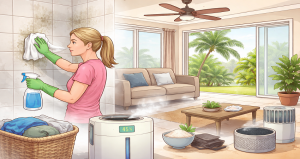
I’ve assisted many Florida homeowners who were shocked to find black or green speckles appearing behind their bedframes or inside their closets. In our climate, mold doesn’t need a massive flood to start growing; it only needs the “tackiness” of humid air and a porous surface like painted drywall.
If you are dealing with a recurring issue, you might want to evaluate the house cleaning cost in Florida to establish a professional baseline before beginning your own targeted remediation. This guide provides a precise, safety-first protocol for 2026 to help you reclaim your space and protect your home’s value.
The Florida Wall Crisis: Why Drywall is Vulnerable
Florida homes are predominantly constructed with drywall (gypsum board) which is covered in paper—a cellulose-based material that mold loves to consume. When the high humidity of the Atlantic or Gulf Coast air infiltrates your home, the paper backing of your walls absorbs that moisture.
Finding a way to Remove Mold From Walls In Florida Homes requires a balance between killing the active fungus and preserving the integrity of the wall itself. If you’ve already noticed a “swampy” aroma in your rooms, check out our guide on removing mildew smells to tackle the airborne component of the problem.
The 2026 Protocol: Step-by-Step Wall Remediation
In 2026, we prioritize “Source-Kill” methods over superficial bleaching. Bleach is largely ineffective on porous drywall because its high water content actually feeds the mold roots deep inside the wall. Follow this professional sequence instead:
1. Preparation and Air Scrubbing
Before touching the mold, you must prevent cross-contamination. Turn off your HVAC system so spores aren’t sucked into the ducts. If you suspect your air system is already affected, it is vital to clean your air vents in Florida humidity immediately.
Open a window and place a fan blowing outward to create negative pressure, pulling spores away from the rest of the house.
2. The “Vinegar-Encapsulation” Method
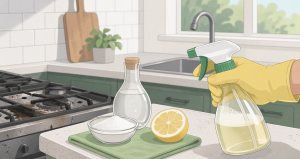
For most residential wall mold, undiluted white vinegar is your strongest ally. It contains acetic acid which penetrates the porous surface of the paint and drywall to kill the “roots” or hyphae.
- Apply: Spray the vinegar directly onto the wall. Do not scrub yet; let it sit for at least 60 minutes.
- Agitate: Use a soft-bristle brush to gently lift the mold from the paint texture.
- Rinse: Wipe with a damp microfiber cloth, using as little water as possible.
Florida Wall Surface Compatibility Table
The Remove Mold From Walls In Florida Homes process changes based on the type of wall finish you have. Use this table for the best results.
| Wall Finish | Recommended Agent | Precaution |
|---|---|---|
| Satin/Eggshell Paint | White Vinegar | Safe for most pigments; avoids streaks. |
| Flat/Matte Paint | Hydrogen Peroxide (3%) | Highly porous; avoid scrubbing too hard. |
| Bathroom Tile Walls | Tea Tree Oil Solution | Best for high-moisture grout. (See hard water tile guide). |
| Wallpaper | Isopropyl Alcohol (70%) | Dries instantly; prevents the glue from peeling. |
Targeting the “Shadow Zones”: Behind Furniture
In Florida, mold is most common on the lower halves of exterior-facing walls and behind heavy furniture where air circulation is zero.
- The Airflow Rule: When you Remove Mold From Walls In Florida Homes, you must also change the room’s layout. Ensure there is at least a 3-inch gap between your walls and your furniture. This allows your AC system to move air across the wall surface, preventing the condensation that feeds mold. This is a key part of any weekly Florida cleaning checklist.
The Kitchen Wall: Grease Meets Mold
Kitchen walls are unique because they often have a layer of microscopic cooking oil. Mold spores stick to this oil like glue. Before treating the mold, you must remove the grease layer. You can find specific instructions on our guide for the best way to clean greasy kitchens in Florida.
Post-Cleaning: The Drying Phase
The job isn’t done until the wall is “bone dry.” In Florida’s 2026 climate, air-drying is rarely enough. Use a dehumidifier in the room for 24 hours after cleaning.
If the wall feels cool to the touch, it is still holding moisture. For beach-front residents, remember that salt-air can trap moisture against your walls longer; see our beach house cleaning tips for more info.
- Pro Tip: After you successfully Remove Mold From Walls In Florida Homes, consider repainting the area with a mold-resistant primer (Zinsser or Kilz). These primers contain “mildewcides” that provide a chemical barrier that is specifically effective against Florida’s year-round spore activity.
When Is the Mold “Too Deep”?
If you press on the drywall and it feels soft or “spongy,” the mold is likely on the inside of the wall. At this point, no amount of surface cleaning will work—the drywall must be replaced. This often happens after hurricane season or hidden pipe leaks.
You can check deep cleaning house costs in Tampa or Miami for professional remediation services that handle structural mold removal.
Natural “Wall Shields” for 2026
For a preventative spray that won’t harm your pets or children, mix 10 drops of Tea Tree Oil with a cup of water. After cleaning your walls, mist this solution lightly over the surface.
It acts as a natural fungicide that remains active even in high humidity. For more recipes, visit our natural cleaning tips for Florida humidity.
Frequently Asked Questions (FAQ)
1. Can I just paint over the mold?
Never. Painting over mold is like putting a band-aid on an infected wound. The mold will continue to eat the drywall paper underneath the paint, eventually causing the paint to bubble and peel away, exposing a much larger mess.
2. Why does mold only grow on my exterior walls?
This is due to the “thermal bridge.” The exterior wall is hotter than the interior air-conditioned air, causing condensation to form on the inside of the wall—perfect for mold growth.
3. Is black mold on walls always toxic?
Not necessarily. While Stachybotrys chartarum is the toxic variety, many common, less harmful molds also look black. However, in Florida, all mold should be treated with the same level of caution.
4. How do I stop mold from coming back in my closet?
Closets are the #1 mold spot in Florida. Leave the door open for air circulation, use a small dehumidifier bag (like DampRid), and never put away damp clothes.
5. How can I tell if mold is in my insulation?
If the wall smells musty but looks clean, and your AC is running perfectly, the mold may be in the insulation. This requires a professional inspection.
Conclusion
The effort to Remove Mold From Walls In Florida Homes is a vital part of property stewardship in our tropical paradise. By understanding the relationship between humidity, surface types, and proper antifungal agents, you can maintain a home that is both beautiful and healthy. Don’t wait for a small spot to become a room-wide problem—act at the first sign of discoloration or scent.
For those who find the task daunting or are dealing with widespread growth, seeking professional help is a smart investment.
Explore our guide on Maid Service costs to see how regular maintenance can prevent these issues from ever starting. Stay dry, stay vigilant, and keep your Florida walls pristine!
Your Next Step: Walk through your home today and look behind your headboards and sofas. If you see even a tiny speck, start the vinegar protocol immediately!