
Living in Florida is a dream for many—the palm trees, the endless coastline, and the tropical warmth are hard to beat. But as any seasoned Floridian will tell you, this paradise comes with a silent, persistent tag-along: humidity. And where there is high humidity, mold is never far behind.
I remember when I first moved here; the struggle with that distinct musty smell in the guest room was real. It felt like no matter how much I cleaned, the dampness was winning. That was until I shifted my focus from heavy chemicals to natural, preventive lifestyle changes.
Mold growth isn’t just a threat to your drywall or your leather shoes; it’s a significant concern for your family’s health. However, you don’t need to turn your home into a laboratory of harsh fumes to stay safe.
In this comprehensive guide, we are going to explore how to prevent mold in Florida homes naturally. By the time you finish reading, you’ll have a professional-grade strategy to keep your living space fresh, dry, and healthy using eco-friendly methods that actually work in our unique climate.
Why Florida is the “Perfect Storm” for Mold Growth
Florida’s geography makes it a natural incubator for fungi. With outdoor humidity levels frequently soaring above 80%, the air is often saturated. Mold spores are microscopic and omnipresent; they drift through open doors, windows, and even hitch a ride on your clothes after a walk through the Everglades.
Once inside, they only need three things to create a colony: moisture, a food source (like dust, wood, or paper), and warmth. Our homes provide all three in abundance.
In regions like Miami, Tampa, or Orlando, the heavy rainfall and occasional flooding exacerbate the issue. Moisture gets trapped in wall cavities, under floors, and in poorly ventilated attics.
Understanding that mold is an environmental response to excess moisture is the first step toward effective prevention. It’s not just about a clean house; it’s about a dry house.
The Hidden Dangers: Why Mold Prevention is Non-Negotiable
I often hear people say, “It’s just a little mildew.” But the reality is that mold exposure is a serious matter. From my years of experience helping homeowners navigate Florida’s cleaning challenges, I’ve seen how mold can trigger persistent allergies, respiratory distress, and even severe asthma attacks. Common signs include a scratchy throat, watery eyes, and skin rashes that won’t go away.
Vulnerable groups, including children, the elderly, and those with compromised immune systems, are at the highest risk. Beyond health, mold can decimate property value.
It eats away at organic materials, leading to expensive structural repairs. This is why a proactive, natural approach isn’t just a “green” choice—it’s a financial and health necessity for every Florida resident.
1. Natural Humidity Control: Your First Line of Defense
The golden rule for Florida living is to keep your indoor humidity levels between 30% and 50%. If you hit 60%, you are essentially inviting mold to move in. Here is how I manage it without running industrial equipment 24/7:
- Hygrometers: Spend a few dollars on a digital hygrometer. It allows you to monitor exactly which rooms are trending “wet” so you can act before spores colonize.
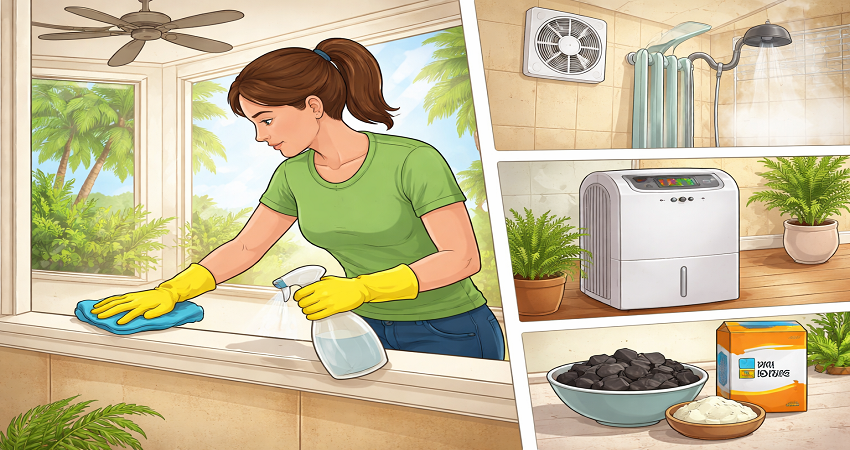
- Desiccant Plants: Nature provides its own moisture absorbers. Plants like Peace Lilies, Boston Ferns, and English Ivy can help reduce ambient humidity. Just be careful not to overwater them, as standing water in trays creates a micro-climate for mold.
- Strategic Airflow: In the winter, we love to open our windows. However, only do this when the outdoor humidity is below 55%. Use ceiling fans to keep air moving; stagnant air is mold’s favorite playground.
2. High-Moisture Zone Ventilation Strategies
Bathrooms, kitchens, and laundry rooms are the “Ground Zero” for mold. If you don’t evacuate that steam, it will settle on your ceilings and grout. I highly recommend installing timer switches on your exhaust fans.
Instead of turning the fan off when you leave the room, let it run for at least 20 minutes to ensure every bit of vapor is pulled out of the building.
In the kitchen, always use the range hood when boiling water. Even a simple act like leaving the bathroom door wide open after a shower can drastically reduce moisture buildup on the walls.
3. Harnessing Nature’s Antifungal Powerhouses
Forget the bleach—it’s mostly water, and the chlorine doesn’t actually penetrate porous surfaces like wood. Instead, use these natural alternatives that I use in my own home:
- White Vinegar: It is a mild acid that kills roughly 82% of mold species. I keep a spray bottle of undiluted vinegar in the shower and mist the tiles once a week.
- Tea Tree Oil: This is a potent antifungal. Mix two teaspoons with two cups of water. It smells strong initially, but it is one of the most effective natural barriers against mold spores I have ever tested.
- Baking Soda: Excellent for absorbing moisture and neutralizing that “damp” odor. Placing an open box in your closet can prevent your clothes from smelling like a basement.
4. The Crucial Role of AC Maintenance
In Florida, your Air Conditioner is your best friend—but a dirty one is a mold distributor. The coils in your AC unit are cold and wet, making them a prime spot for growth. If you don’t change your filters every 30 days, the restricted airflow causes the unit to work harder and fail at dehumidifying.
I always suggest using high-quality MERV filters and ensuring your condensate drain line is clear. A clogged drain line can cause water to back up into your home, resulting in a mold disaster within 48 hours.
5. Protecting Your Closets and Storage
Florida closets are notorious for mold. Because they are often small and lack vents, air becomes stagnant. I’ve lost many leather belts to the green fuzz of mildew before I learned this trick: Activated Charcoal. Placing bags of activated charcoal on the floor of your closet works like a silent sponge, pulling moisture and odors out of the air.
Also, try to keep your clothes spaced out; packing a closet too tight prevents the little airflow you do have from circulating around your garments.
6. Immediate Action: The 24-Hour Drying Rule
Spills, leaks, or even a window left open during a summer afternoon thunderstorm must be addressed immediately. Mold doesn’t wait. If a surface stays wet for more than 24 to 48 hours, spores will start to root.
Use highly absorbent microfiber towels and high-speed fans. If a carpet gets soaked, you might need to lift it to dry the pad underneath. Speed is the only way to avoid a professional remediation bill.
Natural Vs. Chemical Mold Prevention
| Method | Human/Pet Safety | Surface Penetration | Long-term Cost |
|---|---|---|---|
| Natural (Vinegar/Essential Oils) | High – Non-toxic fumes | High – Acid penetrates porous materials | Low – Inexpensive pantry staples |
| Chemical (Bleach/Ammonia) | Low – Respiratory irritant | Low – Only kills surface mold | High – Recurring specialized purchases |
7. Use Sunlight as a Natural Disinfectant
UV light is a natural enemy of mold. While we often close our blinds to keep the heat out and save on cooling costs, a dark house is a moldy house. Open your curtains during the brightest parts of the day. Letting the sun hit your carpets and upholstery helps kill surface bacteria and dry out any deep-seated moisture. It’s the easiest, free mold prevention tool we have in Florida.
Expert Tip: If you’ve already noticed a persistent “old house” scent, you need to tackle the root cause. Check out our detailed guide on how to remove mildew smell from a Florida house for step-by-step instructions.
8. External Maintenance: The Foundation of Prevention
A mold-free home starts on the outside. In our state, heavy downpours can cause water to pool against your foundation. Ensure your gutters are clean and downspouts are directed at least 10 feet away from the house. If water is soaking into your stucco or siding, it will eventually migrate through the walls.
Keep your landscaping trimmed; bushes should be at least a foot away from your walls to allow air to dry the exterior of your home after a storm.
Frequently Asked Questions (FAQ)
1. Why is mold so hard to stop in Florida?
It’s a combination of the tropical climate, high rainfall, and the fact that most Florida homes use central AC, which can create condensation if not maintained perfectly.
2. Can vinegar really kill black mold?
Vinegar is effective against many types of common household mold. However, for a major toxic black mold infestation, you should consult a professional. For daily prevention, vinegar is king.
3. How can I tell if my humidity is too high?
Aside from a hygrometer, look for “sweating” on windows, a sticky feeling on your skin while indoors, or a musty odor when you first walk into a room.
4. Do humidifiers cause mold?
Yes, if not monitored. In Florida, we rarely need humidifiers. If you use one, ensure it is cleaned daily and that it doesn’t push the room’s humidity over 50%.
5. Is mold-resistant paint worth the money?
Yes, especially in bathrooms and laundry rooms. It contains antimicrobials that prevent spores from taking root on the surface of the paint.
Conclusion and Final Thoughts
Living mold-free in Florida doesn’t require a miracle—it requires a routine. By focusing on preventing mold in Florida homes naturally, you are choosing a path that protects your health, your home, and the environment.
It’s about the small things: wiping down the shower, checking under the sink for leaks, and letting the sunshine in. Consistency is what separates a fresh Florida home from a damp one.
Need help keeping your home in top shape? If you are overwhelmed by the Florida humidity and need a professional reset, explore our house cleaning cost guide for Florida to see how affordable a deep clean can be. Don’t let mold win—take action today!