
In 2026, Florida’s pollen season has become more than just a seasonal annoyance; it is a year-round environmental challenge. Due to our warming subtropical climate, the traditional “pollen windows” have expanded, creating a continuous cycle of oak, cedar, pine, and grass dispersal. For residents from Jacksonville down to Miami, the goal is no longer just about tidiness—it is about bio-filtration.
To Maintain Indoor Air Quality During Florida’S Pollen Season, you must treat your home like a sealed sanctuary. In high-humidity zones, pollen grains don’t just float; they bond with moisture to create a sticky “super-allergen” that can infiltrate even the smallest cracks.
This comprehensive guide provides the mechanical and behavioral strategies needed to keep your indoor air pristine during the peak 2026 bloom.
I’ve consulted with many Florida families who noticed their “indoor” allergies were worse than when they were outside. This is often because a home can act as a trap, concentrating pollen that is brought in on shoes, pets, and through poorly filtered HVAC systems.
While you are optimizing your air, you may also want to investigate the house cleaning cost in Florida for a professional deep-clean to remove existing buildup.
To truly protect your respiratory health, you need to combine advanced filtration with a moisture-control protocol. Below is your 2026 air quality roadmap.
The 2026 Florida Pollen Calendar
Understanding what is in the air is the first step to knowing how to filter it. In 2026, Florida’s peak pollen season has shifted earlier, starting in late January.
- January – March: The “Yellow Dust” era. Oak, Cedar, and Pine dominate. This pollen is heavy and sticky.
- April – June: Grass pollen takes over. These grains are smaller and can often bypass low-grade filters.
- July – October: Weed and Ragweed pollen, combined with high-humidity mold spores.
1. The HVAC Shield: MERV Vs. HEPA
To Maintain Indoor Air Quality During Florida’S Pollen Season, your HVAC system is your primary defense. However, not all filters are equal.
- The MERV 11 Standard: For Florida central air units, a MERV 11 or 12 filter is usually the “sweet spot.” It is dense enough to trap microscopic pollen but not so restrictive that it kills your AC’s blower motor in the Florida heat. If you need a complete system reset, consider our guide on cleaning air vents in Florida humidity.
- HEPA Portables: Since most residential HVAC systems cannot handle a true HEPA filter without damaging the motor, use portable HEPA purifiers in bedrooms to create “Clean Air Zones” for sleeping.
2026 Pollen Filtration Efficiency Table
| Filter Type | Pollen Capture Rate | Best Use Case |
|---|---|---|
| MERV 8 | ~70% (Large Grains) | Basic dust control during low-pollen months. |
| MERV 11-13 | ~90% (Fine Pollen) | Peak Florida Spring (Oak/Pine season). |
| True HEPA | 99.97% (All Grains) | Standalone units in bedrooms or nurseries. |
| Washable Filters | Varies (Poor) | Not recommended for severe allergy seasons. |
2. The “Decontamination” Entryway
You cannot Maintain Indoor Air Quality During Florida’S Pollen Season if you are constantly tracking it inside. In 2026, the “No-Shoes” rule is a mechanical necessity.
- The Shoe-Trap: Pollen settles on the ground. When you walk across your porch, your shoes become magnets for allergens. Leave shoes in a bin *outside* the front door or in a dedicated mudroom.
- Pet Management: Florida dogs are essentially pollen sponges. Use a damp microfiber towel to wipe down their paws and fur every time they come inside. For tips on managing the sand that often accompanies this, see our DIY sand-repellent spray guide.
3. Humidity: The Pollen Catalyst
In Florida, humidity makes pollen “heavy.” While this sounds good (as it falls to the ground), it actually causes the pollen to stick to your curtains, upholstery, and carpets. Keeping your indoor humidity between 30% and 50% ensures that the pollen remains dry enough for your vacuum’s HEPA filter to actually lift it.
High humidity turns pollen into a glue-like substance that requires deep cleaning Vs. standard cleaning levels of effort to remove. To prevent mold from joining the pollen party, follow our summer cleaning checklist for high humidity.
- Pro Tip: Avoid using ceiling fans during peak pollen counts if your windows were recently opened. Fans circulate settled pollen back into the “breathing zone” (3–6 feet off the ground). Use your AC’s “recirculate” mode instead.
4. Advanced Cleaning: The HEPA Vacuum
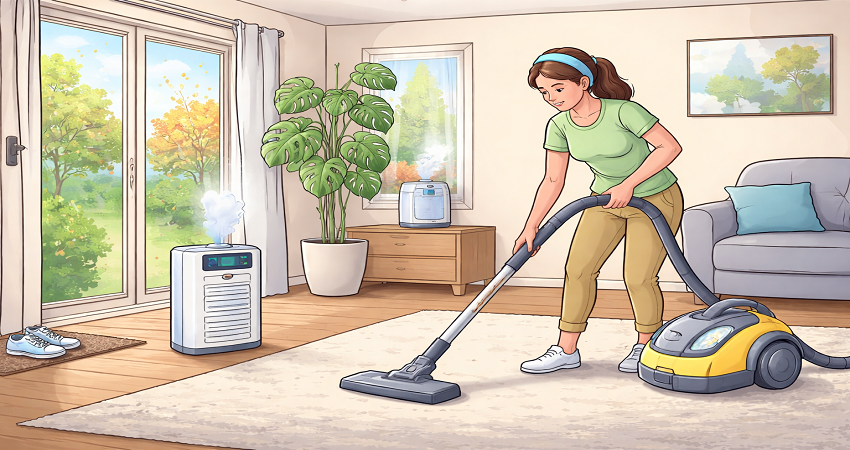
Standard vacuum cleaners without HEPA filters are essentially “pollen cannons.” They suck up the grains and spray the smaller, more allergenic particles back out the exhaust. To Maintain Indoor Air Quality During Florida’S Pollen Season, use a vacuum with a sealed HEPA system.
- Soft Surfaces: Focus on rugs and curtains, which act as filters for the air in your room.
- Weekly Bedding Wash: Wash all sheets and pillowcases in 130°F water to kill dust mites and dissolve pollen proteins.
- Surface Wiping: Use damp cloths, never dry dusters. A dry duster just launches pollen back into the air.
For homes near the coast, salt-air can make surfaces even stickier; refer to our beach house cleaning tips for specific solutions.
5. Environmental Sealing
In 2026, many Florida homes are older and have settled, creating small gaps in window seals.
- Weatherstripping: Check the seals on your doors. If you can see light under the door, pollen is blowing in.
- Window Tracks: These are the “gutters” of your home. If they are full of black dust and sand, your windows won’t seal properly. Clean them as part of your weekly Florida house cleaning checklist.
- Post-Construction Note: If your neighborhood has a lot of new building projects, the dust combines with pollen to create a massive respiratory load. Check the post-construction cleaning cost in Florida for professional air-scrubbing if your home feels constantly dusty.
Frequently Asked Questions (FAQ)
1. Is it safe to open windows on “low pollen” days in Florida?
In 2026, even “low” days in Florida can be tricky due to shifting winds. It is generally safer to keep windows closed and use a “fresh air intake” system on your HVAC if you need ventilation.
2. Does charcoal filtration help with pollen?
Activated carbon/charcoal filters are great for odors and smoke, but they don’t do much for physical pollen grains. You need a mechanical HEPA or MERV filter for pollen.
3. Why are my allergies worse at night?
This is often because pollen from your hair and clothes has been transferred to your pillow. Showering before bed is a mandatory rule during Florida’s peak season.
4. Can I use an ozone generator to clean the air?
No. Ozone is a respiratory irritant. While it kills odors, it can make allergy and asthma symptoms much worse. Stick to HEPA filtration.
5. How often should I change my AC filter in March?
During the height of the oak bloom, check your filter every 2 weeks. If it looks yellow or grey, change it immediately to maintain airflow. For more tips, see our cooling and cleaning guide.
Conclusion
Learning how to Maintain Indoor Air Quality During Florida’S Pollen Season is an essential part of 2026 coastal living. By understanding the mechanical requirements of filtration, the chemistry of humidity, and the importance of entryway decontamination, you can reclaim your home from the seasonal “dust.”
You don’t have to spend the spring months sneezing behind closed doors—with the right setup, your home can be a high-performance sanctuary from the elements.
Consistent maintenance and smart upgrades will keep your air clean and your energy bills low. Whether you manage your own air quality or bring in experts for a deep cleaning in Tampa, the goal remains the same: fresh, healthy air for your family. Stay cool, stay dry, and breathe easy!
Your Action Item: Check your bedroom air purifier today. If the “filter change” light hasn’t come on but you see yellow dust on the pre-filter, vacuum it off immediately to boost its efficiency!