How to Clean a Wooden Deck: 7 Easy Steps for a Fresh, Clean Finish
A wooden deck creates a comfortable outdoor space for relaxing, entertaining guests, and enjoying warm weather. However, exposure to rain, sunlight, pollen, fallen leaves, and everyday foot traffic can leave deck boards looking dirty, discolored, or slippery.
Learning how to clean a wooden deck can help restore its appearance and make routine outdoor maintenance easier. The good news is that you usually do not need expensive equipment or harsh chemicals to get started. A garden hose, a suitable deck cleaner, and a soft or medium-stiff brush are often enough for ordinary dirt and grime.
The best cleaning method depends on the type of wood, its existing finish, and the condition of the surface. Follow these seven steps to clean your deck carefully while reducing the risk of scratches, raised wood fibers, and other damage.
What You Need to Clean a Wooden Deck
Before starting, gather the supplies you need. Having everything ready helps you work efficiently and prevents cleaning solutions from drying on the wood.
| Cleaning supply | Purpose |
|---|---|
| Broom or leaf blower | Removes leaves, pollen, and loose debris |
| Garden hose | Rinses dirt and cleaning solution |
| Wooden deck cleaner | Helps loosen grime and outdoor stains |
| Soft or medium-stiff synthetic brush | Scrubs dirty boards without unnecessary abrasion |
| Bucket or pump sprayer | Applies the cleaning solution |
| Protective gloves and safety glasses | Helps protect your skin and eyes |
| Clean water | Rinses the deck thoroughly |
Choose a deck cleaner specifically formulated for your wood type and existing finish. Always read the product label before mixing or applying it.
You may also need drop cloths to protect nearby furniture or sensitive plants. If you plan to apply a new stain or sealer afterward, check the coating manufacturer’s preparation instructions before cleaning.
Step 1: Remove Furniture and Sweep the Deck
Start by clearing the deck of outdoor furniture, planters, grills, toys, and other movable objects. This exposes the entire surface and makes it easier to clean around corners and edges.
Next, sweep away loose debris using a broom or leaf blower. Pay particular attention to the spaces between deck boards, where damp leaves, pine needles, and dirt can collect.
Removing debris first helps prevent you from rubbing abrasive particles across the wood while scrubbing.
Inspect the deck as you work. Look for loose boards, protruding nails or screws, splintered areas, and signs of decay. Avoid walking on damaged sections until they have been assessed and repaired.
Step 2: Choose the Right Wooden Deck Cleaner
Choosing the right cleaner is an important part of wood deck cleaning. A product that works well on one surface may be unsuitable for another.
For routine maintenance, mild soap and water may be sufficient. For heavier dirt, mildew discoloration, or stubborn outdoor grime, consider a commercial wood deck cleaner designed for the specific surface.
Read the label to confirm:
- Whether the product is suitable for your wood species.
- Whether it can be used on previously stained or sealed wood.
- How much water to mix with the cleaner.
- How long the solution should remain on the surface.
- Whether protective equipment is required.
- How the product should be rinsed and disposed of.
Avoid assuming that stronger chemicals will produce better results. Household bleach, concentrated cleaners, and incompatible chemicals can damage wood fibers, alter the finish, or harm nearby plants.
Never mix bleach with ammonia, acids, or other cleaning products. Dangerous fumes can result.
Before using any new product across the entire deck, test it on a small, inconspicuous area and check the result.
Step 3: Wet the Deck and Apply the Cleaner
Once the deck is swept and the cleaner is selected, lightly wet the surface if the product instructions recommend doing so.
Apply the cleaning solution evenly, working in small sections rather than covering the entire deck at once. This approach gives you better control over the cleaning process and helps prevent the product from drying before you rinse it.
Use a pump sprayer, bucket, or suitable applicator according to the product directions.
Allow the cleaner to work for the specified time. Some products require only a few minutes, while others need a longer dwell time. Do not assume that every deck cleaner should remain on the wood for the same period.
If the weather is hot or sunny, work in smaller sections and keep the surface damp when the label instructs you to do so.
Keep cleaning chemicals away from children and pets, and protect nearby plants by following the manufacturer’s precautions.
Step 4: Scrub Along the Wood Grain
Use a suitable deck brush to loosen dirt, grime, and surface buildup. Brush in the direction of the wood grain whenever possible.
Working with the grain helps reduce visible scratches and creates a more consistent appearance. Apply steady, moderate pressure rather than forcing the brush into the surface.
Give extra attention to areas around railings, stairs, furniture legs, and the gaps between boards. These locations often collect more dirt than open areas.
For stubborn stains, apply additional cleaner only if the product instructions allow it. Let the solution work as directed before scrubbing again.
Avoid metal brushes and aggressive scouring pads that may scratch the surface or leave particles behind.
If you notice soft or rotting wood, deep cracks, or extensive splintering, cleaning alone will not solve the problem. Those areas may require repair or replacement.
Step 5: Rinse the Deck Thoroughly
After scrubbing, rinse the deck with clean water. Remove all loosened dirt and cleaning residue, following the cleaner’s instructions.
A garden hose is often sufficient for ordinary maintenance. Work methodically from one section to the next so you do not leave behind dirty patches or concentrated cleaning solution.
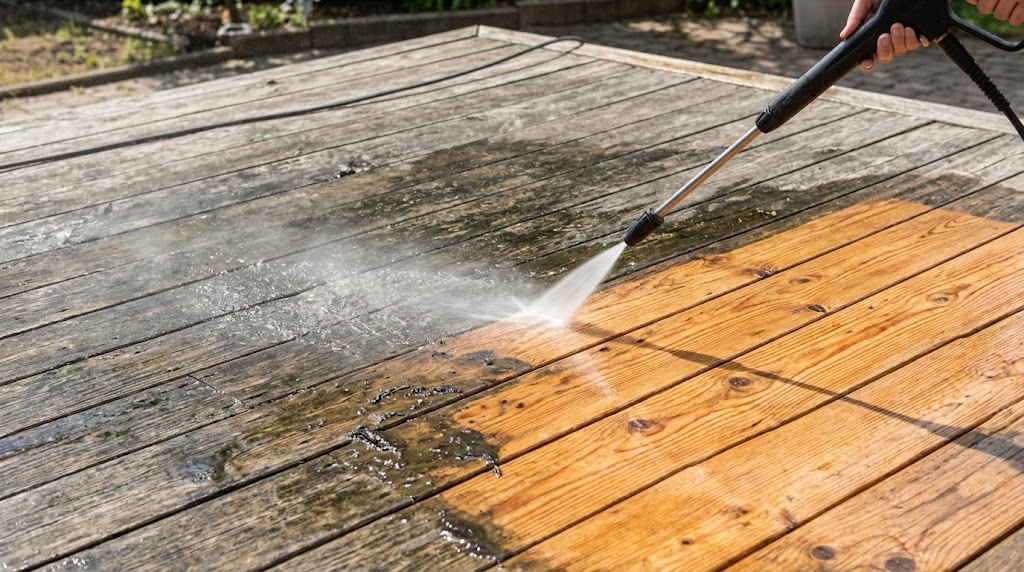
If you use a pressure washer, take extra care. Excessive water pressure or a narrow spray pattern can gouge wood, raise the grain, and create splinters.
Check the deck manufacturer’s guidance before using a pressure washer. Start with a wide fan pattern and a low setting appropriate for the wood, test an inconspicuous area, and keep the nozzle moving. Do not concentrate the spray on one spot.
There is no single pressure setting or nozzle distance that is safe for every wooden deck. The correct approach depends on the wood species, its condition, and the equipment being used.
For older, soft, or weathered boards, manual scrubbing and a garden hose may be the safer option.
Step 6: Let the Wooden Deck Dry Completely
Once the deck has been rinsed, allow it to dry naturally. Good airflow and suitable weather conditions can help speed up the process.
Drying time varies with humidity, temperature, shade, airflow, and the amount of water absorbed by the wood. A deck may need a day or longer to dry, depending on these conditions.
Do not judge dryness by appearance alone, especially if you intend to apply stain or sealer.
Check the instructions for the finish you plan to use. Some products require a specific moisture level or a minimum drying period before application.
If the wood feels rough after cleaning, raised fibers may need light sanding once the deck is fully dry. Follow appropriate safety precautions and remove sanding dust before applying a finish.
Step 7: Protect the Wood After Cleaning
Cleaning removes dirt, but it does not automatically protect a wooden deck against future weather exposure.
After the deck has dried, inspect the surface and decide whether it needs a suitable stain, sealant, or other protective finish. The right choice depends on the wood species, the previous coating, and the appearance you want.
If you plan to stain the deck:
- Confirm that the wood is sufficiently dry.
- Remove remaining dust and loose wood fibers.
- Check whether the existing coating needs to be stripped or sanded.
- Select a compatible exterior wood stain.
- Follow the manufacturer’s application and drying instructions.
A clean, properly prepared surface helps a compatible finish adhere more effectively. Applying a finish over damp, dirty, or poorly prepared wood can contribute to uneven results or premature peeling.
If the existing finish is still in good condition, a full refinishing job may not be necessary. Regular cleaning and periodic inspections may be enough to maintain its appearance.
How to Clean a Wooden Deck Without a Pressure Washer
You can clean most ordinarily dirty wooden decks without a pressure washer.
Begin by sweeping away leaves and loose dirt. Apply a suitable deck cleaner or mild soap solution according to its instructions, then scrub the boards with a deck brush.
Work in manageable sections, paying attention to shaded areas and places where dirt accumulates. Rinse thoroughly with a garden hose and allow the surface to dry.
This manual method gives you greater control over the amount of force applied to the wood. It is particularly useful for older decks, softer wood species, and boards that already show signs of surface wear.
For stubborn stains, use a cleaner designed for that specific problem instead of relying on increasingly aggressive scrubbing.
How to Remove Mildew From a Wooden Deck
Dark or greenish patches may appear on decks that remain damp or receive limited sunlight. Dirt, algae, and mildew can look similar, so identify the likely cause before selecting a treatment.
To address mildew discoloration:
- Remove leaves and other organic debris.
- Improve drainage and remove standing water where possible.
- Apply a deck cleaner labeled for the affected surface and type of growth.
- Allow the product to work according to its directions.
- Gently scrub and rinse the area thoroughly.
- Allow the wood to dry before assessing whether another treatment is needed.
Do not assume every dark mark is mildew. Iron stains, tannin discoloration, old finish, and deteriorating wood may require different treatments.
Avoid combining cleaning chemicals or applying a product that is not approved for your deck. If the discoloration returns repeatedly, look for persistent moisture, poor drainage, or areas that receive little sunlight.
Common Mistakes to Avoid When Cleaning a Wooden Deck
A few avoidable mistakes can turn a straightforward cleaning job into an expensive repair.
Using too much pressure: A pressure washer can damage wood fibers and leave permanent marks. Use a gentler method whenever possible.
Choosing the wrong cleaner: Some products are intended for specific wood types or finishes. Read the label before use.
Letting cleaner dry on the boards: Dried residue can leave streaks or make rinsing more difficult. Work in small sections and follow the product directions.
Scrubbing too aggressively: Excessive force can roughen the surface and cause splintering.
Ignoring the spaces between boards: Trapped leaves and dirt can interfere with drainage and keep parts of the deck damp.
Applying stain before the wood is dry: Excess moisture may interfere with the performance of the finish. Follow the coating manufacturer’s moisture and drying requirements.
Neglecting safety: Wear suitable protective equipment, keep children and pets away from the work area, and follow all chemical and equipment instructions.
How Often Should You Clean a Wooden Deck?
The ideal cleaning schedule depends on local weather, surrounding trees, foot traffic, shade, and the deck’s exposure to moisture.
For many homes, a thorough cleaning once or twice a year is a practical starting point. However, your deck may need attention sooner if it accumulates pollen, mud, fallen leaves, or visible growth.
In Florida, humid conditions, frequent rain, and shaded outdoor areas can make moisture management especially important. Remove debris regularly, check that water drains properly, and address persistent damp spots.
You do not need to perform an intensive cleaning every time dirt appears. Sweeping and occasional gentle rinsing may be enough between deeper cleanings.
Inspect the boards periodically for loose fasteners, splinters, soft spots, and damaged finishes. Early attention can help you identify maintenance problems before they become more extensive.
How to Prepare a Deck for Staining
Frequently Asked Questions
What is the best way to clean a wooden deck?
For routine dirt, sweep the deck, apply a suitable mild cleaner, scrub with a deck brush, and rinse with clean water. Choose the cleaning method based on the wood type and existing finish.
Can I use dish soap to clean a wooden deck?
A mild dish-soap solution may work for ordinary dirt when compatible with the deck’s finish. Use a small amount, test an inconspicuous area, and rinse thoroughly. For stubborn stains, choose a purpose-made deck cleaner.
Is it safe to pressure wash a wooden deck?
It can be, but pressure washing carries a risk of damaging the wood. Check the manufacturer’s recommendations, use an appropriate wide-fan nozzle and low pressure, test a hidden area, and keep the spray moving. Manual cleaning is often preferable for delicate or weathered boards.
Can I clean my deck with vinegar?
Vinegar is not the best default choice for every wooden deck. Its suitability depends on the wood and finish, and some decking-care guidance warns against it. A compatible deck cleaner or mild soap solution is generally a more predictable starting point.
How long should a wooden deck dry after cleaning?
Drying time varies with the weather, wood condition, airflow, and how much water was used. Allow sufficient time for the boards to dry completely, and follow the stain or sealer manufacturer’s requirements before applying a finish.
Should I stain my deck after cleaning?
Not necessarily. If the existing finish remains in good condition, additional staining may not be needed. If the deck requires protection or refinishing, clean and prepare it properly, confirm that it is dry enough, and choose a compatible exterior product.
How can I keep my wooden deck clean for longer?
Sweep regularly, remove wet leaves, keep drainage gaps clear, clean spills promptly, and address areas that remain damp. Periodic inspections and appropriate protective finishes can also help maintain the deck.
Final Thoughts
Learning how to clean a wooden deck is a useful part of maintaining an outdoor living space. With regular sweeping, a suitable cleaner, gentle scrubbing, and thorough rinsing, you can remove everyday dirt without relying on aggressive chemicals or excessive water pressure.
Choose products that match your deck’s wood and finish, allow enough time for drying, and inspect the boards for damage as part of your routine. These simple steps can help keep your deck looking better and make future maintenance easier.
Safety reminder: Always follow the instructions supplied with your deck cleaner, pressure washer, and protective finish. When in doubt, choose the gentlest cleaning method that is effective for your particular deck.