How to Clean Dishwasher With Vinegar Baking Soda: 7 Easy Steps
Clean dishwasher with vinegar baking soda is a popular home-cleaning method for tackling unpleasant odors and everyday residue. When used separately and only if your dishwasher manufacturer approves, white vinegar and baking soda may help freshen your appliance. In this guide, you’ll learn the steps to clean your dishwasher safely, maintain its filter, and avoid common cleaning mistakes.
A dishwasher cleans your dishes every day, but food particles, grease, soap residue, and mineral deposits can gradually build up inside the appliance. Over time, this buildup may contribute to unpleasant odors, cloudy surfaces, and a dishwasher that does not look as clean as it should.
The good news is that you can clean many dishwasher interiors with a few simple steps. White vinegar and baking soda are common household ingredients that can help freshen the appliance and loosen certain types of residue.
However, using them correctly matters. Never combine vinegar and baking soda in the same cleaning cycle. Instead, use them separately, and check your dishwasher manufacturer’s instructions before using either ingredient.
This guide explains how to clean a dishwasher with vinegar and baking soda, how to clean the filter, and which mistakes to avoid.
Why Clean Your Dishwasher With Vinegar and Baking Soda?
Dishwashers regularly encounter grease, food residue, detergent deposits, and minerals from hard water. Normal washing may not remove all the buildup from filters, corners, and other hard-to-reach areas.
White vinegar is acidic and can help loosen some residue and mineral film. Baking soda is mildly alkaline and can help freshen the interior and remove some surface grime.
Used separately and appropriately, these ingredients can be useful for occasional dishwasher maintenance.
Potential benefits include:
- Helping reduce unpleasant dishwasher odors.
- Loosening certain types of residue and film.
- Freshening the dishwasher interior.
- Supporting routine cleaning between manufacturer-recommended maintenance cycles.
Neither ingredient is a guaranteed solution for every problem. Heavy limescale, blocked drainage, persistent leaks, or mechanical faults may require a purpose-made dishwasher cleaner or professional attention.
Frigidaire Dishwashers Stainless Steel
What You Need Before Cleaning
Gather the following supplies before starting:
- Plain white vinegar, if approved for your dishwasher.
- Baking soda.
- A soft microfiber cloth.
- Warm water.
- A small, soft cleaning brush.
- Mild dish soap for cleaning a removable filter, if permitted by the manufacturer.
- A dishwasher-safe measuring cup, if required by your chosen method.
Avoid abrasive pads and harsh chemicals that could scratch or damage the dishwasher’s interior.
Important: Read your appliance’s Use and Care Guide first. Some manufacturers recommend specific cleaning products and discourage vinegar because repeated exposure to acid may damage certain components or finishes.
How to Clean a Dishwasher With Vinegar and Baking Soda
Follow these seven steps for a careful cleaning routine.
Step 1: Empty the Dishwasher
Remove all dishes, glasses, utensils, and cookware. Take out the racks if your manual permits easy removal and doing so will help you reach the interior.
Check the bottom of the dishwasher for food scraps, labels, paper, and other loose debris. Remove them before starting a cleaning cycle.
An empty dishwasher makes it easier to inspect the interior and allows the cleaning method to focus on the appliance rather than a load of dishes.
Step 2: Clean the Dishwasher Filter
The filter catches food particles and helps prevent debris from circulating through the appliance. A dirty filter can contribute to unpleasant odors and poor cleaning results.
To clean it:
- Consult your owner’s manual to locate the filter.
- Remove it only if your model has a removable filter and the manual explains how to do so.
- Carefully discard trapped food and debris.
- Wash the filter with warm water and a soft brush. Use mild soap if the manufacturer permits it.
- Rinse thoroughly and reinstall the filter securely.
Be careful when handling debris because small pieces of broken glass may be present. Do not reach blindly into the drain area.
Cleaning the filter may be more effective than relying on vinegar or baking soda alone when the problem is trapped food.
Step 3: Wipe the Door, Seals, and Interior
Use a soft, damp microfiber cloth to wipe visible food splashes and residue from the interior walls and door.
Pay attention to the edges around the door and the accessible rubber seals, where grime may accumulate. Do not pull, stretch, or aggressively scrub the seals.
Use only cleaning products approved for your appliance’s materials. Avoid soaking electrical controls or spraying liquid directly into openings.
If you notice standing water, a damaged seal, or a blocked drain, investigate the cause rather than assuming a household cleaner will solve it.
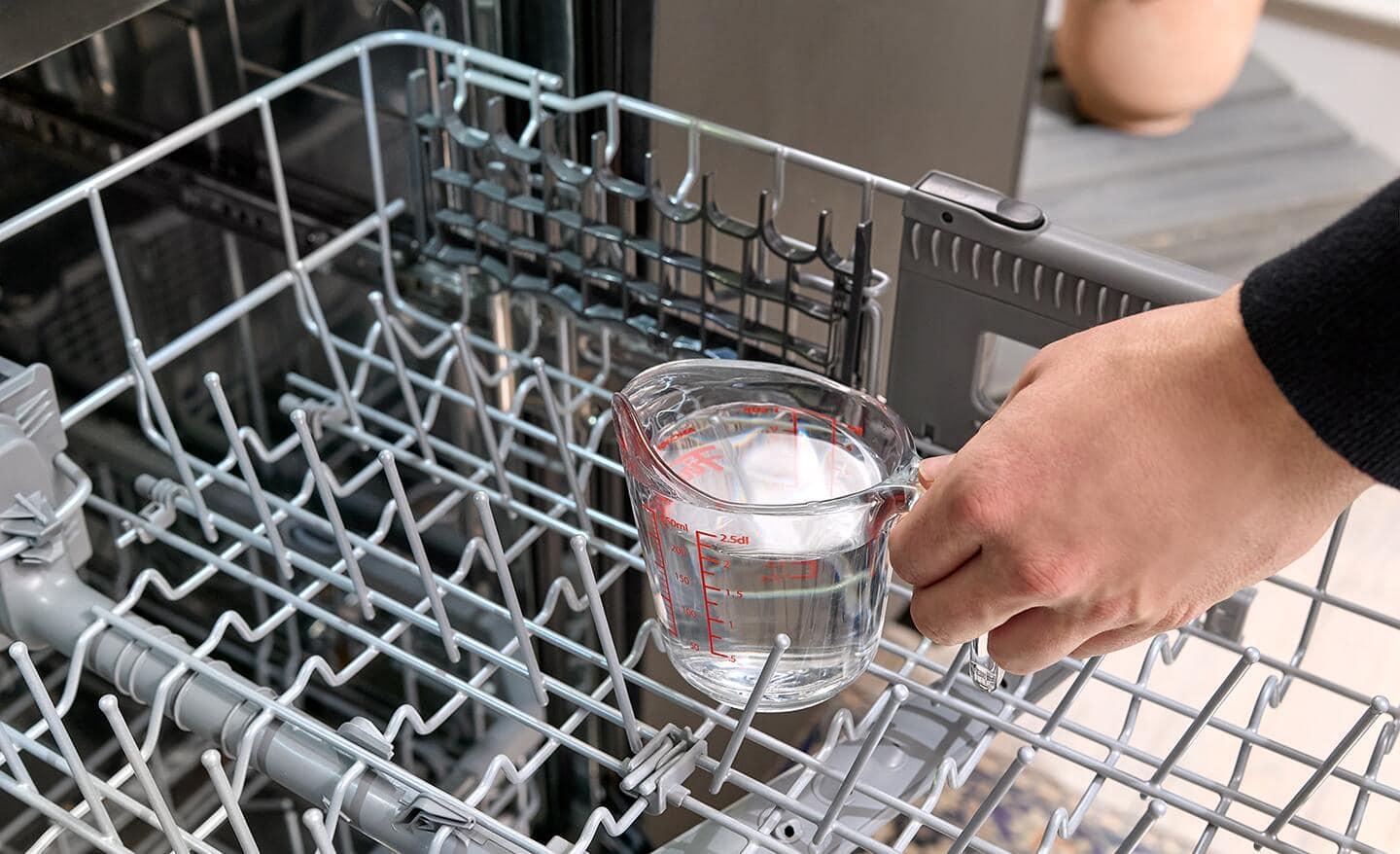
Step 4: Run a Vinegar Cleaning Cycle, If Approved
If your manufacturer permits vinegar, you can use it for an occasional cleaning cycle.
One method recommended by Whirlpool is to:
- Measure approximately 2 cups (500 mL) of plain white vinegar.
- Pour it into a suitable dishwasher-safe container.
- Place the container upright on the lower rack of the empty dishwasher.
- Run a normal wash cycle with heated drying turned off, following the manufacturer’s instructions.
- Do not add dishwasher detergent during this cleaning cycle.
The vinegar may help loosen some residue and reduce certain odors.
Do not use vinegar frequently as a substitute for routine appliance maintenance. Because it is acidic, repeated use may damage some dishwasher components or finishes. If your manufacturer advises against vinegar, skip this step and use its recommended cleaning method instead.
Step 5: Run a Separate Baking Soda Cycle
Once the vinegar cycle has finished, you can use baking soda separately if it is compatible with your dishwasher’s instructions.
A commonly recommended method is:
- Sprinkle approximately 1 cup of baking soda across the bottom of the empty dishwasher.
- Run a separate hot-water cycle, or the cycle recommended by your appliance manufacturer.
- Allow the cycle to finish.
- Inspect the interior for any remaining visible residue.
Baking soda may help freshen the interior and address some lingering odors. It will not necessarily remove heavy mineral deposits or repair drainage problems.
Do not add baking soda to the vinegar cycle. When the two ingredients mix, they react and fizz, neutralizing much of their acid-base action. Separate cycles are the more practical approach recommended in several appliance-cleaning guides.
Step 6: Inspect and Dry the Interior
When the cleaning cycle is complete, open the dishwasher and inspect the bottom, door, and racks.
Use a clean, soft cloth to remove any remaining visible residue. If your model allows it, leave the door slightly open for a short time so the interior can air-dry.
Check that the filter is properly installed and that water drains normally.
If odors remain, check the filter and drain area again. Persistent smells may indicate trapped debris, a drainage issue, or another problem that requires further investigation.
Step 7: Check the Results and Return to Normal Use
Before loading dishes, make sure the interior is free from visible cleaning residue and that the appliance is operating normally.
Return the racks and accessories to their correct positions. Use the dishwasher detergent and rinse aid recommended for your model during future dishwashing cycles.
If you continue to see white film or mineral deposits, consider whether hard water is contributing to the problem. A manufacturer-approved dishwasher cleaner or descaling product may be more suitable than repeated vinegar treatments.
Vinegar vs. Baking Soda: Which Is Better for Dishwasher Cleaning?
Both ingredients have different properties, so one is not automatically better than the other.
| Cleaning need | White vinegar | Baking soda |
|---|---|---|
| Some mineral film or residue | May help loosen certain deposits | Less suited to heavy mineral buildup |
| Lingering odors | May help freshen the interior | May help neutralize some odors |
| Light surface grime | May help loosen some residue | May assist with mild surface cleaning |
| Heavy limescale | May be unsuitable for some models | Usually not the best solution |
| Routine maintenance | Use only if manufacturer-approved | Use only if manufacturer-approved |
For significant mineral buildup, use a dishwasher cleaner or descaler that is suitable for your specific appliance.
How Often Should You Clean Your Dishwasher?
The ideal cleaning schedule depends on how frequently you use the appliance, your water quality, and the manufacturer’s instructions.
These general habits can help:
- After each load: Remove large food scraps from the dishwasher when necessary.
- Regularly: Inspect the filter and clean it according to your owner’s manual.
- When odors or residue appear: Check the filter, seals, and drain area.
- Periodically: Run the manufacturer’s recommended dishwasher-cleaning cycle or use an approved cleaner.
Avoid automatically running vinegar and baking soda cycles every week or month. Frequent acidic cleaning is not appropriate for every dishwasher, and excessive cleaning does not necessarily improve performance.
Common Mistakes to Avoid
Mixing Vinegar and Baking Soda Together
The mixture fizzes because the acidic vinegar reacts with alkaline baking soda. Using them together in the same cycle is less useful than using them separately.
Using Vinegar Too Frequently
Vinegar’s acidity may damage certain components or finishes over time. Always follow the manufacturer’s guidance.
Ignoring the Filter
A clogged filter can trap food particles and contribute to odor and cleaning problems. Household ingredients cannot replace proper filter maintenance.
Using Too Much Detergent
Excess detergent can contribute to residue. Follow the detergent manufacturer’s dosing instructions and account for your water hardness and dishwasher model.
Using Bleach Without Checking Compatibility
Bleach can damage stainless-steel components and may be unsuitable for many dishwashers. Never mix bleach with vinegar or other cleaning products. Dangerous fumes can result from incompatible chemical mixtures.
Expecting Household Ingredients to Fix Mechanical Problems
If the dishwasher does not drain, leaks, makes unusual noises, or leaves dishes consistently dirty, investigate the underlying issue. A cleaning cycle cannot repair a faulty pump, damaged seal, or plumbing problem.
When Should You Use a Commercial Dishwasher Cleaner?
A purpose-made dishwasher cleaner may be the better option when you notice substantial mineral buildup, persistent residue, or recurring odors.
Choose a product specifically labeled for dishwasher use and follow its directions. Some products are designed to remove limescale and detergent deposits more effectively than household ingredients.
If your appliance has a dedicated cleaning cycle, consult the manual for the recommended product and procedure. Do not combine a commercial cleaner with vinegar, baking soda, bleach, or other chemicals unless the product instructions explicitly permit it.
Frequently Asked Questions
Can I clean a dishwasher with vinegar and baking soda at the same time?
No. It is better to use them in separate cycles. Mixing them causes an acid-base reaction that reduces the useful properties of both ingredients. Check your dishwasher manual before using either one.
How much vinegar should I use to clean a dishwasher?
The amount depends on the manufacturer’s approved method. Whirlpool describes a method using approximately 2 cups (500 mL) of white vinegar in a dishwasher-safe container on the lower rack. Other manufacturers may recommend different amounts or prohibit vinegar altogether.
Should the dishwasher be empty when cleaning it?
For the vinegar and baking soda methods described in this guide, use an empty dishwasher. Remove dishes and utensils before starting either cleaning cycle.
Will baking soda remove a bad dishwasher smell?
Baking soda may help with some lingering odors, but it will not fix every cause. Check the filter, drain area, and door seals if the smell continues.
Can vinegar damage my dishwasher?
Yes, repeated use may damage some materials or components because vinegar is acidic. Review your appliance’s manual before using it, and avoid it if the manufacturer advises against it.
Can I use apple cider vinegar instead of white vinegar?
Plain white vinegar is the more commonly recommended choice in dishwasher-cleaning instructions. Do not substitute another vinegar unless your appliance manufacturer approves it.
What if my dishwasher still smells after cleaning?
Inspect the filter, drain area, and accessible seals. Check for standing water or trapped food. If the odor persists, follow the manufacturer’s troubleshooting instructions or contact a qualified appliance technician.
Is vinegar and baking soda cleaning safe for all dishwasher models?
No. Dishwasher materials, components, and manufacturer recommendations differ. Always check the Use and Care Guide before using household cleaning ingredients.
Final Thoughts
Cleaning a dishwasher with vinegar and baking soda can be a useful occasional maintenance method when your appliance manufacturer approves both ingredients. Start by removing food debris and cleaning the filter, then use vinegar and baking soda in separate cycles rather than mixing them together.
For the best long-term results, keep the filter clean, use the correct dishwasher detergent, and follow your manufacturer’s maintenance recommendations. If odors, mineral buildup, or drainage problems persist, choose an approved dishwasher cleaner or investigate the underlying issue instead of repeatedly applying household remedies.
1 thought on “Clean dishwasher with vinegar baking soda: 7 Easy Steps”